“ontextC” – Technical Diary 5

What happened so far?

Over the end of the last semester and the summer, implementation became the main topic for the process. I managed to find decent placeholder models for the EQ, pitch shifting and reverb unit in the Max default resource examples: (in the ‚pitch and time‘/‘effects‘ folder, access by right click > object > open.amxd). With these, I did some testing using exports from the original Paulstretch software to make sure the results could work in the context of what I am trying to create.

Although initially I was headed towards just slightly modifying the phase vocoder that is available for Max, I realised that for my understanding of the algorithm and Max itself it might be better to start and troubleshoot from scratch, to get a result that I could fully explain and modify as needed. To do so, I used my Python analysis and the available Github repository to break down the most important steps of the algorithm (to recap in overview terms: Fourier Transform > Windowing Function > Spectral Processing > Inverse Fourier Transform > Interpolation and Smoothing) in terms of understanding, but also mathematically so I would be able to send the signal through the correct processing chain in Max for the output I am looking for. This also required me to go back into my mathematical education a little bit in order to properly understand what I was working with.

Ultimately I aimed for 4 manually changeable parameters for now: Window size (to control spectral resolution), Overlap (to control overlap between windows), Stretch factor (the most important one) and a Smoothing parameter which is supposed to help create a smoother output with some to few artefacts.

For Future Reference

Another new consideration that came up during this process was that it might be useful to have a tuner of some sort integrated tob e able to tune the edited audio as needed for the current project. However, this is not a priority right now.

Ongoing

I am currently also trying to plan first listening experiences, to be able to test my prototype in the future. My supervisor suggested I look into webmushra to set up listening test scenarios, and another idea was to set up a sonified „Find the Mistake“ station at the exhibition so people could playfully get results for me to evaluate, in a less controlled context of course.   

Results and Reflection

The stage of the project I am in right now is not the most rewarding in that I don’t get any immediate results at the moment, as I am setting up and testing the patch based off my notes and the process I noted down fort he audio signal, but I know it is essential to create a sounding prototype and am hopeful that it will pay off. Either way, I have learned a lot about digital signal processing during my research for this phase of the project, which is always useful.

Objectives for Next Time

  • Get sound through the new signal chain
  • Come up with test scenarios and mockups
  • If I get that far: Try to get reloadable presets set up

1.Impuls: Pixel Vienna 2024

Am vergangenen Freitag besuchte ich die Pixel Vienna 2024, ein Event, das für seine kreative Vielfalt und seine inspirierende Atmosphäre bekannt ist. Obwohl ich aktuell noch unentschieden bin, welchen genauen Schwerpunkt ich in meiner Masterarbeit verfolgen werde, habe ich mich an die tollen Erfahrungen des Vorjahres erinnert. Schon damals hatte die Pixel Vienna mich motiviert, weshalb ich auch dieses Jahr auf der Suche nach neuen Impulsen und Denkanstößen wieder dabei war.

Die diesjährige Ausgabe bot ein breites Spektrum an Vorträgen, die verschiedene kreative Disziplinen und Herangehensweisen beleuchteten. Besonders eindrucksvoll waren die präsentierten Workflows und Prozesse der eingeladenen Speaker, welche zwar zum Teil sehr von meinem Feld der Interessen abweichen, jedoch trotzdem wirklich spannend waren.

Einer der Höhepunkte war der Vortrag von Jens Lindfors, Thomas Moor und René Vidra, den kreativen Köpfen hinter dem multidisziplinären Designstudio Power Pixel. Ihre Session „Navigating rough seas – how to run a small studio in international waters“ war eine tiefgehende und praxisnahe Darstellung, wie ein kleines Studio in einer wettbewerbsorientierten internationalen Branche bestehen kann. Besonders inspirierend fand ich ihren innovativen Tag-Team-Ansatz, mit dem sie ihre Projekte effizient und dynamisch umsetzen. Der Vortrag bot einen Blick hinter die Kulissen und zeigte, wie entscheidend Teamarbeit und Flexibilität sind, um in der Film- und Games-Branche erfolgreich zu agieren.

Power Pixel deckt eine Vielzahl an Dienstleistungen ab – von Concept Art, Illustration und 3D-Modellierung bis hin zu Animation und Rendering. Ihre Vielseitigkeit und ihr Fokus auf kollaborative Arbeitsmethoden boten mir interessante Einblicke, auch wenn die Inhalte nicht direkt zu meinem eigenen Forschungsthema passten.

Ein weiterer spannender  Vortrag kam von Carina Lindmeier, einer preisgekrönten Illustratorin aus Österreich. Ihre moderne, verspielte und farbenfrohe Kunst ist international bekannt, und sie hat bereits mit renommierten Marken wie Adobe und Red Bull Media House zusammengearbeitet. In ihrer Präsentation sprach sie über ihre Herangehensweise, in der sie alltägliche Momente, Popkultur und triviale Erlebnisse in ihre Arbeit einfließen lässt.

Ein weiterer Talk der mich interessiert hat war von Thomas Heschl, 3D-Artist bei Microbird Games. Er  präsentierte seine Arbeit am Action-RPG „Dungeons of Hinterberg“. Sein Vortrag beleuchtete die Entwicklung und Gestaltung der Spielwelt mit ihren vier unterschiedlichen Spezifikationen sowie die Herausforderungen, die es mit sich bringt, einen einzigartigen Artstyle zu erhalten und die Cel-Shading-Technik auf innovative Weise zu interpretieren. Auch wenn Game Design thematisch nicht zu meiner aktuellen Ausrichtung passt, fand ich es spannend zu sehen, wie viel Liebe zum Detail und wie viele kreative Entscheidungen in jedem Aspekt des Spieldesigns stecken.

Obwohl viele der Vorträge nicht direkt mit meinem Masterarbeitsthema verbunden waren, war es äußerst inspirierend, die unterschiedlichen Herangehensweisen und Workflows der Speaker kennenzulernen. Die Pixel Vienna 2024 zeigte erneut, wie wertvoll der Austausch mit kreativen Köpfen und das Aufgreifen neuer Ideen sind. Dieser Besuch hat mir geholfen, meine eigenen Gedanken zu erweitern und potenzielle neue Richtungen für meine Masterarbeit zu erörtern. Die Vielfalt der Speaker und ihre Vielzahl an spannenden Projekten waren ein sehr guter  Impuls, um meine nächsten Schritte weiter zu definieren.

Frauen in der Selbstständigkeit am Beispiel des Berufsfeldes der Fotografie

Meine bisherigen Blogs haben von Dokumentationsfilmen, Porträtfotografie und Streetfotografie gehandelt. Mein Thema für die Masterarbeit wird sich nach wie vor auf Fotografie beziehen, allerdings bringe ich einen gesellschaftskritischen Aspekt hinzu, der mich selbst als Frau betrifft.

Mein erstes Gespräch, im Zuge der Lehrveranstaltung Design and Research, wurde dafür genutzt, mein neues Thema vorzustellen und einen Diskurs darüber zu starten.
Meine Masterarbeit wird sich mit dem Thema „Frauen in der Selbstständigkeit“ beschäftigen. Roman Pürcher und ich kamen zum Entschluss, dass es bei diesem Thema besonders wichtig ist darauf zu achten, wissenschaftlich zu bleiben und nicht mit losen Verallgemeinerungen und Zuschreibungen zu argumentieren. Zu diesem Thema haben mich meine eigenen Erfahrungen in der Selbstständigkeit, Gespräche mit Frauen aus der Kreativbranche und der Besuch einer Ausstellung bewegt. Die Ausstellung „IN*VISIBLE x RAUM FÜR ERREGUNG – ZUR GLEICHSTELLUNG IM DESIGN“ werde ich kurz in diesem Blog erwähnen. Da sie sehr inspirierend war, werde ich ihr auch einen IMPULS widmen.

Um das Thema „Frauen in der Selbstständigkeit“ weiter einzugrenzen, werde ich mich in den folgenden Blogs auf Frauen in der Selbstständigkeit am Beispiel des Berufsfeldes der Fotografie spezialisieren. Das Berufsfeld der Fotografie ist daher so spannend für mich, weil ich selbst ein Gewerbe in diesem Bereich führe. Innerhalb dieser Branche möchte ich herausfinden welche Herausforderungen sich besonders für Frauen ergeben, wie sie sich selbst im Vergleich zu ihren männlichen Kollegen Positionieren und selbst präsentieren.

Mir ist bewusst, dass Geschlechteridentitäten sehr vielfältig sind und dieses Thema von einer Zweigeschlechtlichkeit ausgeht, die den tatsächlichen gesellschaftlichen Gegebenheiten nicht gerecht wird und für viele Menschen einschränkend sein kann. Diese Einteilung in weiblich und männlich gelesene Personen wird im analytischen Teil herangezogen, um die Thematik vergleichbaren zu machen.

Als Plattform zur Untersuchung der Selbstpräsentationen möchte ich mich auf Instagram fokussieren. Auf dieser Social-Media-Plattform möchte ich untersuchen, inwiefern sich die Selbstpräsentation zwischen selbstständigen Fotografinnen und Fotografen unterscheiden. In weiterer Folge könnte erforscht werden, wie die unterschiedlichen Selbstpräsentationen und die Positionierung der eigenen Marke, auf potenzielle Kund*innen wirken.

Außerdem wäre es spannend auf die Preisgestaltung der angebotenen Dienstleistungen einzugehen. Ich stelle die Hypothese auf, dass Fotografinnen tendenziell weniger für ihre Leistungen verrechnen als Fotografen. Ich wage zu behaupten, dass Frauen ihre Dienstleistungen unter ihrem Wert verkaufen. In der Ausstellung „IN*VISIBLE x RAUM FÜR ERREGUNG – ZUR GLEICHSTELLUNG IM DESIGN“ habe ich erfahren, dass der Lohn in Berufsfeldern sinkt, sobald Frauen in ihn einsteigen.

Eine Langzeitstudie der US-Census-Daten zeigt: Sobald Frauen in ehemals männlich dominierte Berufe eintreten, sinken Gehälter und Prestige drastisch – um bis zu 57 %. 1

Dieses beschriebene Phänomen geht auch in die andere Richtung. Demnach steigt der Gehalt, wenn in weiblich dominierte Berufsfelder Männer einsteigen. Als Beispiel nannte die Ausstellung die IT-Branche. Diese wurde in ihren Anfängen von Frauen dominiert. Programmieren galt als einfache Aufgabe und erst mit dem Einstieg der Männer in diese Branche, stieg auch der Gehalt und das Ansehen rapide an.2

Für meine ersten Literaturrecherchen nutze ich Keywords wie Selbstständigkeit, Entrepreneur, Fotografie, Frauen, Gleichberechtigung und Selbstpräsentation. Im Laufe der ersten Recherchen haben sich schon mögliche Forschungsfragen finden lassen. „Bieten Fotografinnen ihre Dienstleistungen günstiger an als Fotografen?“ Um diese Frage zu beantworten, könnte eine Analyse der individuellen Preisgestaltungen herangezogen werden. So kann herausgefunden werden, ob sich die Preise zwischen Fotografinnen und Fotografen unterscheiden. Eine weitere Forschungsfrage könnte sich um die Selbstpräsentation von Fotografinnen und Fotografen drehen. „Wie präsentieren sich Fotografinnen im Vergleich zu Fotografen auf Instagram?“ Die Beantwortung kann durch die inhaltliche Analyse von Instagram-Profilen erreicht werden. Die Selbstinszenierung, verwendete Hashtags und Häufigkeit von persönlichen Bildern könnten mögliche Kategorien sein.

Abschließend möchte ich meine Masterarbeit mit einer kleinen Ausstellung abrunden.
Es könnte eine Fotoserie geben, wo Frauen fotografiert werden, die selbstständig als Fotografinnen arbeiten. Für die Fotos werden keine Models gecastet. Die Authentizität wird durch die Abbildung von realen Fotografinnen gewahrt und erreicht. An dieses Projekt möchte ich sehr konzeptionell herangehen und die herausgefundenen Fakten in visuell erfassbare Bilder verwandeln. Selbstporträts könnten auch ein Weg sein, um zu authentischen Bildern zu kommen. Möglich wäre auch eine Ausschreibung dieser Challenge via Instagram. Fotografinnen könnten dazu aufgefordert werden, sich selbst in einem Porträt festzuhalten. Das Porträt könnte eine Herausforderung thematisch aufbereiten, die sie persönlich einschränken und das berufliche Schaffen erschweren. Eventuell könnte diese Intervention über Instagram gestartet werden und ihre Ergebnisse am Ende in einer Ausstellung präsentiert werden. Weiters soll diese Ausstellung Raum für Diskurse unter Gleichgesinnten bieten. Es ist mir ein großes Anliegen, dass sich alle die an der Veranstaltung teilnehmen als große Community sehen.

1 (IN*VISIBLE x RAUM FÜR ERREGUNG 2024)

2 (vgl. IN*VISIBLE x RAUM FÜR ERREGUNG 2024)

Literaturangabe:

IN*VISIBLE x RAUM FÜR ERREGUNG. ZUR GLEICHSTELLUNG IM DESIGN. (2024) Kuratiert von Wicht, Johanna u.a. designforum Wien, Wien, 19.09.2024-10.11.2024

Impuls 2 – Literaturrecherche

In preparation for the master thesis we had to research different types of resources and literatur which would fit our topic. It should help us how we can search and how things like the Fernleihe works. As I am currently exploring a new topic for my master thesis this was very helpful with deciding if this topic has enough research already for me to build up my work. For this I started to research for both my possible topics:

“Wie is Herrl, so is Gscherrl” – The topic of personality of humans and their dogs/pets and how this works and how to illustrate it.

or

A topic about wool and crafts as I am a knitter and crafter myself and it is hard to know materials and their environmental impact as well as the animal welfare aspect in this field.

With my research I found out that the first topic has a lot of research and studies already on how our pets influence us and about the relationship and that it will be hard to find out something new. And at the same time I felt more interest into the second topic. It is a little bit harder to find corresponding literature but there are papers in different fields connected to that. I found out if I want to write about this there are a lot of suptopics into it – animal welfare, environmental impact, wool production, marketing of knitting shops/patterns, material etc. And I have to split it up into these pieces and then I find more studies to each of these topic and later I will make a connection between or solve problems that I will discover through my research.

So these resources were my outcome from this first research and depend on the briefing from the master thesis course.

Abgabe IV

  1. Schlüsselwörter
  • Knitting/Stricken
  • Sustainable/Nachhaltigkeit
  • Mulesing
  • Schafe
  • Wolle/Wool
  • Wollproduktion
  • Siegel & Zertifikate
  • Leitfaden
  • Fasern
  • Handarbeiten
  • Slow Fashion

Literaturverzeichnis

ABBOTT, Kym A. Sheep Veterinary Practice. 1. Auflage. Boca Raton: CRC Press, 2024

CONFORTE, Daniel; DUNLOP, Samuel; GARNEVSKA, Elena. New Zealand Wool Inside: A Discussion Case Study In: The International Food and Agribusiness Management Review. 14, Nr. 3 (September 2011): 147–178. https://doi.org/10.22004/ag.econ.114716.

KLEPP, Ingun G. ; TOBIASSON, Tone S. Local, Slow and Sustainable Fashion: Wool as a Fabric for Change. 1. Auflage. Palgrave Macmillan Cham, 2022.  https://doi.org/10.1007/978-3-030-88300-3.

WIKIPEDIA. 2024. „Mulesing.“ Wikipedia: Die freie Enzyklopädie. Letzte Änderung: 29. August 2024. https://de.wikipedia.org/w/index.php?title=Mulesing&oldid=248134525 Zugriff: 20. Oktober 2024.

WIKIPEDIA. 2023. „Wollsiegel.“ Wikipedia: Die freie Enzyklopädie. Letzte Änderung: 24. Dezember 2023.  https://de.wikipedia.org/w/index.php?title=Wollsiegel&oldid=240484012 Zugriff: 20. Oktober 2024.

IMPULSE #1: Mari-Ell Mets on Accessibility

In the beginning of our third semester, we as Interaction Design students once again had the privilege to attend the main conference of the World Usability Congress 2024, held on October 16th and 17th at the Stadthalle Graz. This event provided us with an excellent opportunity to deepen our understanding of usability and accessibility, as well as to draw inspiration from industry experts. The two days were packed with enlightening keynotes and interactive workshops, covering a wide range of topics central to the field of user experience design.

For my part, I primarily chose to attend sessions focused on accessibility, a subject that has always held particular significance to me. Among the various presentations, one talk stood out the most: „Websites and Apps for Everybody“ by Mari-Ell Mets, the Head of Accessibility at Trinidad Wiseman. Mets’ speech left a profound impression on me due to its relevance, practical insights, and passionate advocacy for inclusion in digital design.

Key insights from Mari-Ell Mets‘ talk

Mets began her presentation by emphasizing that accessibility is a cornerstone of high-quality web design. She supported her point with a striking statistic: every fourth European is classified as a person with special needs. This highlights the sheer scale of users who face disadvantages when websites and apps fail to meet accessibility standards. Mets further outlined key European regulations governing digital accessibility, including:

  • EU Directive 2016/2102 on the accessibility of websites and mobile applications of public sector bodies,
  • EU Directive 2019/882 on accessibility requirements for products and services, and
  • EN 301 549, the European standard on accessibility requirements for ICT products and services.

These legal frameworks underline the necessity for designers and developers to prioritize accessibility. However, it was Mets’ practical advice that truly resonated with me. She shared 10 accessibility rules that, when applied, can resolve 80% of common usability issues in websites and apps. The simplicity and effectiveness of these rules made them particularly impactful.

Applying accessibility principles to my prototype

Mets‘ accessibility guidelines felt directly applicable to my ongoing project, which I developed as part of the Design & Research module at FH JOANNEUM. Over the last two semesters, I have been working on a mobile app concept aimed at assisting untrained first aiders in public spaces. The app provides step-by-step instructions on how to secure and help a person experiencing an epileptic seizure. Given that first aiders can be anyone in a public area, my app must cater to a diverse user base, including those with special needs. Mets‘ principles offered a concrete framework to refine my design.

No moving content

One of Mets‘ rules highlights the importance of avoiding autoplaying content, such as sounds, animations, or videos. If moving content is used, it should serve a clear purpose, and users must be able to pause it.

For my app, this means ensuring that emergency steps and instructions are presented clearly and with minimal motion. Movement can serve as a helpful explanatory tool, such as an animation showing the recovery position, but it should not overwhelm users or cause distractions. To address this, I plan to: Justify the use of movement in each case to ensure it enhances comprehension. Keep animations subtle and purposeful to reduce cognitive load, especially for sensitive users. Include an easily accessible pause button for any moving content.

Contrasted color

Color contrast plays a pivotal role in ensuring text readability and emphasizing interactive elements. Mets warned against placing text on images, as this can reduce contrast and make text difficult to read. She recommended using contrast-checking tools to ensure compliance with accessibility standards.

As my prototype progresses to a high-fidelity design, I will focus on selecting appropriate color schemes that enhance usability. Given the app’s life-saving nature, its design must remain minimalistic and user-friendly. High-contrast color combinations will ensure that all users, including those with visual impairments, can easily read text and identify critical elements like buttons and icons.

Clear error messages

Error messages are another critical aspect of accessibility. Mets stressed that they should be specific, clearly indicating what went wrong and offering solutions. For example, errors should have precise labels, point to the problematic area, and be compatible with screen readers.

In my app, this principle will guide the design of features like the medical ID form and emergency call options. If an error occurs—such as a failure to submit an emergency form—the user should receive an immediate and clear explanation with steps to resolve the issue. Additionally, I plan to implement screen-reader compatibility for error notifications, ensuring that users with disabilities are adequately informed.

Broader implications for design

Mets’ talk served as a timely reminder that accessibility is not a niche concern but a universal requirement. It goes beyond catering to individuals with disabilities and improves the overall user experience for everyone. Features like clear navigation, sufficient contrast, and error notifications benefit all users, regardless of their abilities.

Reflecting on her presentation, I was reminded that accessibility isn’t just about meeting regulations—it’s about embracing an inclusive mindset. By ensuring that websites and apps are accessible, designers actively contribute to breaking down barriers and creating a more equitable digital landscape.

Conclusion

Attending the World Usability Congress 2024 was an inspiring and educational experience, particularly Mari-Ell Mets’ session on accessibility. Her practical advice directly applies to my work, offering valuable insights to improve my app prototype. By implementing Mets’ accessibility rules, I can ensure that my app is not only functional but also inclusive and user-centered.

In a world where digital experiences are increasingly integral to our daily lives, designing for accessibility is no longer optional—it is essential. Mets’ presentation reaffirmed my commitment to creating designs that are not only innovative but also meaningful and inclusive. This learning experience will undoubtedly have a lasting impact on my approach to design.

Resources

World Usability Congress. „Agenda 2024.“ Accessed November 5, 2024. https://worldusabilitycongress.com/agenda-2024/?agenda=83CALT.

European Union. Directive (EU) 2016/2102 of the European Parliament and of the Council of 26 October 2016 on the Accessibility of the Websites and Mobile Applications of Public Sector Bodies. Accessed November 5, 2024. https://eur-lex.europa.eu/eli/dir/2016/2102/oj.

European Union. Directive (EU) 2019/882 of the European Parliament and of the Council of 17 April 2019 on the Accessibility Requirements for Products and Services. Accessed November 5, 2024. https://eur-lex.europa.eu/eli/dir/2019/882/oj.

21 | Proseminar Master Thesis | Task III – Evaluation of a Master Thesis

For this evaluation task, I have selected the master thesis “Digital fashion for sustainable change a strategy for digital fashion at Tommy Hilfiger” by Charlotte Joliijn Hoekstra. The thesis was submitted in March 2021 at Delft University of Technology for the completion of the masters degree in Strategic Product Design. The evaluation considers the following criteria:

  1. Level of Design The thesis is well designed and comprehensive owing to its employment of color coded layout and clearly structured chapter marking. The reading flow is easy and the overall appearance of the thesis is appealing. Graphics and statistics are also designed in a uniform way, which contributes to the cohesive appearance of the work.
  2. Degree of Innovation
    The topic of the thesis is quite innovative and new, especially for the time of publication. There research topic of digital fashion is not yet extensively researched in academic context at time of writing. Additionally, the concrete and precisely narrowed down scope of the thesis makes it a useful case study and an important reference basis for further research in this area of study.
  3. Independence
    The thesis demonstrates a high degree of independence and effort on the part of the researcher. The outcomes are tangible and underline the amount of independent research that was conducted for the paper.
  4. Outline and Structure
    The structure is extremely reader friendly and clear. The researcher provides a table of contents that includes an executive summary as well as a reading guide in the beginning of the text. The thesis is then divided into five main areas, titled “Discover”, “Why”, “How”, “What” and “Conclude” which each of the sections being color coded and further divided into subchapters. This is extremely helpful for readers in guiding their reading experience of the paper.
  5. Degree of Communication
    The degree of communication high, the manner of communication is effective and the research topic, though extensive, is well communicated. The author manages to relate the basis of the topic and the background information needed to understand the most important aspects of the research in a clear and understandable manner, enabling even readers who are unfamiliar with the research area to understand the thesis. 
  6. Scope of the Work
    The scope of this work appears to be quite extensive and becomes evident primarily in the discussion of the research objectives, the scope of the deliverables and the research methodology. The researcher employs various methodological tools, such as the Vision in Product design method on the design side and scientific research methods current state of the art evaluations and focus group research. The paper consists of 85 pages including the bibliography and title page, and I would evaluate this as a quite extensive scope for a paper at this level.
  7. Orthography and Accuracy
    Orthography and accuracy are on an appropriate level. No obvious mistakes in orthography, grammar or mistakes of any kind in the writing could be detected while reading the thesis. 
  8. Literature
    The author cites 44 sources, which I would classify as a number on the lower end of the scale especially in relation to the extensiveness of the work. However, the novelty of the topic and the limitations in existing research justify this quite low number of referenced works. The cited references are varied and diverse and draw from different categories of sources. Overall, the literature is satisfactory but could be slightly more extensive. 

Overall Evaluation
Overall, this thesis is very well written, has a clear and appealing layout, an excellent reading flow and demonstrates a high degree of innovation. The slightly low number of literature sources is compensated well by the extent of independent research conducted by the author. In the Austrian grading system, I would grade this thesis as a 1 (very good).

Source:
Hoekstra, Charlotte. „Digital fashion for sustainable change: A strategy for digital fashion at Tommy Hilfiger.“ (2021).

#2 Experiencing Klanglicht 2024 – A Journey into Dreams

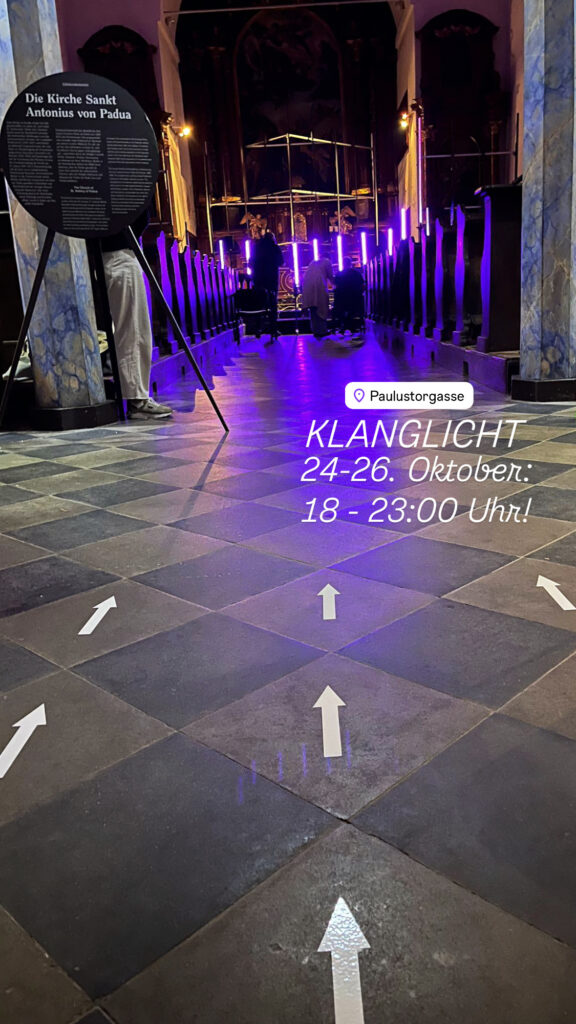
For three magical nights, from October 24 to 26, 2024, Klanglicht transformed Graz into a city of light, sound, and dreams. This year’s festival theme embraced the concept of dreams—those mysterious journeys of the mind that take us to hidden desires, profound longings, and fleeting utopias, both day and night. Through 18 unique art installations, renowned artists from Austria and around the world presented interpretations of dreams, each piece inviting visitors to enter their own inner landscapes.

Klanglicht 2024’s artworks ranged from the poetic and subtle to the surreal and powerful, weaving a tapestry of light and sound that filled the streets, courtyards, and buildings of Graz. From the Joanneum Quarter, up to the Schlossberg, along Herrengasse, and within venues like Schauspielhaus Graz, Next Liberty, and the Graz Opera House, the city itself became a dreamscape. For those three nights, Klanglicht invited the audience to dive into a dialogue with art and their own imaginations—a reminder to keep dreaming, if only for a moment.

As a communication designer, I had the unique opportunity to contribute to this year’s Klanglicht experience. Alongside three other designers, I was part of the design team that created the wayfinding system for one of Klanglicht’s most atmospheric venues: the Antonius Church. Our work included posters, postcards, and directional signs that helped guide visitors through the space, adding a layer of clarity to their dreamlike experience. It was incredible to see how these design elements played a role in shaping people’s journey through the installations, allowing them to focus on the art while feeling oriented and welcomed.

Since its founding in 2015, Klanglicht, organized by Bühnen Graz, has brought the magic of light and sound out of the theater and into public spaces. This year’s edition continued that tradition, blending elements of joy, critique, allure, and abstraction, offering a kaleidoscope of emotions and ideas. For me, being involved in the design process added a whole new dimension to experiencing the festival. It was fulfilling to see our work as part of this stunning event and to witness the impact of art on people as they journeyed through Klanglicht’s dreamworld.

If you missed it this year, I can only recommend marking your calendar for next October. Klanglicht 2024 was truly unforgettable—a festival that encourages us all to keep dreaming, both in and beyond the light and sound of Graz.

#1 Nacht der Museen

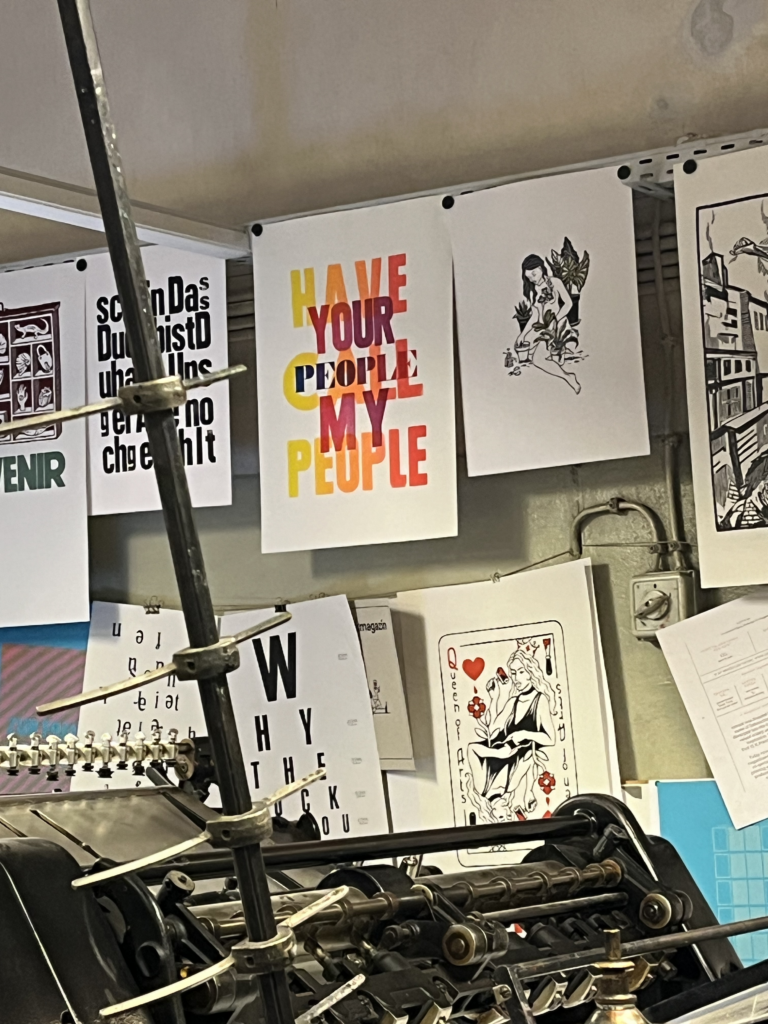
On October 5, 2024, it was that time again: the „ORF Long Night of Museums“ drew culture enthusiasts and night owls alike into museums and cultural institutions all over Austria. From 6 p.m. to midnight, they opened their doors, offering a diverse program. This year, my tour led me to the print workshop Druckzeug, a true highlight for anyone who appreciates the art of printing.

The atmosphere at Druckzeug was unique. From the moment I stepped into the workshop, I felt the charm of the historic printing machines and the passion of the team for the age-old technique of letterpress. As part of the event, I attended a fascinating lecture on the history and artistry of letterpress, gaining deeper insights into this traditional craft. It was truly impressive to see just how much precision and skill go into this technique—a striking contrast to the digital world that surrounds us today.

The highlight of the evening was watching the master printers at work. With a blend of routine and dedication, they demonstrated the process: loading the paper into the machine, adjusting the printing plates, mixing the inks, until a beautifully crafted print emerged. It felt like watching a piece of history come to life. After the demonstration, I couldn’t resist purchasing a beautiful print as a souvenir of this special evening.

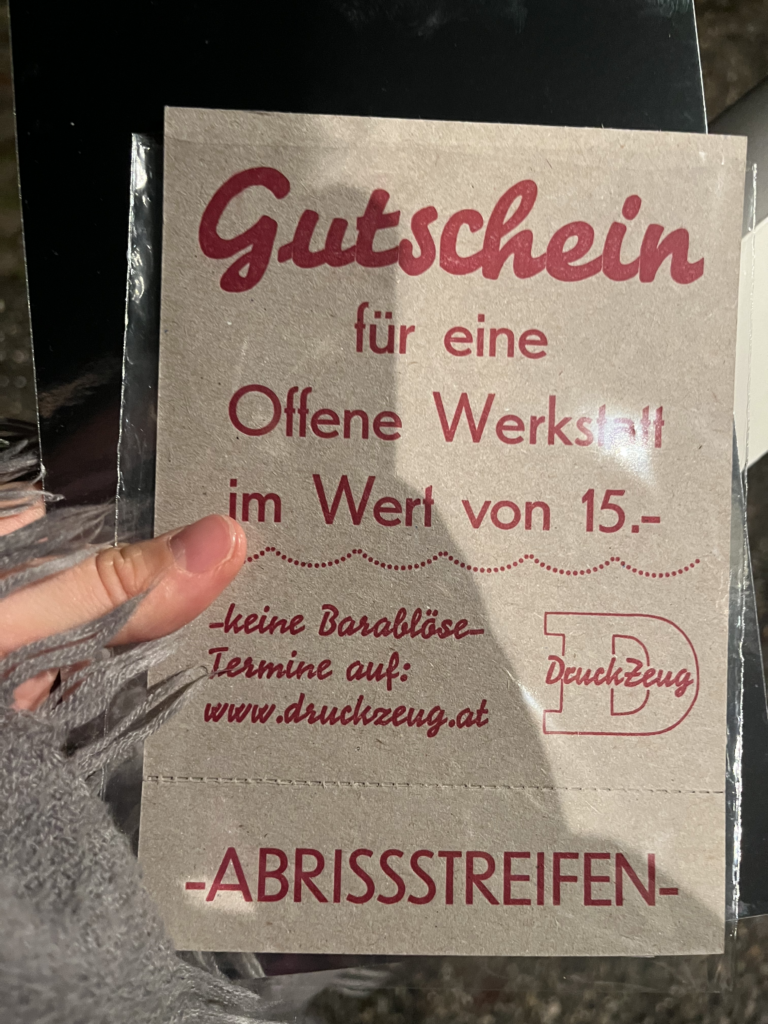
The night held one more surprise: a raffle with various prizes. To my amazement, I actually won a voucher for the next open workshop at Druckzeug! I’m already looking forward to visiting again and maybe even trying my hand at printing myself.

The „Long Night of Museums“ was an unforgettable experience in many ways. The chance to wander through different cultural institutions at night, the variety of programs, and the unique atmosphere made it a truly memorable evening. For anyone who loves art and culture and appreciates special glimpses like this, don’t miss this event next year!

Until next time at the „Long Night of Museums“—I’ll definitely be back!

23 | IMPULSE #2 – Clothing Swap

I’ve already attended a few clothing swaps so far, and every time I go, I’m reminded why they’re a great way to refresh my wardrobe sustainably. Today’s swap at Forum Stadtpark in Graz was no exception.
For anyone who hasn’t been to a swap before, it’s a bit like treasure hunting. You bring clothes you’re ready to part with, and in return, you can take something „new-to-you“ home, all without spending a cent. It’s a refreshing change from the shopping experience we’re used to, combining sustainability, creativity, and a good dose of community spirit.
This swap had all the usual excitement: people sorting through racks, helping friends to find pieces, and sharing stories about the items they were parting with. It’s a way to consume less, reduce waste, and still have fun with style.
Events like these show that, beyond the ecological benefits, clothing swaps are also about building community around a shared love of sustainable living and oftentimes there are even some foods and drinks provided.

One reason I keep coming back to these swaps is how effortlessly they support sustainable fashion. It shows that swaps are the best answer to the problem of fast fashion. By choosing to swap, you’re extending the life of clothes and reducing the need to produce new items.
It’s so easy to forget that every shirt, skirt, and pair of jeans has a footprint, from water consumption to emissions.
Even small acts like these can make a difference, especially when it means we’re keeping clothes in circulation and reducing the constant demand for “new.”
Swaps make sustainable fashion accessible and fun. They’re usually free, which removes the cost barrier of eco-friendly fashion for a lot of people.
Even though sometimes, making sustainable fashion choices can feel like an uphill battle, especially when fast fashion dominates, experiences like clothing swaps show that sustainable choices don’t have to be restrictive or expensive. If anything, they expand our options and offer a fresh take on fashion. In a world where fast fashion dictates what’s in style every season, swaps offer a refreshing mix of options from every trend, style, and decade. I left a lot of swaps with unique pieces that I never would have found in a fast fashion store.

One of my main focuses for my master’s thesis is finding ways to gamify sustainable choices, especially through everyday actions like clothing swaps. They are a natural fit for this idea because they’re low-effort but high-impact. In my project, I imagine an app that rewards users for sustainable actions like attending a swap or donating unused items.
This app would go beyond typical reward systems by incorporating points, badges, and other incentives each time someone makes an eco-conscious choice, such as going to a swap. Imagine you attend a clothing swap, and afterward, you get points or achievements added to your profile. These could eventually translate to tangible rewards or even unlock perks in local eco-friendly stores. For instance, 50 points might earn you a discount at a sustainable boutique, or you might receive invites to exclusive events or workshops on sustainable fashion.
One feature I think could be especially helpful is a map that shows upcoming swaps, thrift stores, and sustainable events nearby, so people could plan their wardrobe refreshes and eco-conscious shopping trips in advance. These points could also motivate people to start swapping regularly or even organize swaps in their communities.

Aside from in-person swaps, other platforms make it easier than ever to shop sustainably. One of my favorite online options is Vinted, where you can buy and sell secondhand clothes for affordable prices. Vinted’s marketplace is filled with a huge range of styles and brands, often available for a fraction of the retail price. Apps like Vinted are a great supplement to clothing swaps because they make it easy to extend the life of your clothes.

There’s also the option to browse through local thrift stores, which offers a similar thrill to attending a swap – you never know what you’ll find, and each piece feels more personal.
In Graz there are for example the Carla-Shops or Humana-Stores, but from time to time there are also very big Vino Kilo Sales, where you pay per kg clothes you want to take home, the next one in Graz will take place on 16th and 17th of November.

Stores and platforms like these also support sustainable fashion habits, and I’d love to include options like Vinted in my thesis project as another way to earn points for sustainable choices.

Events like today’s swap reinforce my belief that sustainable choices can be fun, accessible, and impactful. While fast fashion continues to dominate, small actions like choosing swaps can lead to bigger change. By integrating swaps into my project, I hope to make sustainable fashion more visible and encourage more people to make eco-conscious choices. And as these choices will become rewarding, there might be more people opting for sustainable options simply because it feels good, both personally and planet-wise.

Next Vino Kilo Sale in Graz: https://www.eventbrite.at/e/bethrifty-vintage-kilo-sale-graz-16-17-november-tickets-1036671060047?aff=ebdssbdestsearch&keep_tld=1
Vinted: https://www.vinted.at/
Carla Stores: https://www.caritas-steiermark.at/carla?gad_source=1&gclid=Cj0KCQjwm5e5BhCWARIsANwm06hjRVQ9Nka6YkVOj_7Eoph2YkXZ0amtt9Qu4PzqMmZwos7zzKGAS6EaAoInEALw_wcB

„Gamification in Marketing: Insights on Current and Future Research Directions Based on a Bibliometric and Theories, Contexts, Characteristics and Methodologies Analysis.“


by Patrícia Marques Santos, Joana Matos Dias, and Cristela Maia Bairrada. published in 2024 in the journal Heliyon by the Faculty of Economics at the University of Coimbra, Portugals or critical evaluation based on specific criteria.

Critical Evaluation of the Master’s Thesis

1. Quality of Design

  • Evaluation: The design is strong, with a focus on comprehensive bibliometric analysis and the TCCM (Theories, Contexts, Characteristics, and Methodologies) framework. This approach effectively categorizes and synthesizes existing literature.
  • Strength: The hybrid review approach offers a well-organized view of gamification research in marketing, especially in terms of identifying research clusters and future directions.
  • Weakness: The methodology could benefit from further exploration of alternative analytical frameworks beyond TCCM for a more diverse perspective.

2. Degree of Innovation

  • Evaluation: This thesis is innovative in its synthesis of gamification literature specific to marketing using bibliometric and TCCM analysis, which has not been widely explored before.
  • Strength: The emphasis on future research recommendations is particularly novel, setting a foundation for emerging areas in gamification.
  • Weakness: The study primarily focuses on well-researched gamification elements and does not explore less common aspects of gamification, such as VR/AR or AI applications.

3. Independence

  • Evaluation: The work shows a high level of independence, as it extensively gathers and categorizes literature without reliance on pre-existing summaries.
  • Strength: The extensive use of original data from Scopus and the detailed analysis indicate a thorough, self-directed effort.
  • Weakness: The thesis could potentially over-rely on keyword-based Scopus data, which might introduce some selection bias in the included research.

4. Organization and Structure

  • Evaluation: The thesis is logically structured, moving smoothly from background to methodology, analysis, and discussion.
  • Strength: Clear division into bibliometric analysis, TCCM framework, and conclusions makes the complex information accessible.
  • Weakness: Some sections, especially the conclusions, could better integrate insights from the bibliometric and TCCM analyses for stronger cohesion.

5. Degree of Communication

  • Evaluation: The communication is professional, with well-defined terms and clear language.
  • Strength: Technical jargon is well-explained, making the thesis accessible even to readers unfamiliar with gamification in marketing.
  • Weakness: Some parts of the analysis could benefit from simpler language to improve clarity further, especially in technical sections.

6. Scope of Work

  • Evaluation: The scope is comprehensive, covering a broad range of gamification applications and identifying research gaps.
  • Strength: The use of 114 articles from Scopus gives a broad overview of gamification in marketing, supporting a thorough exploration of the field.
  • Weakness: The reliance on only journal articles excludes valuable insights from books and industry reports, which could enrich the scope.

7. Orthography, Care, and Accuracy

  • Evaluation: The thesis is well-edited with minimal errors in grammar or spelling.
  • Strength: The thesis adheres to high standards of academic language, and formatting errors are minimal.
  • Weakness: Occasional complex terminology may affect readability for non-specialist readers.

8. Literature

  • Evaluation: The literature review is exhaustive and up-to-date, including foundational and recent studies.
  • Strength: It includes a diverse array of sources, with a balanced representation of foundational theories like self-determination theory and current research.
  • Weakness: The literature review could benefit from including more critiques of gamification, examining both its benefits and limitations in marketing.

Summary and Grading

Suggested Grade: 2 (Very Good)

This thesis is thorough, well-organized, and highly original in its approach to categorizing and analyzing gamification research in marketing. While some areas, such as the conclusion integration and broader literature scope, could be strengthened, the overall quality is very high.