03_Different framerates and its effect on the viewer

What is this Blogpost about?

In the captivating realm of cinema, where storytelling unfolds frame by frame, the choice of frame rate is a subtle yet powerful tool that filmmakers use to shape our viewing experience. From the smooth elegance of 24 frames per second (fps) to the hyper-realistic immersion of high frame rates, the speed at which images flicker on the screen can influence our emotional engagement, perception of time, and even our physiological responses.  In this blog article, I want to look at these influences and find out what tricks the big filmmakers have in their toolbox, how they influence the viewer’s perception, where these practices come from and what the latest trends are in this field. 

About the history of framerates…

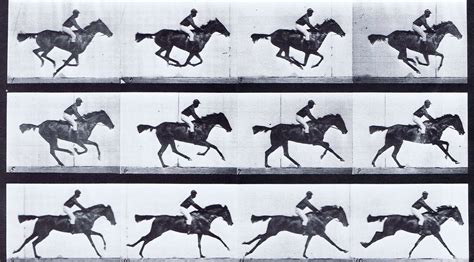
Since the dawn of filmmaking, the heartbeat of the industry has been the rhythm of frame rates, shaping the way we perceive motion on the silver screen. Let’s take a journey through time, exploring the fascinating evolution of frame rates from the earliest days of silent films to the high-speed wonders of the present. 

Silent Era (Late 19th Century – 1920s): The Birth of Cinema 

In the infancy of cinema, frame rates were a variable factor, often determined by the limitations of hand-cranked cameras. Early silent films typically operated at an average of 16 to 18 frames per second (fps). The fluctuating speeds contributed to the charmingly erratic motion characteristic of this era. 

Standardization (1920s – 1930s): The Rise of 24 fps 

With the advent of synchronized sound in the late 1920s, the film industry sought a standardized frame rate for a seamless audio-visual experience. The iconic 24 frames per second (fps) emerged as the industry standard during this period, providing a balance between visual fluidity and synchronization with sound. 

Slow Motion and Experimentation (1930s – 1950s): Playing with Time 

Filmmakers began experimenting with slow-motion effects during this era, manipulating frame rates to create dramatic visuals. Directors like Akira Kurosawa and Orson Welles employed variable frame rates to enhance storytelling, marking a shift towards more intentional use of frame rate as a creative tool. 

New Wave and High-Speed Cinematography (1960s – 1980s): Pushing Boundaries 

As filmmakers embraced artistic freedom, the 1960s and 1970s witnessed experimentation with higher frame rates. Innovations like „Showscan“ attempted frame rates as high as 60 fps, pushing the boundaries of traditional filmmaking. However, these experiments were largely confined to specialized formats and did not become mainstream. 

Digital Revolution (1990s – 2000s): Frame Rates in the Digital Age 

The transition from celluloid to digital cinematography brought new possibilities. Digital cameras allowed for flexibility in choosing frame rates, and filmmakers began exploring unconventional speeds. The renowned director Peter Jackson notably used a variable frame rate in „The Hobbit“ trilogy, shooting at 48 fps to achieve hyper-realistic visuals. 

High-Speed Filmmaking (2010s – Present): A Need for Speed 

In recent years, advancements in camera technology have opened the door to high-speed filmmaking. Directors like Ang Lee, with „Billy Lynn’s Long Halftime Walk“ and „Gemini Man,“ have embraced frame rates as high as 120 fps to deliver an unprecedented level of realism and immersive storytelling. 

From the stuttering frames of the silent era to the high-speed wonders of contemporary cinema, the history of frame rates is a testament to the ever-evolving language of filmmaking. As technology continues to advance, who knows what cinematic experiences the future holds with even faster frame rates? The journey of frames in film remains an exciting tale of innovation, creativity, and the constant pursuit of visual storytelling excellence. (cf. Cook& Sklar, 2023)

About the influence of framerates on the viewer…

The Emotional Symphony of Frame Rates:  

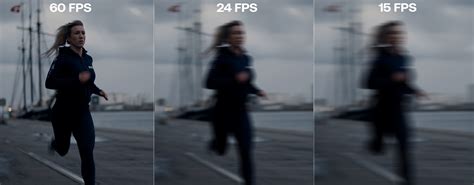
Frame rates act as the conductor of a cinematic orchestra, orchestrating emotions with precision. A lower frame rate, such as 24 fps, often evokes a classic, cinematic feel. It allows for a certain level of motion blur that contributes to a dreamy, nostalgic ambiance. On the contrary, higher frame rates, like 60 fps or even 120 fps, can deliver an unnervingly lifelike and immersive experience, impacting the emotional resonance of the narrative.  

Enhancing Storytelling Dynamics: 

 Frame rates are not mere technicalities; they are narrative tools wielded by filmmakers to tell their stories in unique ways. The choice of frame rate can alter the perception of time, accentuate tension, or create a dreamlike atmosphere. Directors strategically experiment with frame rates to synchronize the viewer’s emotional experience with the unfolding plot, heightening the overall impact of the story. 

Heightening Realism and Intimacy: 

Frame rates play a pivotal role in shaping the viewer’s perception of reality within the cinematic realm. A higher frame rate, particularly in the range of 60 fps and beyond, enhances realism by reducing motion blur and providing unprecedented clarity. This heightened visual fidelity can create an intimate and immersive experience, allowing viewers to feel intricately connected to the narrative unfolding on the screen. Whether it’s the subtleties of facial expressions or the fluidity of action sequences, a higher frame rate can bridge the gap between the fictional world and the viewer, intensifying the emotional resonance of the storytelling. 

Manipulating Pacing and Rhythm: 

The rhythmic cadence of frame rates profoundly influences the pacing and rhythm of a film. A director’s choice to increase or decrease the frame rate can be a deliberate narrative device, impacting the tempo of scenes and overall storytelling dynamics. A slower frame rate, such as in classic films shot at 24 fps, can instill a deliberate and contemplative pace, allowing viewers to savor each moment. Conversely, a higher frame rate can inject energy and urgency, propelling the narrative forward with a sense of immediacy. This manipulation of pacing through frame rates becomes a subtle yet powerful means for filmmakers to guide the emotional journey of the audience, keeping them engaged and invested in the unfolding narrative. (cf. Bordwell&Thompson, 2008)
What´s next?

  • More research on the different framerates and their effects.
  • Produce content in different framerates and check the effect on a test group.
  • Dig deeper in the field of high speed framerates.
  • Connect the two topics of aspect ratios and framerates.

Bibliography:

Cook, D. A. and Sklar, . R., (2023, September 18). history of film. Encyclopedia Britannica. https://www.britannica.com/art/history-of-the-motion-picture

Brown, B. (2021). Cinematography: Theory and Practice: For Cinematographers and Directors (4th ed.). Routledge. https://doi.org/10.4324/9780429353239

Bordwell, D. & Thompson, K. (2008). Film art: An Introduction. McGraw-Hill Humanities, Social Sciences & World Languages. https://archive.org/details/davidbordwellkristenthompsonfilmartanintroductioneighthed.
Themensuche

Pareidolie – Wie können Wahrnehmungsphänomene in Kunst und Design genutzt werden?

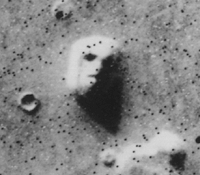
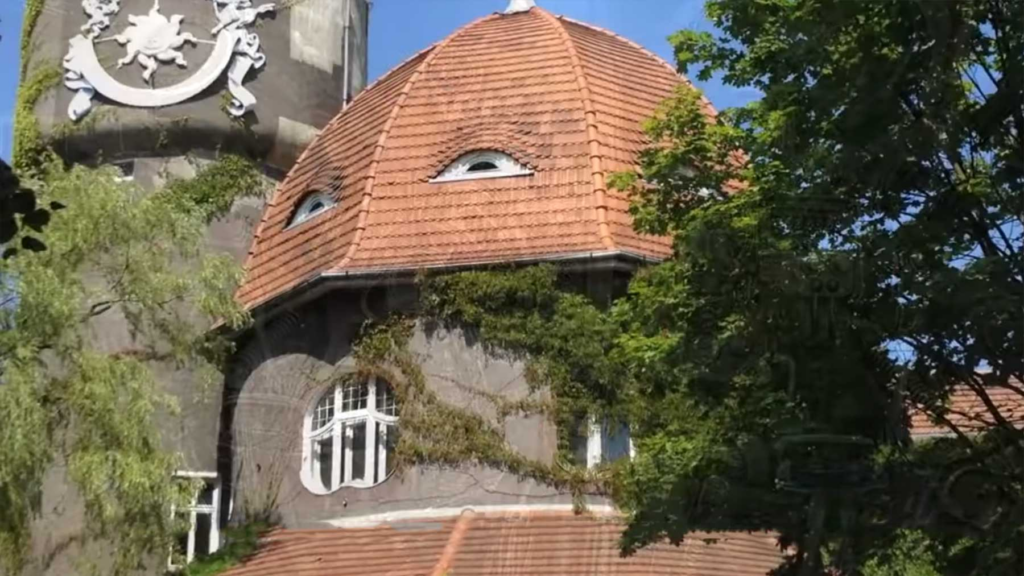
„Pareidolie beschreibt das Phänomen, in Dingen und Mustern vermeintlich vertraute Dinge, wie Gesichter zu erkennen.“[1]

Pareidolien unterscheiden sich von Apophänien und Halluzinationen – sie können willentlich gesteuert werden und verschwinden nicht, wenn man das erkannte Objekt über längere Zeit beobachtet.
Zumeist können Pareidolien, die beispielsweise bei Wolkenformen gesehen werden, von mehreren Menschen wahrgenommen werden.[2]

Mich faszinieren die evolutionär bedingten Fähigkeiten des Gehirns. In meiner Freizeit habe ich angefangen, die zufällig erkannten Gesichter in Alltagsgegenständen, wie Fenstern, Griffen, Türen oder ganzen Häusern zu sammeln. Oft entstehen beim ersten Erkennen Ideen für Charaktere – ihr Aussehen, ihre Persönlichkeit, ihre Geschichte.
Eine Frage bleibt für mich: Wenn mehrere Menschen dasselbe Gesicht in einem Gegenstand erkennen, vermuten sie auch eine ähnliche Persönlichkeit dahinter?
In Form von Umfragen kann getestet werden, ob die Pareidolie von mehreren Menschen erkannt wird und den Charakteren Eigenschaften zugewiesen werden – Anhand davon wird in einer Animation eine Geschichte erzählt.


[1] https://de.wikipedia.org/wiki/Pareidolie

[2] https://de.wikipedia.org/wiki/Pareidolie

Literatur

Hehl, Walter: Die Kreativität des Menschen und der Zufall. In: Der Zufall der Physik, Informatik und Philosophie. Die blaue Stunde der Informatik. Wiesbaden: Springer Vieweg 2021
https://link.springer.com/chapter/10.1007/978-3-658-32063-8_7#Sec4

Ahlenstiel, Heinz/Kaufmann, Reinhard: Über pathologische Illusionen. Archiv für Psychiatrie und Zeitschrift f. d. ges. Neurologie 202, 592–605 (1961).
https://link.springer.com/article/10.1007/BF00342850

Schneider, Carl: Über Sinnentrug. Z. f. d. g. Neur. u. Psych. 131, 719–813 (1931)
https://link.springer.com/article/10.1007/BF02865998

Lehmann, Konrad: Das schöpferische Gehirn. Auf der Suche nach der Kreativität – eine Fahndung in sieben Tagen. Heidelberg: Springer 2018
https://link.springer.com/book/10.1007/978-3-662-54662-8

Hofmann, Ludwig: Neuro Design. Was Design und Marketing von Neorowissenschaft und Psychologie lernen können. Paderborn: Brill | Fink 2019
https://www.thalia.at/shop/home/artikeldetails/A1053120155?ProvID=11010474&gclid=EAIaIQobChMIgvvusebjgQMVWuZ3Ch0GxgUiEAQYAiABEgKfKPD_BwE

Fortsetzung des Bachelorthemas (Gehörlose Kinder, Hörende Eltern: Die visuelle Gestaltung von Gebärden in Form eines interaktiven Kinderbuches):
Gebärdenabfolge – Fokus Animation

Im Rahmen meiner Bachelorarbeit habe ich ein interaktives Kinderbuch für gehörlose Kinder gestaltet. Interaktiv meint in diesem Fall, dass die im Buch dargestellten Gebärden als Animation konzipiert wurden, die mit einer App angesehen werden können.
Ein Großteil des gestalterischen Fokus lag auf der Illustration sowie auf Typographie. Für den Prototyp wurde eine der abgebildeten Gebärden zweidimensional in After Effects animiert.

Das Projekt hat Potenzial weiter bearbeitet zu werden. Der erarbeitete Prototyp kann verbessert werden, und der Animationsteil erweitert. Derzeit existiert ein Gefälle beim Verhältnis Text und Gebärden (Animationen). Auch die technische Umsetzung der Animation hat Verbesserungsbedarf. Diesbezüglich gibt es verschiedene Möglichkeiten. Eine davon wäre 2D Facial Motion Tracking. Eine weitere Möglichkeit wäre das video-basierte Facetracking. Da die Mimik in der Gebärdensprache eine große Rolle spielt, käme diesem Teil der Animation eine besondere Bedeutung zu. Derzeit bin ich auf der Suche nach Kooperationspartnern aus der Gebärdencommunity und nach Förderungen für das Projekt.

Interaktiv – Eigene Abbildung & Layout des Buches . Eigene Abbildung

Literatur

Bühler, Peter/Schlaich, Patrick/Sinner, Dominik: Animation. Grundlagen – 2D-Animation – 3D-Animation. In: Bibliothek der Mediengestaltung. Berlin: Springer 2017
https://www.thalia.at/shop/home/artikeldetails/A1045336354?ProvID=11010474&gclid=EAIaIQobChMI-LerpZf2gQMVJDsGAB2tVgKoEAQYASABEgLDMvD_BwE

Bai, Ruibin u.a: Facial Animation Based on 2D Shape Regression. In: Chen, Enqing u.a. (Hrsg.): Advances in Multimedia Information Processing – PCM 2016. PCM 2016. [(Lecture Notes in Computer Science)] Cham: Springer 2016. S. 33–42
https://link.springer.com/chapter/10.1007/978-3-319-48896-7_4

Kim, Jaehwan/Jeong, Il-Kwon: Realistic 2D Facial Animation from One Image. In: Anacleto, Junia Coutinho u.a: Entertainment Computing – ICEC 2011. ICEC 2011. Lecture Notes in Computer Science, vol 6972. Berlin/Heidelberg: Springer 2011. S. 258–263
https://link.springer.com/chapter/10.1007/978-3-642-24500-8_27

Lee, Chan-Su u.A: Facial Animation and Analysis Using 2D+3D Facial Motion Tracking. In: Kim, Tai-hoon u.a. (Hrsg.): Multimedia, Computer Graphics and Broadcasting. Berlin/Heidelberg: Springer 2011. S. 272–279
https://link.springer.com/chapter/10.1007/978-3-642-27204-2_33

Luo, Changwei: Video Based Face Tracking and Animation. In: Zhang, Yu-Jin (Hrsg.): Image and Graphics. Springer Cham 2019 [(Lecture Notes in Computer Science.)], S. 522–533
https://link.springer.com/chapter/10.1007/978-3-319-21969-1_47

Character Design in Erklärvideos
– Wie kann Narration den Lerneffekt verbessern?

Der Nutzen von Erklärvideos ist mittlerweile bekannt. Nicht nur können komplexe Themen schnell erklärt werden oder eine höhere Verweildauer auf der Website. Das Image eines Unternehmens kann sich vollkommen verändern.[1]

Meine Frage ist: Gibt es einen Unterschied in Bezug auf den Lerneffekt der Zuschauer, zwischen optisch und narrativ wenig ausgearbeiteten Videos und einem mit Protagonist:in und Handlung?
Dieser Frage würde im wissenschaftlichen Teil der Arbeit nachgegangen werden. Der praktische Teil der Arbeit umfasst das Erstellen zweier Erklärvideos, die sich inhaltlich gleichen – der Unterschied ist eine ausgearbeitete Handlung sowie ein Character, in einem Video.


[1] https://www.netzfilm.de/die-vorteile-von-erklaervideos/

Literatur

Bishop, Randy u.A: Fundamentals of Character Design: How to Create Engaging Characters for Illustration, Animation & Visual Development. o.O: Ingram Publishers 2020
https://www.thalia.de/shop/home/artikeldetails/A1057338487

Di Furia, Marco. u.A: Storytelling Practice in Sectors of Education, Psychology, Communication, Marketing: A Narrative Review. In: Limone, Pierpaolo/Di Fuccio, Raffaele (Hrsg.): Psychology, Learning, Technology. Foggia: Springer Cham 2022 [(Communications in Computer and Information Science, vol 1606)], S. 41-62
https://link.springer.com/chapter/10.1007/978-3-031-15845-2_3

Anders, Petra u.A: Erklärvideo. In: Einführung in die Filmdidaktik. Stuttgart: J. B. Metzler, S. 255-268
https://link-1springer-1com-1xaftlwkz01ec.perm.fh-joanneum.at/chapter/10.1007/978-3-476-04765-6_18

Mailinger, Domenico: Schulbuch vs. Erklärvideo im Unterricht. Ist das klassische Schulbuch noch zeitgemäß? Ein geschichtsdidaktischer Vergleich an einem konkreten Beispiel. München: GRIN Verlag 2022
https://www.grin.com/document/1368127?lang=de

Zander, Steffi u.A: Erklärvideos als Format des E-Learnings. In: Niegemann, Helmut/Weinberger, Armin (Hrsg.): Lernen mit Bildungstechnologien. Berlin/Heidelberg: 2018, S. 1-12
https://link.springer.com/referenceworkentry/10.1007/978-3-662-54373-3_21-1

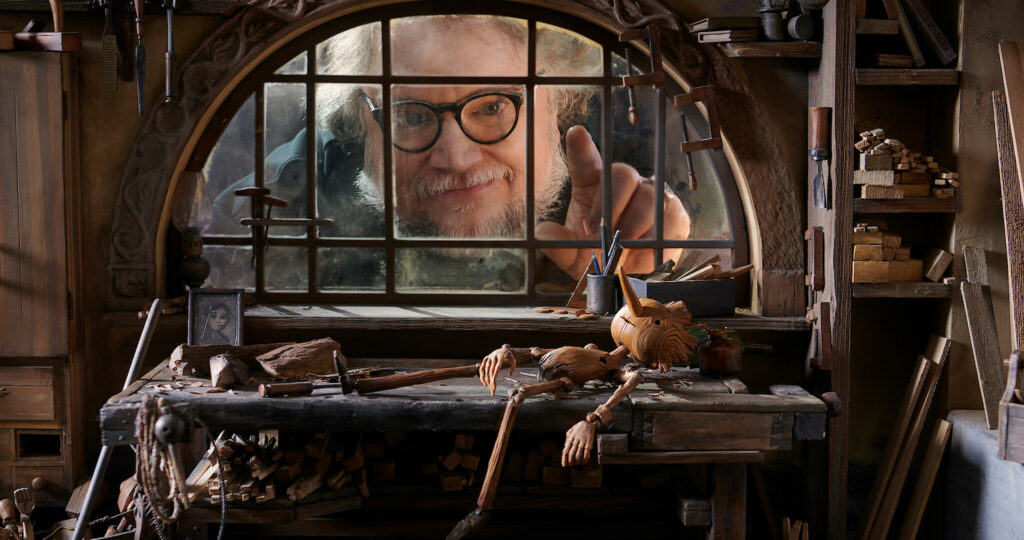
Pinocchio – Handcrafted Cinema (NETFLIX)

Bild: https://www.netflix.com/tudum/articles/pinocchio-stop-motion-behind-the-scenes

Guillermo del Toro ist Autor, Regisseur und Produzent der neuen Verfilmung von Pinocchio. Er machte den Klassiker Pinocchio zu einer Stop-Motion-Animation.

Den Filmemacher Guillermo del Toro fasziniert die Kunstform Stop-Motion aufgrund der Beziehung zwischen der Puppe und den Animator*innen. Er versteht es als höchste Kunstform, mit Stop-Motion Realitäten zu erschaffen. Es dauerte 15 Jahre diesen Animationsfilm zu erschaffen. Einige der besten Animator*innen der Welt arbeiteten an diesem Stop-Motion-Film.

Bei einigen Puppen konnte das Gesicht mechanisch bewegt werden, während bei anderen die Gesichtszüge zur Gänze austauschbar wurden. Ein Beispiel für ein austauschbares Gesicht ist die Puppe von Pinocchio selbst. Für jeden Ausdruck und jede Mundform wurde ein Transplantat verwendet. Die Austauschbarkeit unterstreicht seine Identität als Holzjunge. Er verhält sich so, als wäre er wirklich aus Holz. Die Größe seines Gesichts bleibt immer gleich und die Holzmaserung ist statisch. Die Puppe von Pinocchio ist zur Gänze 3D gedruckt. Geppetto funktionierte gut als mechanische Puppe. Seine charakteristischen Eigenschaften, wie die dicken Augenbrauen und sein voller Bart, eignen sich gut für mechanische Gesichter, da sie ein breites Spektrum an Variation in der Mimik anbieten. Die Mimik von glatteren Gesichtern zu ändern, ist vergleichsweise schwieriger. 1

Wirklich sehenswerte 36 Minuten! 🙂

1 https://www.netflix.com/at/title/81639893?s=i&trkid=14170286&vlang=de&clip=81663504

Themenfindung

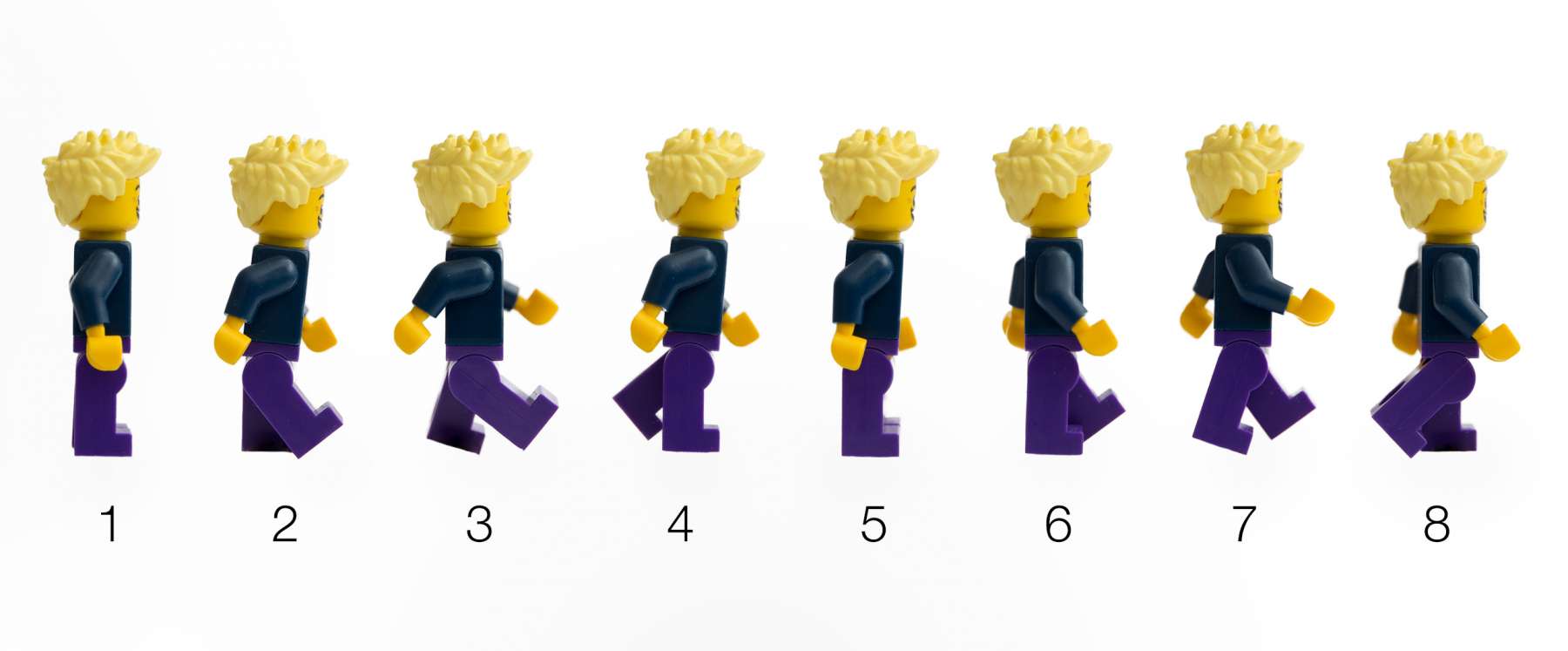
Thema 1: Stop Motion

Bild: https://www.stopmotiontutorials.com/experten-anleitungen/die-gehbewegung-animieren/

Definition: Stop-Motion reiht Einzelbilder aneinander und erweckt dadurch statische Objekte und Bilder zum Leben. 1

Die Techniken: Es gibt unterschiedliche Techniken wie Claymation (Knetanimation), Pixilation (mit menschlichen Darsteller*innen), Cutout-Animation (ausgeschnittene Figuren), Objekt-Animation, Puppenanimation und Silhouetten-Animation. 1

Die Geschichte: Erste Anwendungen dieser Filmtechnik sind auf das Ende des 19. Jahrhunderts zurückzuführen. Georges Méliès zählt zu den Pionieren dieser Zeit, die sich mit der Stopptrick-Technik beschäftigten. Zeichentrickfilme Anfang des 20. Jahrhunderts basierten auf dieser Filmtechnik. 1

Künstler*innen und Regisseur*innen: In meinen Blogeinträgen könnte ich über Stop-Motion-Filme und deren Schöpfer*innen schreiben (Otmar Gutmann: Pingu; Guillermo Del Toros: Pinocchio; Daniel Ojari und Michael Please: Rote Robin u.a.).

1 https://www.adobe.com/de/creativecloud/animation/discover/stop-motion-animation.html

Thema 2: Vergleich Color Grading diverser Filmgenres (Realfilm)

Bild: https://www.adobe.com/de/creativecloud/video/discover/color-grading.html

Color Grading hat einen großen Einfluss auf die Wirkung von Filmen. Meine Blogbeträge könnten zu dieser Annahme forschen.

Filmgenres: Es könnte darum gehen die einzelnen Genres klar zu definieren und voneinander abzugrenzen.  Die Genres könnten analysiert werden in Bezug auf das Color Grading. Als Genres könnte auf Science-Fiction, Drama, Horror und Dokumentarfilme eingegangen werden.

Software: In den Blogbeiträgen könnte auf die gängige Software DaVinci Resolve eigegangen werden. Ihre Funktionen und Möglichkeiten könnten in den Beträgen vorgestellt werden.

Farbmanagement: Hierbei geht es um die Vorteile der Verwendung von Color Charts. Auch die Kalibrierung von Monitoren wäre interessant in den Blogbeiträgen zu behandelt.

Informiere dich hier über DaVinci Resolve: https://www.blackmagicdesign.com/at/products/davinciresolve/color

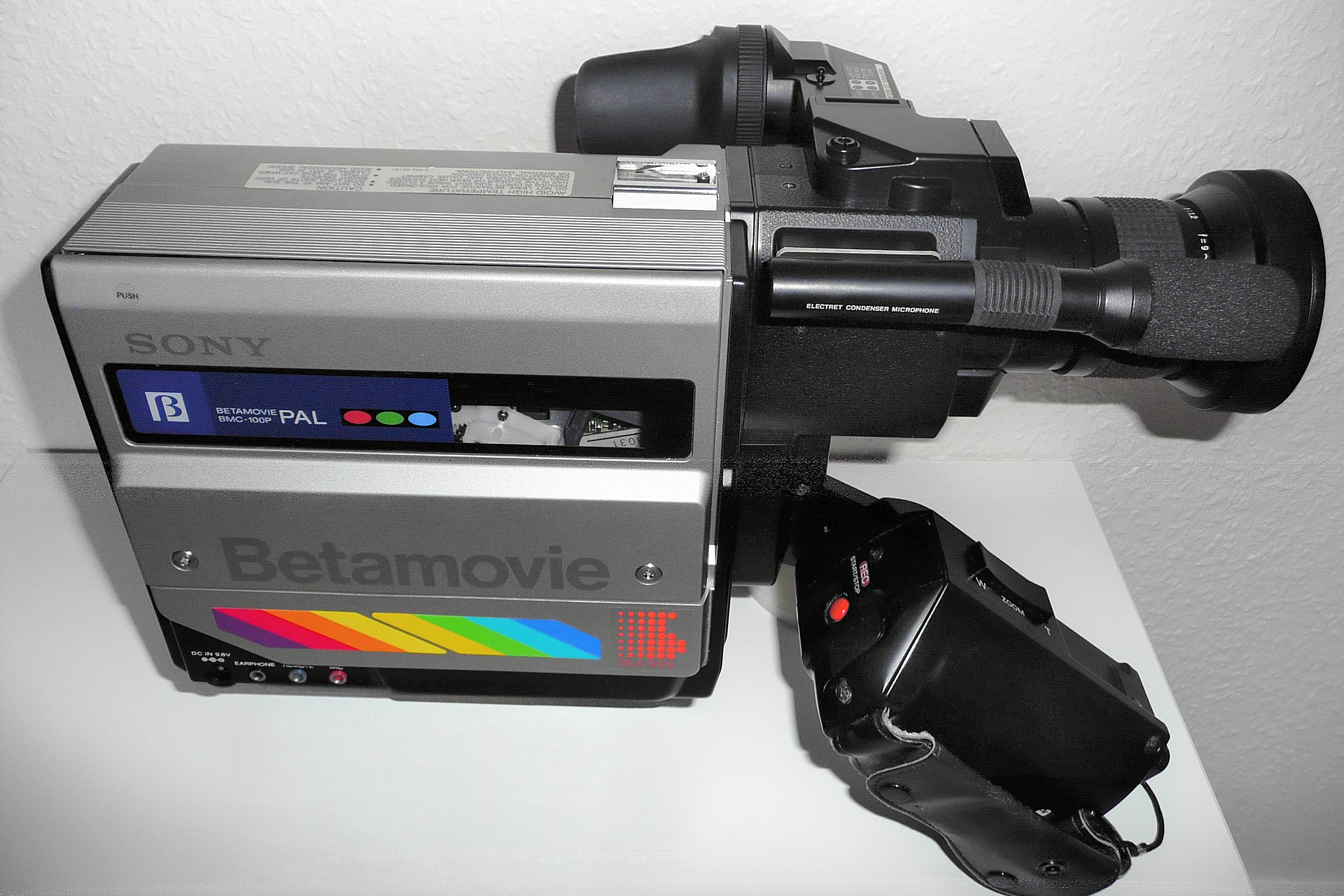
Thema 3: Private Dokumentarfilme – Demokratisierung der Filmproduktion

Bild: https://de.wikipedia.org/wiki/Camcorder#/media/Datei:Sony_Betamovie_BMC-100P_(retouched_filtered).jpg

Die Entwicklung: Vor der Einführung von günstigen Camcordern, war es nur professionellen Filmproduktionen möglich Events wie Hochzeiten festzuhalten. Filmschaffende Menschen waren in einer exklusiven Position und hatten neben teurer Ausrüstung auch ein breites Fachwissen. Die Camcorder öffneten privaten Personen einen neuen Zugang. Viele der Aufnahmen aus dieser Zeit sind in veralteten Formaten steckengeblieben. Damals gab es noch keine Tools zur Bearbeitung und die Weiterverbreitung war nicht so einfach möglich wie heute mit Social Media. 2

Heute: Die Grenze zwischen Amateur- und professionellen Filmproduktionen verschwimmt langsam. Smartphones und Laptops sind auf einem technischen Niveau, welches einige Jahre zuvor nur professionelle Filmkameras und Computer hatten. Jeder hat Zugang zu professionellen Schnittprogrammen, die auch in Hollywood ihre Anwendung finden. Auch die Benutzerfreundlichkeit wird immer besser. 2

Chancen und Risiken: Durch diese Entwicklungen haben wir die Chance Geschichten von Menschen zu hören, die uns ansonsten verborgen geblieben wären. 2

2 https://fortelabs.com/blog/the-dawn-of-personal-documentaries/

Perception of materials within animation

Animation has often been neglected (or at least marginalised) in film theory and history. For example, the authors David Bordwell and Kirstin Thompson categorise in their publication Film Art: An Introduction documentaries, experimental and animated films as alternatives to the fictional, apparently mainstream and live-action film (vgl. Beckman, S.2-12). Another differentiator is animation’s definition as „expressive medium“, which in contrast to live-action film can reach from hyperrealism to experimental. Also the different animation techniques like cell- or flash animation, stop-motion animation, 3D animation and many more add to the animations overall aesthetic. These techniques can be then again separated into different styles. These various styles can be perceived differently. So I had a closer look of how people recognise and analyse materials in different way. This blog entry is based on Matthias C. Hänselmann’s article „Das Gemachte als Bewusst-Gemachtes – Produktive und rezeptive Dimensionen von Materialität und Materialtransparenz im Film“, which was published within „Ästhetik des GemachtenInterdisziplinäre Beiträge zur Animations- und Comicforschung„.

Different ways of Perception

Most of the times we humans perceive man-made products as self-evident and do not question why it is the way it is. But every object communicates. That’s why Matthias C. Hänselmann takes a closer look in his essay „Das Gemachte als Bewusst-Gemachtes – Produktive und rezeptive Dimensionen von Materialität und Materialtransparenz im Film“ on the qualities of the conscious experience. He subdivides the conscious experience into two categories:

  • The production process: It concerns the intention of the produced product. In more detail this aspect focuses on the awareness for the decisions which have been made in order to design the product in question. Intention, purpose, its production and the unique way of its appearance are key figures when analysing a product. In this regard the term man-made is applicable on the intentional manufacturing and also on the manufacturer. Therefore is the man-made product measured by its quality and every decision has a semiotic relevance at the end. Explicitly for animation it means that for the production there has to be a decision made with which technique to accomplish the resulting animation. Furthermore, this exclusive choice of technique has a significant character for the end product, since it makes a difference whether a particular topic is realized in traditional drawing or on the basis of computer generated 3D graphics. Depending on the chosen technique, stylistic peculiarities arise, which influence the overall significance of the film’s communication.
  • The perceptibility of a media product: This approach focuses on the aspect of perceptibility of a certain material quality of a specific product. In this regard, the man-made as consciously made refers to the fact that the material condition of a media product is explicitly defined, experienced and perceptible and therefore particularly noticeable in terms of receptivity. Something is ‘conscious’ in this regard, because it is made noticeable, sensually perceptible. In this dimension, the focus is placed on a certain effect of what is created – in other words: the quality of the media product, which (partly) emphasises its artificiality, objectifies it noticeable within film communication and– at least theoretically – keeps it constantly awake in the consciousness of the recipient.

Especially the second aspect of the perceptibility of a media product has been theoretical discussed by many. The russian formalist Victor Šklovskij examined and compared in his essay „The theory of prose“ specific characteristics between artistic texts and aesthetically inefficient texts. Unlike Hänselmann, Šklovskij was of the opinion that art is method for the experience of a certain product, while the product itself is in regard to art irrelevant. His distinction amounts partly to what structuralist narratology later distinguished with the pair of concepts of discourse and history.

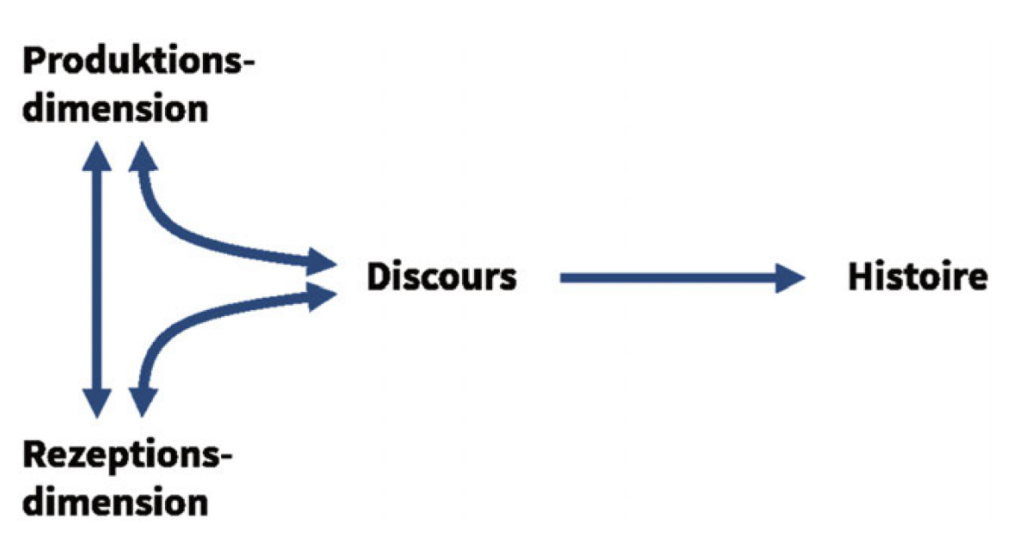
  • Discourse is the (materialistic) surface dimensions of the particular product. For example in regard to film it reaches from each frame, the colourfulness, design techniques and production to the principles of sequencing and montage.
  • History focuses on the chronological sequence of a specific narration. It is more about the storytelling and displayed plot than about how it is achieved. For Šklovskij history is irrelevant.

Hänselmann combines his defined production process and the perceptibility of a media product with the theory of discourse and history. The result is the following diagram. As shown are both aspects important to form a discourse and subsequently a history.

Abb. 01: The link of production process and the perceptibility of a media product with discourse and history according to Matthias C. Hänselmann

Material vision and immersion vision

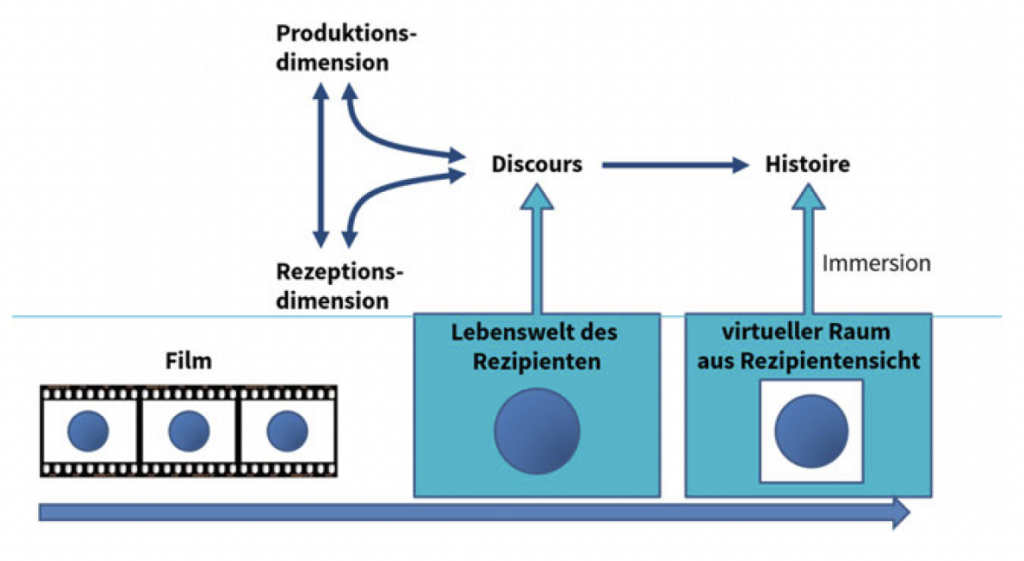
Matthias C. Hänselmann introduces the model of the levels of consciousness of film perception by Anselm Kreuzer to demonstrate his model in regard to film. Kreuzer’s model originally focuses more on film music theory, but is according to Hänselmann also applicable on materials. In this model, Kreuzer distinguishes three levels of consciousness of film-perception, starting from a certain recipient who deals with a film. In doing so, he considers:

  1. the living environment of the recipients
  2. the virtual space conveyed by the film
  3. the depth dimension of consciousness
Abb. 02: Combination of the model of the levels of consciousness of film perception by Anselm Kreuzer and Matthias C. Hänselmann’s model by Matthias C. Hänselmann

When viewers are fully absorbed in the virtual world of the film and captivated by the action depicted as if it were a real, current event, they primarily perceive the film in terms of its illusory history (history aspect of the model). The key characteristic of this type of reception is immersion. Initially associated primarily with the explanatory concepts of virtual reality, the term immersion is now used more broadly in various cultural sciences to describe states in which the recipient gradually merges imaginatively with the perceived work of art. A film achieves an immersive effect when the medium itself, as a means of mediation, becomes invisible to the audience and the specific medium or the material representation of the film is perceived as real. In relation to this aspect of film reception, one can also refer to it as immersive viewing. On the other hand, the more clearly and skillfully it can be concealed that the narrative is conveyed through a medium, the more easily and effectively immersion is achieved.

However, immersion is disrupted or even completely prevented when certain effects arise, revealing that what is been shown is in some way an illusion, a fabrication, mediated, or invented – in other words, „made“. These effects primarily occur at the level of discourse and are particularly noticeable when deliberate disruptions or intentional attention to materiality are built into the film. When such effects occur, they often overwhelm the history aspect and may even bring the audience back to their reality since counter-immersive effects always remind them that the film is merely a constructed material, something that has been „made“, and therefore an element of the real world. Hence, in relation to this aspect of film reception, one can also refer to it as material viewing, since the material qualities and factors of the film are predominantly perceived. But both, immersive viewing and material viewing accompany, complement and interact with each other. That is why the aesthetic component in the narrative process of a film can be used productively, informatively and communicatively.

Illusion of life principle

The illusion of life principle is coined by Disney and describes a concept in which the aesthetic of the animation should be as life-like as possible. Every aspect like the material’s intrinsic value disturbs the immersive experience which results in complete negligence. So the intrinsic value of materials is kept on a minimum. The three key aspects of the illusion of life principle are the following:

  1. a completely smooth, closed, opaque surface that shows no signs of manufacturing or manipulation (usually computer animations with optimal shading, but also classic Cel-animations with acrylic paints)
  2. a stringent, eventful and unbroken narrative with a (often single) central narrative line
  3. the renunciation or the deliberate avoidance of any media-reflective reference to the formal-material composition of the film

From the point of view from the discourse variable, material in this case is solely carrier and does not have any intrinsic value on its own. The main focus lays on the history variable. Hänselmann calls this state: Materialtransparenz.

Like language a viewer learns to read film. If a person is used to watch western animated films, for example, they will probably struggle at first while watching traditional Japanese anime. But as soon as they get used to the Japanese animation and develop a feeling and understanding for it, it turns automatic and will be seen as a given. The material of the representation is neutralised, therefore it descends to the level of the self-evident and is no longer seen as itself (it is transparent). That also indicates that the discourse looses its significance and the main focus is on the history – in brief: Medientransparenz occurs.

To break Materialtransparenz the film/ animation, the film can use tools in the form of self-referential or material-accentuating structures. This can be reached by alienation of the happening immersion or by accentuating the material itself. For example if you use a material which is unconventional or is highly contrasting the narrative and therefore is in the foreground while watching the animation, the material itself communicates and has a higher significance in the perception of the animation.

To conclude this blog entry I have to say, that I got a better theoretical understanding of the perception of material within an animation. For further understanding it would be ideal to use Hänselmann’s theory when it comes to analyse animations – especially it’s usage of material.

Visual Media within exhibitions

The idea to integrate the moving image into our daily environment is not new: Especially since the invention of the moving image. Nowadays you will find moving images in public transport, in museums or in our hands – in other words: everywhere. Also its technology is developing rapidly, so that it feels like something which was new yesterday can be already old today. These swift innovation cycles have an enormous impact on the designing process in every field. In this blog entry I will have a closer look on the moving image and its usage within the field of exhibitions. But beforehand I will discuss shortly some useful parameters which are very much relevant while working with digital visual media and spacial environments.

Some specific parameters shortly explained

Resolution

Every digital image is constructed out of different pixel, which vary in brightness and colour. In order for the human eye to register the 2D-grid arrangement as an image, it has to have a certain density of pixels (The more pixels, better the resolution). Another variable for the resolution is the distance between the viewer and the monitor. When the viewer is too near to monitor, they only will see dancing light points. But, probably the most important variable for the resolution is the capability of the human eye, which of course differs between human to human.

Abb. 01: High resolution
(www.pexels.com/photo/a-close-up-of-apples-on-a-tree-18510514/)
Abb. 02: Low resolution

Circle of Confusion

A useful term used in photography and optics to mention is the circle of confusion (CoC). The term describes the area on the camera sensor or film where a point of light is recorded as a blur instead of a point. In other words, it is the smallest circle that a point can be imaged as, which still appears acceptably sharp to the human eye. This circle of confusion is influenced by various factors, including the lens aperture, focal length, subject distance, and the size of the camera’s sensor or film. Generally, a smaller circle of confusion is considered better as it produces sharper images with more detail. The concept of the circle of confusion is particularly important when considering the depth of field in photography and film. It helps determine the acceptable range of distance in an image that appears sharp, both in front of and behind the focused point. By controlling the size of the circle of confusion, photographers and filmmakers can manipulate the depth of field and achieve desired effects in their still/ moving images. Within viewing experiences in spacial settings, it always depends on the viewer’s distance to the display. In order to get good results for many different occasions, there is a useful rule of thumb: < 1 mm of pixel size per 1 meter viewing distance.

Abb. 03: depth of field: As seen here only the tip of the leave is detailed. Everything else is blurred. (https://www.pexels.com/photo/close-up-photo-of-wet-leaf-7883458/)

Contrast and colour

Another important factor for the perception of image based media is contrast and colour. Especially for this case, there are 3 criteria which are crucial while working with images in spacial environments. They are the following:

  • Contrast range: Humans have already a presumption from reality which range of contrast something has to have to feel real. Contrast is the difference between the brightest and darkest pixel among digital visual media. In general, the more contrast exists, the more custom quality an image has. Alone to graphics this rule does not directly apply. Usually graphics have an advantage next to images when there is not a great contrast range.
  • Colour gamut: The colour gamut describes how widespread and nuanced the colour display of digital media is.
  • Surrounding-media-contrast: The perceived contrast range is dependent on the brightness or darkness of its surroundings. If it is too bright or too white the observer will register the displayed image as glaring. If the image is too dark for the environment, there will not be white displayed and therefore the range of contrast will be registered as too shallow.

Frequency

Film is the sequencing of still images. In order for people to see movement in an image sequence, it needs to reach certain frequency. Frequency is either measured by Hertz (Hz) or Frames per Second (fps). Also frequency heavily relies on the type of displayed movement and the quality.

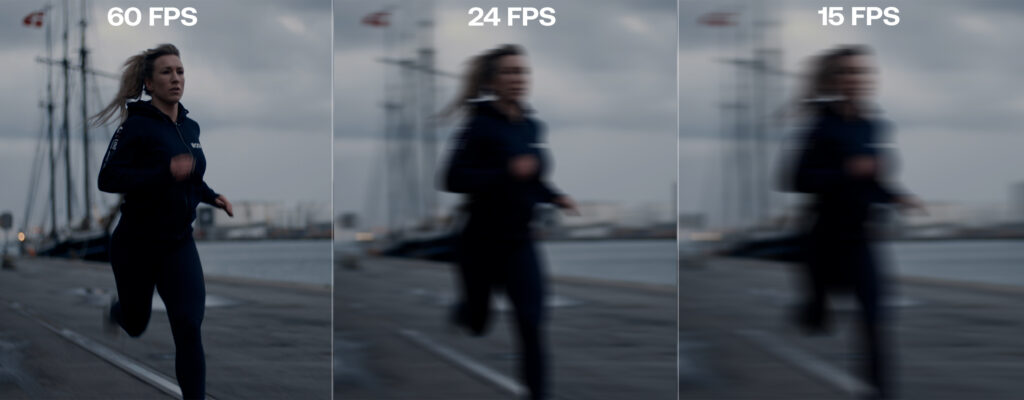
Already with 12 to 15 fps, small images or small movements will be seen as fluent motion. Traditional film cameras record either in 24 fps, 25 fps or 30 fps. If in need for a more smooth display of motion 50 fps or 60 fps are the standard. For even bigger image areas with faster motion and strong contrasts there will be more fps needed in order to display a fluent viewing experience. If the object is too fast there will be motion blur, which enhances the softness of the motion.

Abb. 04: Motion Blur in different frame rates (https://artlist.io/blog/how-to-use-frame-rates/)

Visual media in the context of spacial environments

The german word „Mediatektur“ is a compound word of Architektur (architecture) and Medien (media). In the field of Mediatektur the space is orchestrated with the help of digital media/ images. So the real space will be expanded with virtual space in many different ways.

The cooperation between digital media and space and form takes primarily place within two sections: the virtualisation of meaning and the virtualisation of the spacial geometry.

  • Virtualisation of meaning: The virtualisation of meaning is an existing space/ form which meaning is extended by digital media. Examples for this phenomenon are a wall which is transformed to a digital canvas or a chimney to thermometer. In conclusion a corpus gets a virtual identity and adopts the functions of that identity.
  • Virtualisation of the spacial geometry: The term virtualisation of spatial geometry means that the geometry of an object is altered with the help of digital media in such a way as to create an optical illusion. This can range from small changes to the complete dissolution of the physically existing geometry.

In both cases there are 3 different ways/ directions, which can be useful when it comes to designing media for spacial environments.

  1. Expansion: The virtual world extends the real world without replacing the existing real form with a virtual one. Space and form will be charged solely with meaning.
  2. Expansion and partial dissolution: It means that a designed cooperation between real and digital elements receive a meaning and hence take up a key role in the experience. Also, the virtual dissolves partial the real space/ form. An example for such a case is project mapping, which is guided by the already existing physical attributes and which from time to time dissolves it.
  3. Complete dissolution: Complete dissolution is the abandonment of any real form within a immersive experience. The reality dissolves itself to make space for the virtual world like VR glasses. Meaning in this case is not bound to the physical space.

To conclude my blog entry I will end with a quote by Andrea Rostásy and Tobias Sievers. This quote sums up the previous discussed aspects and also showcases that at the end the only thing that counts is the perfect designed cooperation between the different components to create a cohesive experience.

„Während Mediatektur im funktionalen Gestaltungsaspekt durch eine assoziative Formaussage ihre Intention einlöst, leben die weiteren beschriebenen Gestaltungsaspekte – Material und Oberfläche, Raum sowie Form und Objekt – davon, dem Zuschauer Virtuelles als Teil seiner realen Erfahrung zu vermitteln. Dabei ist das Ausmaß der virtuellen Illusion nicht entscheidend für das Erlebnis – im Gegenteil ergeben sich die interessanten und eleganten Lösungen dort, wo sich das Erlebnis vom Realem und Virtuellem ergänzt, wo Form und Medium ein magischen Zusammenspiel finden“.

Rostásy, Sievers 2018, S.175

02_The influence of the vertical aspect ratio on frame sizes and visual aesthetics

Why this topic?

As it is not yet clear exactly which topic I would like to cover in my master’s thesis, I have chosen the third topic of my first entry for my second blog post, adapted it slightly and elaborated on it further. I chose this topic because it has become very relevant in today’s world, especially as the majority of moving image content on social media is now filmed and published in portrait format. I am interested in how this change in frame size influences general film production, but also the effect this frame size has on consumer perception. As part of my further research, I focused on the effects of the increased use of portrait format in film production and especially on social media. I would like to take a closer look at these aspects.

  • Aesthetic choices: Reasons why filmmakers are increasingly choosing portrait format and how these choices affect the aesthetic quality and visual impact of the content produced.
  • Narrative adaptations: Changes to the narrative structure and general construction of content.
  • Viewer experience: An assessment of how the switch to portrait format affects the way viewers consume content and what emotional responses or interactions are enhanced.
  • Creative freedom and restrictions: Does the shift to portrait format bring increased creative restrictions or does this format allow more freedom to be creative?

This blog post aims to develop an understanding of how the trend towards portrait format in film production is affecting the industry and what implications this has for viewer perception and interaction.

Looking back…

How is it today?

What was still a rarity back then is now standard: portrait-format videos have become indispensable, especially on social networks.  

The rise of smartphones and platforms such as Facebook, Instagram and TikTok has also changed the type of content that is consumed today.  

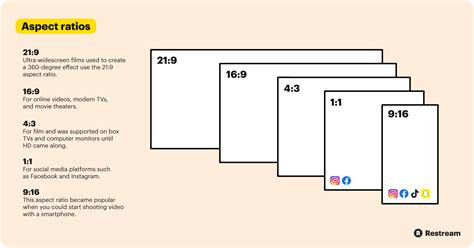
What used to be the television and the classic 1.78:1 aspect ratio is now the smartphone and the 1:1.78 format turned upside down.  

And it’s not just the format itself that has changed, but also the way it is produced and consumed – here are a few examples of topics on which the aspect ratio had a big influence on. 

On Cameras 

Professional film cameras are not designed exclusively for vertical filming, leaving mobile devices as the primary option for optimized vertical recording in social media. While professional cameras can record vertically by turning on their side, this method poses stability challenges and demands additional equipment for secure rigging and effective cable management. The current filmmaking equipment is tailored for horizontal production, and advancements in technology are anticipated in response to increasing demand for vertical content. (cf. Clayton, 2019, S.8) 

Power and Vulnerability 

Psychologically, height symbolizes power, and classical filmmaking often employs low-angle shots for this effect. In vertical frames, this power dynamic is intensified, while looking down on a subject accentuates vulnerability. Without angles, a vertical frame can showcase vulnerability to nature, like walking in rain or swimming underwater. 

(cf. Clayton, 2019, S.4) 

On Depth 

Capturing descents like underwater exploration, skydiving, or entering caves is challenging in a horizontal frame, often requiring a wide shot. Contrary to conveying failure, intentional downward journeys symbolize bravery and adventure for a protagonist. The vertical frame inherently accommodates upward and downward movements, enabling dynamic framing that emphasizes depth and height. High and low-angled shots enhance drama and perspective in portraying these actions. (cf. Clayton, 2019, S.5) 

On Shot Sizes and Wasted Space 

In traditional horizontal filmmaking, poorly framed shots often result in wasted space above or behind the subject’s head. Proper framing typically positions the subject just above the head, aligning the eyes with the upper line of thirds. However, in vertical filmmaking, where the frame naturally accommodates the vertical human form, conventional shot sizes need reconsideration. For instance, a horizontal close-up, measured to the shoulders, becomes an extreme close-up in a vertical frame, filling a significant portion of the screen. This prompts a question: should shot classifications be redefined for vertical filmmaking, or should shot sizes be executed differently? The inclination is towards the latter. 

(cf. Clayton, 2019, S.6-7) 

Questions like these are the reason why I want to take a closer look at this topic in the future.

The future of content consumed on mobile devices lies in portrait format and it will therefore continue to be very important to take a closer look at how the workflow, recording techniques and processing of content can be optimised, but it will also be very exciting to find out what the long-term consequences are for consumers and whether and, if so, how the perception of certain content changes.

What´s next? 

  • More research on the perception of portrait and landscape format
  • Find out what possibilities the portrait format offers and check whether there is more potential.
  • Find examples in which the portrait format is compared with the landscape format.
  • Produce content in portrait and landscape format and check the effect on a test group.

Bibliography:

Clayton, R. (2019). Filmmaking Theory for Vertical Video Production. In The International Academic Forum. Abgerufen am 11. November 2023, von https://papers.iafor.org/submission52556/

Clayton, R. (2021): The Context of Vertical Filmmaking Literature, Quarterly
Review of Film and Video, DOI: 10.1080/10509208.2021.1874853

01_Topic Exploration

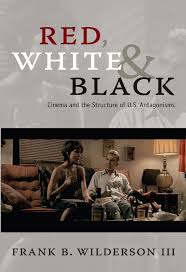
1. Topic: Racism and stereotypes in the film industry

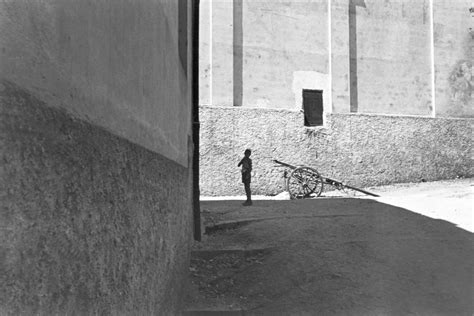
2. Topic: Street photography as a method of exploring new environments.
A Videographic Documentation Approach of a
Photographic Exploration Method in New Habitats.

3. Topic: Changing perceptions of video formats through the development of social media. About attention span and content change.

Exploring possible master topics

Topic 01: Main Title Design

Many people skip the credits scene at the beginning of an episode or film on Netflix and Co. But this sequence is often so much more than just the listing of actors and others involved in the project. So, what makes this sequence so important for films and TV series? What is it exactly? Where did it come from? How is it constructed? Are there rules? Are there specific classifications for different types of credits scenes? Could main title design in TV series be for each episode different and used actively as a storytelling device?

Consulting the internet for first quick research into the topic of credit scenes I tumbled upon other terms for this sequence: main title design, title sequence, opening sequence or intro. Wikipedia describes it the following: 

“A title sequence (also called an opening sequence or intro) is the method by which films or television programmes present their title and key production and cast members, utilizing conceptual visuals and sound (often an opening theme song with visuals, akin to a brief music video). It typically includes (or begins) the text of the opening credits, and helps establish the setting and tone of the program. It may consist of live action, animation, music, still images, and/or graphics. In some films, the title sequence is preceded by a cold open“.

Title sequence, 2023

Also, other sources describe like the film term glossary of filmsite.org describe it as initial titles which are usually placed at the beginning of a film. It states that its often an ignored aspect of films, but that they are an aid for creating an introduction into the time period, mood or design of the film / TV series (vgl. titles, 2023).

There are two websites which are solely dedicated to archiving title sequences. In addition, they publish discussions with creators about their process behind their main title design and general articles about specific designers (artofthetitle.com [up-to-date] and watchthetitles.com [believed to be last updated 2013]). 

Other literature I found, and I would have a closer look at for further research: 

  • Bass, Jennifer, Pat Kirkham: Saul Bass: A Life in Film & Design – London: Laurence King Publishing, 2011 About Saul Bass (important figure in the history of title sequences) and his work
  • Betancourt, Michael: Semiotics and Title Sequences: Text-Image Composites in Motion Graphics. USA: Taylor & Francis, 2017 Focuses on the relationship of text and background image and its meaning.
  • Buhse Eric: Der Vorspann als Bedeutungsträger: Zu einer zentralen Strategie zeitgenössicher Fernsehserien – Darmstadt: Büchner-Verlag, 2014  In German, but it contains the history of title design, and focuses more on TV series.
  • Krasner, Jon: Motion Graphic Design: Applied History of Aesthetics – Burlington: Focal Press, 2013 Contains history, focuses on motion graphics in the different subgenres, also elaborates on the process.
  • Schaudig, Michael: Das Ende vom «Ende». In: montage AV – Zeitschrift für Theorie und Geschichte audiovisueller Kommunikation, 12/2, 2003, S. 182-194 Article focusing on the end credits and its history.

Links

Topic 02: Moving visuals within exhibitions and museums

For my bachelor’s Thesis I already touched upon exhibition design theoretical and practical. Since exhibition design unites lots of different fields of design, I wanted to take a closer look into the possibilities of the moving visuals within the field of museums and especially exhibitions. From my experience I came up with the following different usages of moving visuals within exhibition: as exhibition pieces (artistic nature and historical nature), as (additional) explanation videos (can be visualised as interviews, motion graphics) and as part of immersive experiences. Now I ask myself if there are further ways of usage within exhibition I didn’t come up with. 

Further questions that popped up in my head are: Are their untouched possibilities for the video within exhibitions? How does the popularity of immersive exhibition affect the museum/ exhibition landscape? How beneficial is the knowledge transfer in form of video content?

While researching into the topic, I stumbled upon a research paper called “Immersive experiences in digital exhibitions: The application and extension of the service theater model” by Sharleen Xiaolian Chen, Hung-Che Wu and Xiaoyuan Huang. As the title already suggests, it focuses mainly on the possibilities and benefits of the audience’s immersion in digital exhibition. But they also state that: 

“Digital exhibition mode, with traditional physical exhibition space, provides a better viewing experience for the audience, which is an important development direction in future museum development”.

Chen, Huang, Wu, 2023

Therefore, I concluded that in my master thesis I would like to further explore the benefits and possibilities of the video as a format within exhibition. There is only one problem I experienced while my first research: literature for that specific field is rather rare. So maybe I’ll have to extent my research to the possibilities with space and video projection/ projection mapping.

Other literature I found, and I would have a closer look at for further research: 

  • Chen, Sharleen Xiaolian; Wu, Hung-Che; Huang, Xiaoyuan: Immersive experiences in digital exhibitions: The application and extension of the service theater model. In: Journal of Hospitality and Tourism Management, Volume 54, 2023, Pages 128-138, https://doi.org/10.1016/j.jhtm.2022.12.008 The articles focuses more on immersive experiences and its effect upon the audience.
  • Menotti Gonring, Gabriel; Crisp, Virginia: Practices of Projection: Histories and Technologies. USA: Oxford University Press, 2020. Focuses on projection mapping and its history and its role as practice, technology and expressive form across multiple cultural, temporal and geographical contexts. Not necessary on exhibitions.
  • Rostásy, Andrea; Tobias Sievers: „Handbuch Mediatektur – Me-dien, Raum und Interaktion als Einheit gestalten, Methoden und Instrumente“. Bielefeld: transcript Verlag, 2018. In German; It contains a chapter about visuals, projection mapping and their technical parameters which should be considered when working with them. 
  • Saba, Cosetta, et al. Preserving and Exhibiting Media Art. Amsterdam University Press, 2013. The book focuses more on media art as exhibition piece, its challenges in the field of media art preservation and exhibition, providing an outline for the training of professionals in this field.
  • Schmitt, Daniel; Burczykowski, Ludovic; Thébault, Marine: Image Beyond the Screen: Projection Mapping. UK: Wiley, 2020. Focuses on projection mapping its history and its limitations, possibilities and much more. I cannot tell to which extend its relevant for projection mapping in exhibitions.

Topic 03: Emotional impact of Materials

In fine arts the visual aesthetic of an artwork is partly defined by the chosen technique/ material. The same is applicable to film and photography. It matters if you shoot your film on a 35mm analog film, on a Camcorder or on the newest DLSR. So I would argue that material is an important part of a product, even when it’s more or less 2D. 

Mixed media animation uses this characteristic, and it focuses on the different materials, the different mediums as well as the different techniques and merges them to its own aesthetic. It involves combining traditional hand-drawn or computer-generated animation with live-action footage, stop motion, claymation, puppetry, or other forms of visual arts. This allows artists to experiment with different styles, textures, and aesthetics to create unique and visually dynamic animated sequences.

Now I’m asking myself if the usage of different material can be used as a storytelling tool like color? Does different material convey specific emotions to the audience? Can it be a tool for Character Design? What is the benefit of combining analog and digital workflows? Does the integration of different materials simulate dimension towards 2D animations?

Literature:

I was struggling a bit for literature on this topic because there isn’t really theoretical work on mixed media.

  • Genz, Julia, and Paul Gévaudan. Medialität, Materialität, Kodierung: Grundzüge einer allgemeinen Theorie der Medien. Bielefeld: transcript, 2016. Print. In German; It’s more theoretical literature about the importance of material within semiotics.
  • Harris, Miriam; Husbands, Lilly; Taberham, Paul (Eds.). Experimental Animation: From Analogue to Digital (1st ed.). Routledge, 2015 https://doi.org/10.4324/9781315203430 This book could be interesting for the different inputs from animators and their workflow, but also for the theoretical input.
  • Ohnmacht, Tina. Wasser in Animationsfilmen: Materielle Transformationen, diskursive Interaktionen und strukturelle Analogien. Deutschland, Schüren Verlag, 2022. Even though it’s just about water as a material. It could be interesting to have a closer look on one material in particular way. 
  • Schleicher, Harald, and Hans Beller. Filme machen : Technik, Gestaltung, Kunst – klassisch und digital. Orig.-Ausg., 1. Aufl.., 2005. In German, This book would be helpful in regards of structuring the product itself.
  • Schröter, Jens, et al.  Analog/Digital – Opposition oder Kontinuum? : Zur Theorie und Geschichte einer Unterscheidung. 1st ed.., transcript Verlag, 2015. In German. It’s less about materials or mixed media and more about the terms analog and digital. Maybe there would be aspects I never considered when thinking about these two terms.