BREAKING THE MALE GAZE? THE FEMALE GAZE ON THE MALE GAZE.
After receiving feedback and mentoring, I’ve decided to continue working on the topic of the ‚Male Gaze‘ in film. Given that I encounter it daily and desire more female perspectives in the realm of film, I find it a compelling area to explore further. The exploration of the „Male Gaze“ in film from a female perspective can contribute to understanding and potentially changing the representation of women in the medium. It could also help raise awareness of gender inequality in the film industry.
A lot of different aspects
Exploring the „Male Gaze“ in film from a female perspective involves critically examining how women are portrayed on screen and the impact of this representation on the audience. There are a lot of aspects that I could dive further into like:
Historical Context: Explore the historical evolution of the „Male Gaze“ in cinema. How has the representation of women changed over time? Are there specific eras or movements that have influenced these portrayals?
Impact on Audience Perception: Investigate how the „Male Gaze“ affects the way audiences perceive women. Consider the psychological and sociocultural implications of repeatedly presenting women through a male-oriented lens.
Female Filmmakers and Perspectives: Highlight the work of female filmmakers who challenge or subvert traditional gender portrayals in film. Analyze how their perspectives contribute to a more nuanced and diverse representation of women.
Intersectionality: Explore how factors like race, ethnicity, sexuality, and age intersect with the „Male Gaze“ and influence the portrayal of women in film. Consider the experiences of women from different backgrounds.
Industry Practices: Examine the behind-the-scenes aspects of the film industry. How do casting decisions, writing, directing, and production contribute to the perpetuation or challenging of the „Male Gaze“?
Audience Reception: Investigate how audiences, particularly women, respond to and engage with films that either conform to or challenge the „Male Gaze.“ Do certain portrayals empower or reinforce harmful stereotypes?
Changing Trends: Explore contemporary films and movements that actively work against the „Male Gaze.“ Identify examples where the narrative empowers female characters and provides a more authentic representation.
Influence on Culture: Consider the broader cultural impact of the „Male Gaze“ in film. How does it contribute to societal norms and expectations regarding gender roles and relationships?
Bibliography
Visual Pleasure and Narrative Cinema“ by Laura Mulvey
Filme beeindrucken uns besonders, wenn Bild und Ton ein harmonisches Zusammenspiel ergeben. Wie kann visuelle Kunst dazu dienen, nicht nur die Welt oder die „äußere“ Realität um uns herum, sondern auch unsere inneren Empfindungen – also Emotionen und Gefühle – einzufangen. Wie kann sich der Fokus einer reinen Dokumentation hin zu einer Ausdrucksform von Gefühlen und Emotionen verlagern? Unterschiedliche Techniken, Stile sowie visuelle und auditive Effekte können verwendet werden um Emotionen bei Rezipient:innen auszulösen – wie zum Beispiel Lichtstimmung, Komposition, Einstellungsgrößen, Schärfe und Unschärfe, Musik und Sound, Bewegung, Kontrast und Kameraperspektive. Auch das Kombinieren von diesen Elementen kann die Betrachter:innen auf verschiedene Weisen ansprechen und subtile oder dramatische Emotionen hervorrufen.
Literaturverzeichnis
Barnbaum, Bruce: The Art of Photography: An Approach to Personal Expression. Rocky Nook, 2010.
Bogre, Michelle: Photography as Activism: Images for Social Change. Focal Press, 2011.
Eil, Bernd, Jochen Kühnel, und Claudia Neuhaus: Studienhandbuch Filmanalyse. Wilhelm Fink, 2016.
Freeman, Michael: The Photographer’s Eye. Lewes, ILEX, 2007.
Ein Trailer „muss“ die besten Momente eines Films hervorheben, um das Interesse und die Neugier des Publikums zu wecken. Dabei ist die Auswahl der Szenen sowie das Hervorheben von Höhepunkten sehr wichtig. Die Schnitttechnik sowie das Einsetzen von visuellen Effekten spielen dabei eine wesentliche Rolle. Hinzu kommen Soundeffekte, um die visuellen Eindrücke zu verstärken, während Musik die Emotionen beeinflusst. Ein Trailer soll Fragen aufwerfen und Spannung aufbauen, ohne zu viel über die Handlung preiszugeben. Trailerschnitt erfordert ein Verständnis für Erzähltechnik und die Fähigkeit, die filmischen Elemente so zu kombinieren, dass Rezipient:innen mehr sehen wollen. Dabei ergeben sich folgende Fragen: Welche Rolle spielen Musik und Soundeffekte im Trailerschnitt, um die emotionale Wirkung zu verstärken? Welche Techniken werden im Trailerschnitt verwendet, um Spannung zu erzeugen? Wie beeinflusst ein Trailer die Wahrnehmung und die Erwartung der Zuseher:innen an einen Film?
Literaturverzeichnis
Bordwell, David: Narration in the Fiction Film. The University of Wisconsin Press , 1985.
Bordwell, David/Thompson, Kristin: Film Art: An Introduction. 8. Aufl., McGraw-Hill, 2008.
Bruhn, Herbert u.a. (Hrsg.): Musikpsychologie. 4. Aufl., Rowohlts Enzyklopädie, 2002.
Eder, Jens: Dramaturgie des populären Films. Drehbuchpraxis und Filmtheorie. LIT Verlag, 1999.
Wenn man Musikvideos nicht nur als reine Werbemittel für Musikstücke, sondern als eigenständige Kunstwerke betrachtet, ergeben sich daraus folgende Fragen und Überlegungen: Können Musikvideos überhaupt eigenständige Kunstwerke sein? Wie können visuelle und ästhetische Elemente zur kreativen, aber auch inhaltlichen Gestaltung von Videos beitragen und Botschaften und Bedeutungen beeinflussen? Mit Musikvideos werden oft Geschichten erzählt, doch nicht immer mit klarem Handlungsstrang oder traditionellen Erzählstrukturen. Immer mehr etabliert sich eine abstraktere Art der Herangehensweise, bei denen zum Beispiel bewegte Bilder auch auf metaphorische Weise eingesetzt werden können oder wo (filmische) Regeln keine Rolle mehr spielen. Musikvideos ermöglichen es KünstlerInnen Aufmerksamkeit und Interesse zu erzeugen, dass über das bloße Hören hinausgeht. In einer Welt, in der visuelle Inhalte dominieren, können tiefere Verbindungen zwischen Künstler:innen und Rezipient:innen geschaffen werden.
Literaturverzeichnis
Altmeyer, Markus: Die Filme und Musikvideos von Michel Gondry: Zwischen Surrealismus, Pop und Psychoanalyse. Tectum, 2008.
Bódy, Veruschka und Gábor(Hrsg.): Video in Kunst und Alltag. DuMont, 1986.
Bühler, Gerhard: Postmoderne, auf dem Bildschirm auf der Leinwand. Musikvideos, Werbespots und David Lynchs Wild at Heart. Gardez!-Verlag, 2002.
Flade, Uwe: „Gute Musikvideos gehören ins Museum.“ Zeit Online, 14. Oktober 2023, https://www.zeit.de/kultur/musik/2011-04/musikvideo-uwe-flade
Railton, Diane und Paul Watson: Music Video and the Politics of Representation. Edinburgh University Press, 2011.
Vernallis, Carol: Experiencing Music Videos: Aesthetics and Cultural Context. Columbia University Press, 2004.
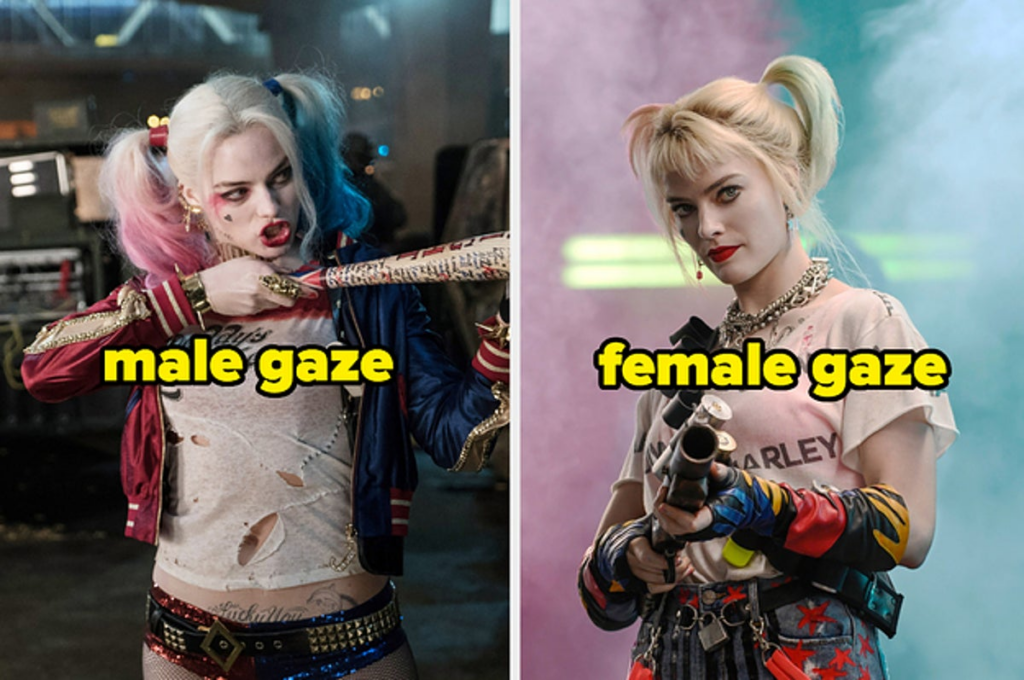
The term „Male Gaze“ was first described in the 1970s by film critic Laura Mulvey. It refers to a representation of women dominated by the male perspective. In this portrayal, women are often depicted as passive figures without significant value or personality, placed alongside an active male protagonist. Visually, the female character is frequently reduced to her appearance.
Male Gaze is not confined to just films and TV shows; it’s also present in video games, advertisements, social media, and television. This phenomenon persists because there are still significantly more men than women in key roles in the film and television industry, allowing this perspective to prevail. The Male Gaze relies on stereotypical portrayals of men and women, offering viewers limited opportunities for identification due to a lack of diversity in character traits.
It’s essential to understand that the act of looking (Gaze) itself is the consumption of products, and 85% of characters in Hollywood are male. We are compelled to consume the male gaze, whether we like it or not, and it often fails to fully incorporate other sexualities and identities. Non-male characters are used to reinforce a mediocre plot in the name of male power.
An interesting comparison is Margo Robbie’s transformation as Harley Quinn and the subtle changes in costume design when Cathy Yan took over the franchise. Over the course of several films, Harley Quinn evolved from creating the fantasy of a mentally unstable, infantilized villain in extremely short shorts to a character leaving an abusive relationship, finding sisterhood, and saving a woman in distress.
SECOND TOPIC: A24 and the modern horror in film
A24, the American independent entertainment company founded in 2012, has played a groundbreaking role in modern horror films. Known for distributing and sometimes producing influential TV shows and movies like Lady Bird, Moonlight, and Everything Everywhere All At Once, A24 has left a significant mark in the horror genre. Films like Hereditary, Midsommar, and Beau Is Afraid by Ari Aster showcase the company’s pioneering work in modern horror.
In modern horror, the genre serves as a platform to convey important messages and provoke thoughtful reflection. A24’s horror films, including The Witch, The Lighthouse, It Comes at Night, X, and Pearl, go beyond conventional scares. They combine supernatural elements with twisted horror narratives, exploring themes like blind faith, cults, and societal obsessions.
A notable aspect of A24’s horror films is the fusion of supernatural elements with the characters‘ emotional depth. For example, Midsommar and Hereditary delve into human beliefs and cults, intertwining the supernatural with the characters‘ experiences. The protagonists may seem morally ambiguous, yet their struggles are relatable, connecting with audiences on a deeper level.
The effectiveness of these characters lies in the actors‘ ability to visually portray emotions such as grief, trauma, loss, and rejection. By depicting these emotions, A24’s horror films bring the genre to the forefront, creating movies that use human emotions to evoke fear in the audience. This approach has elevated A24 to the forefront of modern horror, prompting viewers to engage with the genre in a more profound and emotionally resonant way.
THIRD TOPIC: The 4th wall in film
The imaginary boundary between the events of a film or theater stage and the audience is known as the „Fourth Wall.“ When actors break this boundary, it’s referred to as breaking the Fourth Wall. In instances where plays, TV shows, and films break the fourth wall, they acknowledge the audience’s existence and directly address it. This action blurs the fictional world with the literal reality of the medium: a group of actors performing in front of a live audience or a camera. Actors can step out of their imaginary reality and address the audience watching them, breaking the fourth wall. While most films and TV shows never break the fourth wall, when the imaginary barrier falls, and a character speaks to the real audience, the filmmaker typically has a specific purpose in mind.
To provide a commentary on the scene, actors may turn towards the camera to comment on events in the story. As this direct address often appears absurd, this technique is prevalent in comedy. Breaking the fourth wall pulls the audience out of a fictional world and may clash with the seriousness of most dramas, thrillers, and action films.
Another way to break the fourth wall is by having a character speak an internal monologue, offering insight into their inner thoughts. While this can break the audience’s suspension of disbelief, narrative films seldom attempt this. However, in documentary films, documentary subjects—or even the filmmakers themselves—can address the camera and speak for themselves.
Some directors, inspired by Bertolt Brecht, aim to highlight the artificiality of the film itself. Actors breaking the fourth wall can acknowledge that they are part of a fiction, drawing attention to the symbiotic relationship between the actor and the audience and effectively engaging the audience in the artwork.
Naturdokumentationen bedienen sich einiger Tricks, um die Aufmerksamkeit des Publikums zu gewinnen und zu halten.
Ein wichtiger Bestandteil von Tierdokumentationen ist das Sounddesign. Um in das Geschehen der Natur nicht einzugreifen, werden die Aufnahmen meist aus sicherer Entfernung aufgenommen. Teleobjektive ermöglichen das Hineinzoomen an diese weit entfernten Szenen. Tonaufnahmen sind aus diesen Distanzen nicht möglich. Wird beispielsweise eine Luftaufnahme in einem Dokumentarfilm verwendet, enthält die originale Tonspur nur das Geräusch des Hubschraubers. Filmschaffende fügen daher in der Postproduktion Sound hinzu, der das Naturereignis unterstreicht.
Storytelling findet auch bei Tierdokumentationen ihre Anwendung. Einen Kampf zwischen zwei Kängurus zu filmen, kann mehrere Tage oder Wochen dauern. Bis es zum eigentlichen Kampf kommt, wird viel Material gesammelt. Dieses Material gewinnt an Bedeutung, wenn es den Kampf zwischen zwei Kängurus zu einer Geschichte werden lässt. Nahaufnahmen des Blickaustauschs zwischen den beiden Rivalen oder eines Babykängurus, das sich im Beutel seiner Mutter versteckt, machen die Szene emotionaler.
Für den Filmemacher Simon Cade sind Tierdokumentationen keine falschen Abbildungen der Natur, sondern Geschichten, von denen wir lernen können. Dokumentarfilme, die nur aus Fakten bestehen, würden unsere Aufmerksamkeit nicht fesseln, so Cade. 1
1. Optimisation of production workflows in Western and Japanese animation: Rotoscoping, Motion Capture and other Hybrid 2D/3D Techniques
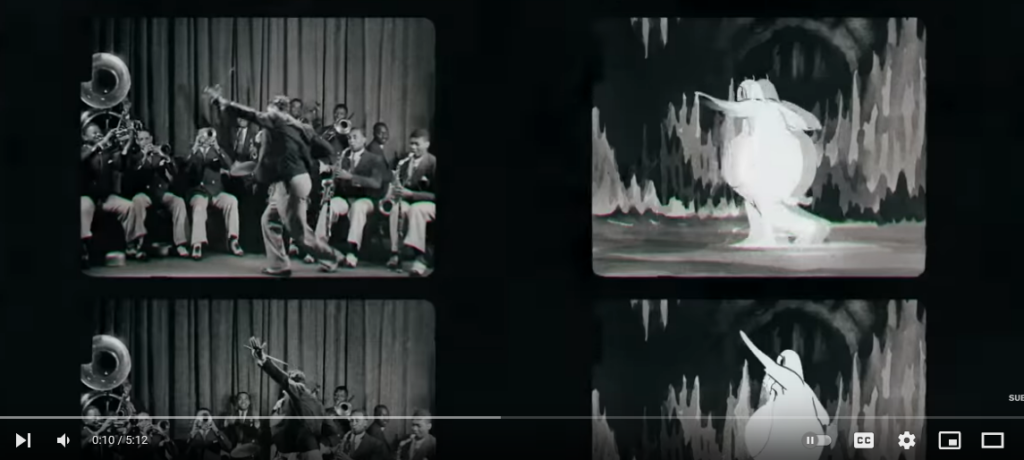
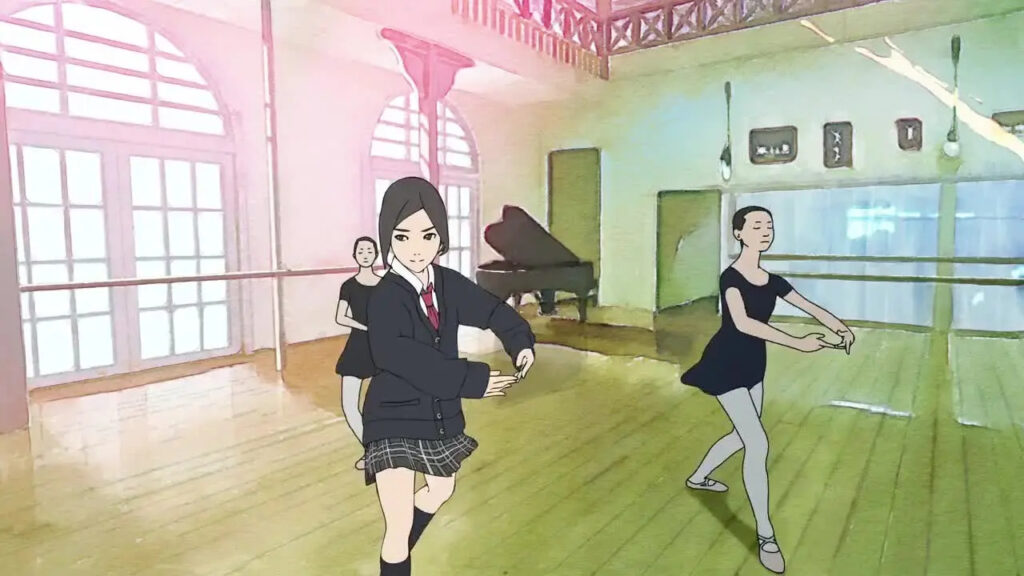
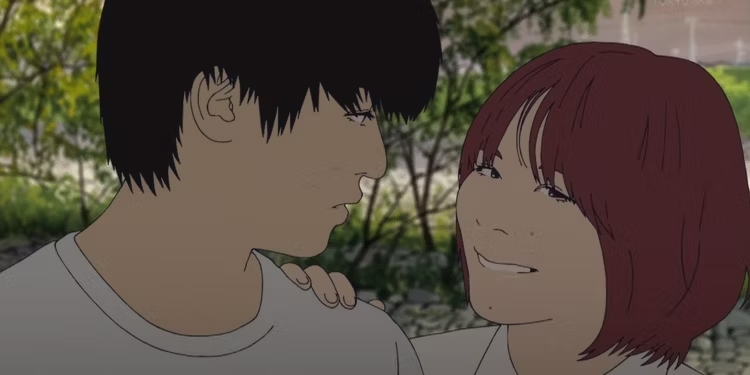
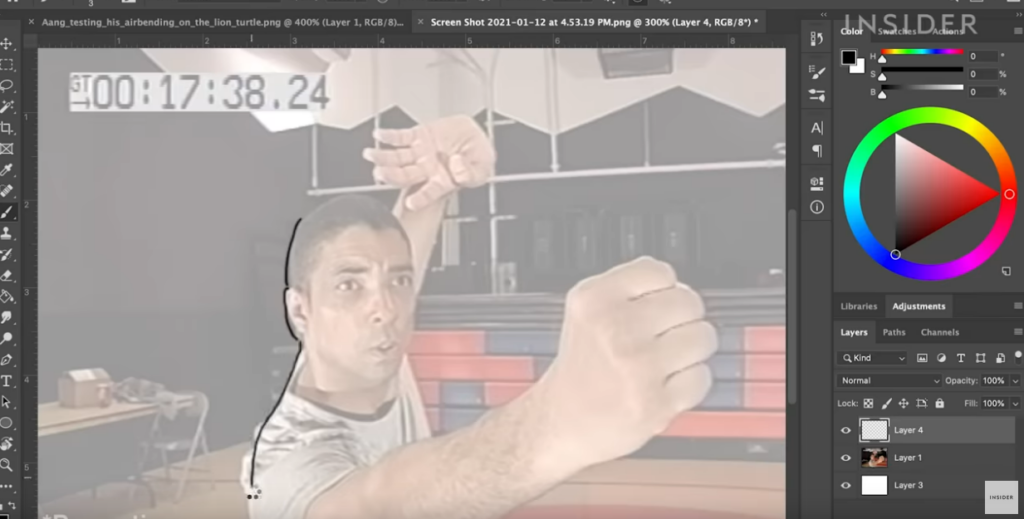
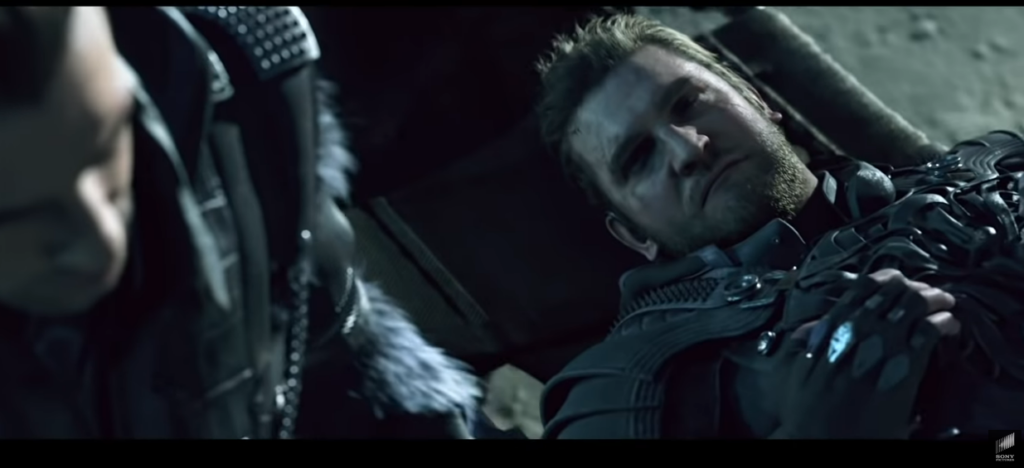
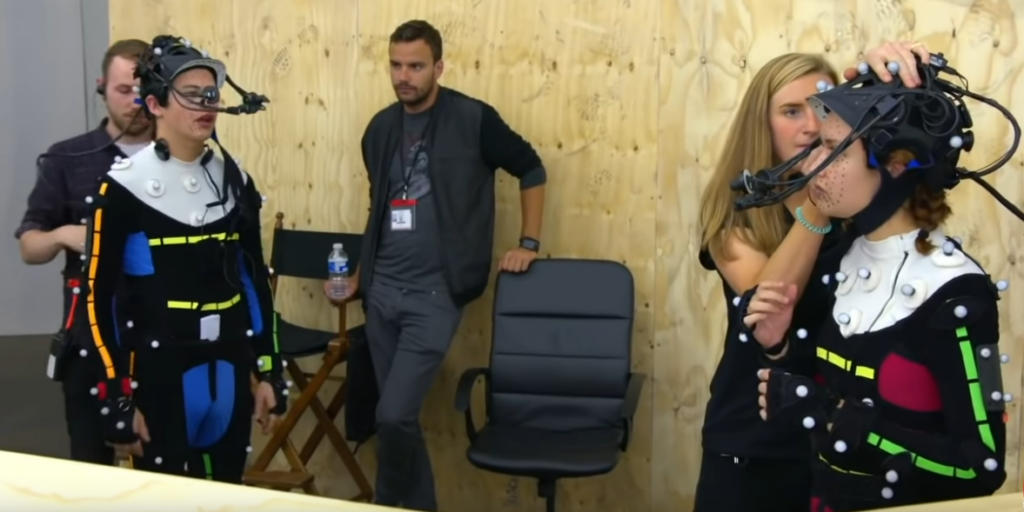
This topic deals with the question of how Western and Japanese animators and animation studios try to optimise their production workflows and how they incorporate technologies such as Rotoscoping, Motion Capture as well as other Hybrid 2D and 3D techniques into their pipeline. The aim is to provide accurate insight into different 2D and 3D production workflows and compare them along with the results they achieve. The main interest will therefore be the practical applications of such techniques and the comparison of the different results they achieve within their cultural, narrative and genre-specific context. To summarise, after an in-depth study of the material, which will hopefully show both the advantages and the disadvantages of the different approaches, the next step will be to look for ways to incorporate the learned into my own design. This will be done via different case studies and short projects, such as short animations, character models or even a short movie.
1. Agarwala, A. / Hertzmann, A. / Salesin, D. / Seitz, S.: Keyframe based tracking for rotoscoping and animation . In: “ACM transactions on graphics, 2004, Vol.23 (3)”, ACM, New York 2004 , DOI: https://www.doi.org/10.1145/1015706.101576 2. Bratt, B: Rotoscoping, Routledge, 2021, ISBN: 9780240817040. 3. Davison, A. / Deutscher, J. / Reid, I.D.: Markerless Motion Capture of Complex Full-Body Movement for Character Animation, in: “Computer animation and simulation 2001”, Springer, Vienna 2001, ISBN: 3211837116. 4. Dunlop, R.: Production pipeline fundamentals for film and game. Focal Press, Burlington 2014, ISBN: 1-317-93622-1. 5. Kitagawa, M. / Windsor, B.: MoCap for artists: workflow and techniques for motion capture. Elsevier / Focal Press, Amsterdam / Boston 2008, ISBN: 9786611307301. 6. Menach, A.: Understanding motion capture for computer animation, Morgan Kaufmann, Amsterdam 2011, ISBN: 9780123814968. 7. Lanier, L.: Professional digital compositing: essential tools and techniques. Wiley Pub, Indianapolis 2010, ISBN: 9786612471834. 8. Lin, Z.: Research on film animation design based on inertial motion capture algorithm, in: “Soft computing (Berlin, Germany), 2021, Vol.25 (18)”, Springer, Berlin 2021, DOI: https://www.doi.org/10.1007/s00500-021-06001-y. 9. Miyakoshi, M.: Correcting whole-body motion capture data using rigid body transformation, in: “The European journal of neuroscience, 2021, Vol.54”, Wiley Subscription Services, France 2021, DOI: https://www.doi.org/10.1111/ejn.15531. 10. Roberts, S.: Character Animation Fundamentals: Developing Skills for 2D and 3D Character Animation. Routledge, London 2017, ISBN: 9786613267436. 11. So, Clifford, K.F. / Baciu, G.: Entropy-based motion extraction for motion capture animation, in: “Computer animation and virtual worlds, 2005, Vol.16 (3-4)”, John Wiley & Sons Ltd., Chichester 2005, DOI: https://www.doi.org/10.1002/cav.107´.
2. Gamification and Exploration in a VR environment
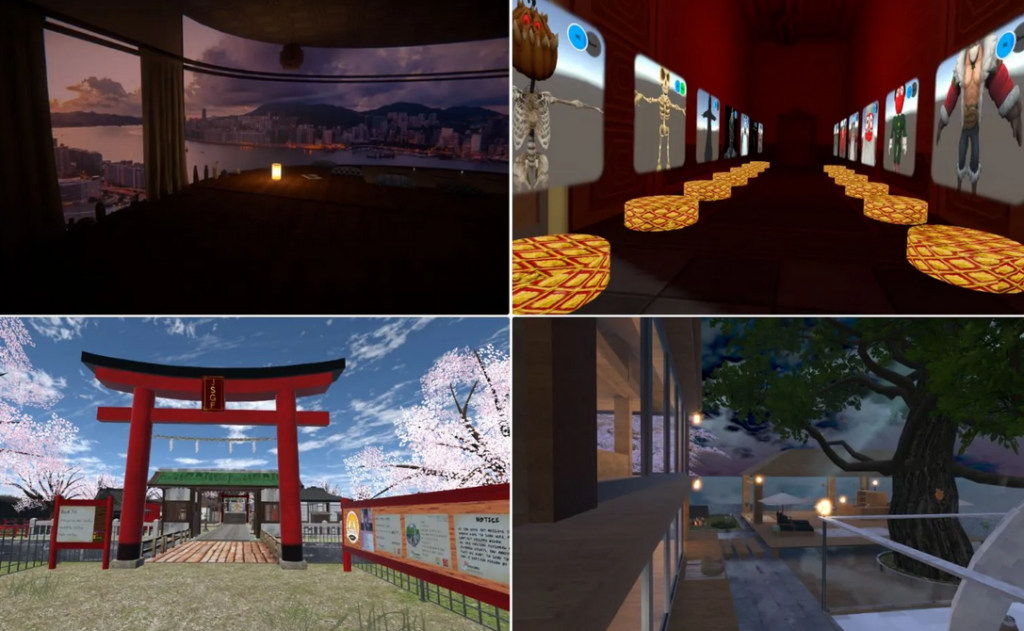
The goal of this topic would be to explore the different possibilities to work, play and design within a VR environment. With a very experimental approach, the final outcome of this topic can not yet be defined, but would very likely be some form of VR environment that allows for a playful and creative exploration of different applications and possibilities that such a digital space provides. Since VR can be seen as a completely different entity from our real world allowing for the addition of a second reality right within our lived-in one, with different rules, options and limitations, the current possibilities seem almost endless and are only restricted by our imagination as designers. As such and to set a boundary for the planned thesis, the exploration of two very particular topics is of special interest to me. These are:
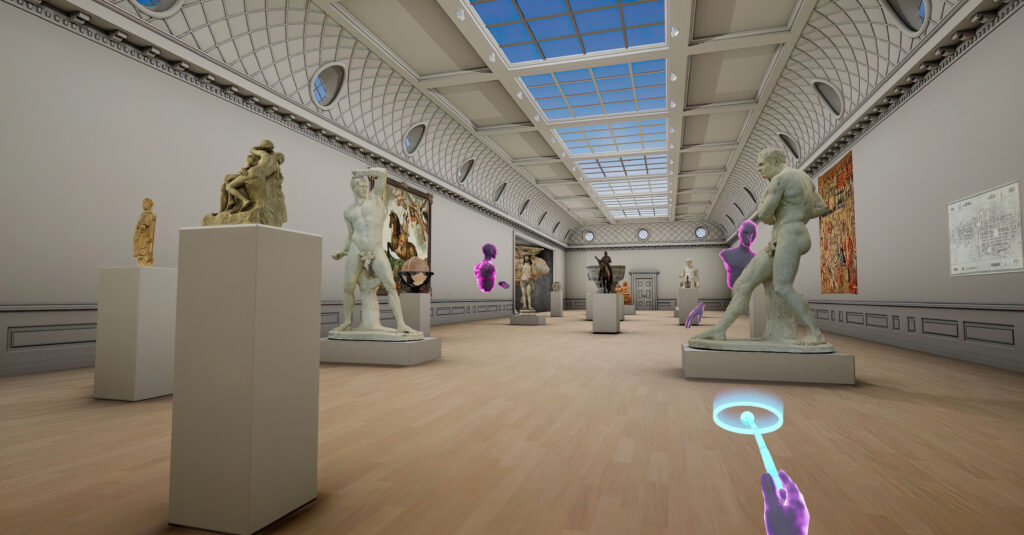
2.1 An integrated approach to an interactive digital VR museum Based on the current research project I am working on at the Graz University of Technology, funded by the FWF, the possibility of building a completely interactive, decentralised virtual museum within Virtual Reality could be researched. Possible topics to look into include but are not limited to: user interaction and how to increase engagements, tools to allow exploration, interfaces and information design, accessibility, visual narration and perception of space and many, many more. As such, more in-depth research of this topic could prove to be worthwhile.
2.2 Gaming and designing in / for VR Another topic that seems quite promising is inquiring how gaming and exploration can even work in a virtual reality environment, both from a design standpoint and from the view of a user. To explore the different possible playful experiences that can be created and how to create them would be the main focus of this research. By looking into existing examples, such as VR games and the user-driven and collaboratively designed environment of VR chat, a deeper understanding of the topic could be achieved, which then in turn would be used to inform the design decisions shaping the new environment created as part of this research.
All in all, this topic is sure to be the most ambiguous and open among the presented, but also the one with the most potential for playful exploration and development. As such, VR and the inquiry of possible applications, is currently my favourite.
1. Jerald, J.: The VR book: human-centered design for virtual reality, Association for Computing Machinery (pub.), Morgan & Claypool, San Rafael 2016, ISBN: 9781970001129. 2. Sherman, W.R. / Craig, A.B.: Understanding Virtual Reality: Interface, Application, and Design, Elsevier Science, Burlington 2002, ISBN: 9780080520094. 3. Caarrozzino, M. / Bergamasco, M.: Beyond virtual museums: Experiencing immersive virtual reality in real museums, in: “Journal of cultural heritage, 2010, Vol.11 (4)”, Elsevier SAS, 2010, DOI: https://www.doi.org/10.1016/j.culher.2010.04.001. 4. Lengua, D. / Lengua, M.: Moving Towards Digital Lands: on Processes of Interaction in Museum’s Virtual Spaces, in: “Meta space”, DISTANZ Verlag, Berlin 2022. 5. Plowman, J.: Unreal engine virtual reality quick start guide: design and develop immersive virtual reality experiences with unreal engine 4, Packt Publishing Ltd, Birmingham / Mumbai 2019, ISBN: 1-78961-504-6. 6. Mitsea, E. / Drigas, A. / Skianis, C.: VR Gaming for Meta-Skills Training in Special Education: The Role of Metacognition, Motivations, and Emotional Intelligence, in: “Education sciences, 2023, Vol.13 (7)”, MDPI AG, Basel 2023, DOI: https://www.doi.org/10.3390/educsci13070639. 7. Evans, L. / Rzeszewski, M.: Hermeneutic Relations in VR: Immersion, Embodiment, Presence and HCI in VR Gaming, in: “HCI in Games”, Springer International Publishing, Cham 2020, DOI: https://www.doi.org/10.1007/978-3-030-50164-8_2. 8. Yildirim, C.: Cybersickness during VR gaming undermines game enjoyment: A mediation model, in: “Displays, 2019, Vol.59”, Elsevier B.V, 2019, DOI: https://www.doi.org/10.1016/j.displa.2019.07.002.
3. 3D character modelling and narration in Virtual YouTubing / the V-Tuber-community: How to make your character engaging via VFX and animations to underline your narration
Virtual YouTubing (V-tubing) has evolved over the recent years from a small niche community into an active and dynamic format of online content creation, where content creators interact with their audiences through animated 3D avatars. This topic delves into V-Tubing as a form of content creation, focusing on its combination of 3D character modelling and rigging and the narration and storytelling behind the characters of different creators. The main inquiry will be, how content creators use visual effects (VFX) and animations to create engaging characters that line up with their created narratives.
V-tubers, in this context, balance different skillsets, between technology and its capabilities to entertain and the storytelling aspect of their character. It is not surprising then, that some creators instead already opt to outsource one or the other, sometimes even both, to a digital artist, since the skillset required is expansive and the quality of many models in the competition is on the rise. Nonetheless, there is also still those that do everything themselves. The research aims explores the intricacies of character creation, using 2D character designs in combination with 3D modelling and rigging to craft distinct personas and then employing advanced animations and VFX to enhance their narrative expressiveness. By doing so, a deeper understanding of the complexity these creators are faced with, can be achieved.
The proposed research will then go on to explore the possibilities of viewers developing emotional attachment towards these digital personas, examining how the interplay of animations and VFX may enrich the viewer experience and engage the viewer. It will include studies into collaborations and manners of fan engagement – for example, fan art – that acts as the foundation of this community.
Finally, this topic aims to create one such V-Tuber model from scratch, going through all the most common steps from first draft to finished character. By doing so and by documenting the process, it will hopefully act as an investigation into the role of technology in facilitating the creation of these characters, including the software and hardware used to bring V-Tubers to life.
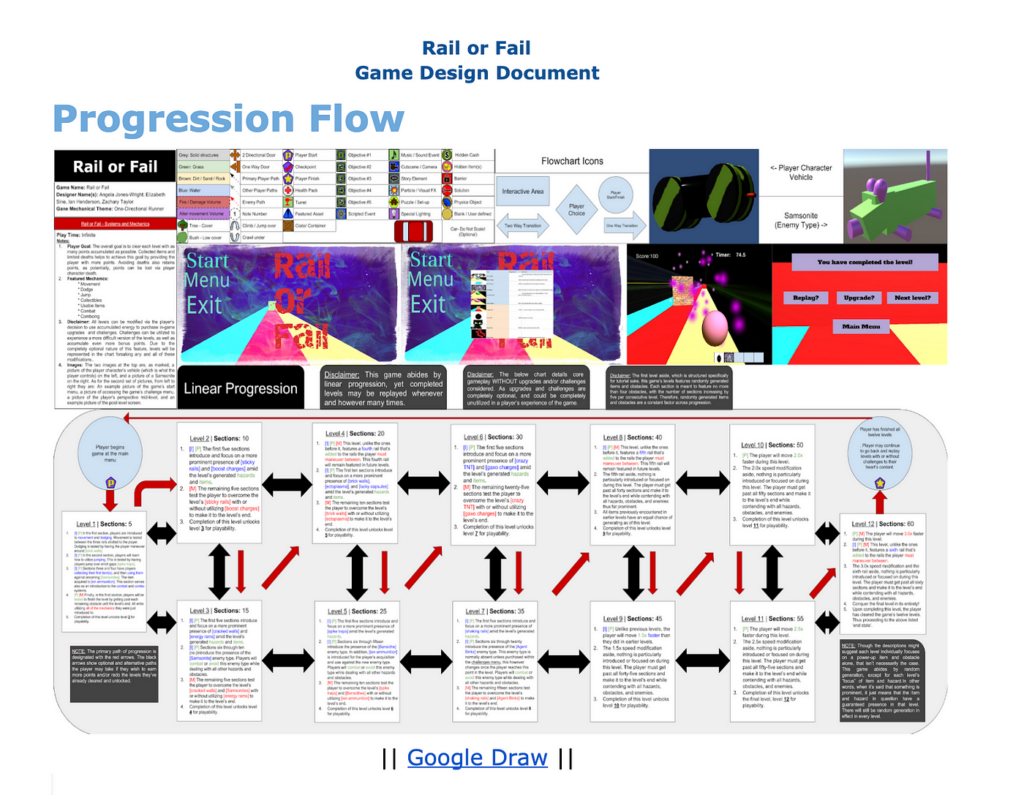
As mentioned in the blog post “Indie Games”, a Game Design Document, or GDD for short, is typically a detailed guide that can be used to keep track of the core themes, styles, features, mechanics and ideas of your game project. [1]
The main purpose of a game design document is to communicate the details of your project to either yourself, as you work on your game over time, or to other people, such as team members, publishers, stakeholders or people who will be playing your game, as part of a crowdfunding campaign or early access product. [2]
Put simply, it’s the tool that you’ll use to manage and develop the concept of what your game is, how it’s supposed to work and how it will be built. [3]
A GDD usually consists of:
The Game Overview
This section gives the reader the introduction to the document. It contains the target audience and platforms, feature set, game genre, game flow summary, and project scope.
“The Overview section in a Game Design Document (GDD) serves as a concise and essential introduction to the entire project. This serves as a compass that guides the development process and ensures everyone involved is on the same page.” [4]
2. The Game Story and Setting
This section describes the story of the game and its setting. The story is one of the key elements of a game and it needs to be well defined for the game to work. Here it is necessary to define the games genre.
3. Defined Gameplay
This section describes the core mechanics of the game, camera view, primary objectives and goals, secondary objectives and goals, game progression, players journey, player rewards, penalties, play flow, and interactivity mechanics.
4. Defined Visual Identity (art and design)
This section contains the game vision mood board, audio, music and sound effects.
5. Technical Stack
“A tech stack, short for „technology stack,“ refers to the combination of software, programming languages, frameworks, libraries, and tools used to build and run your game.” [5]
This section contains the target hardware, development hardware, and the used softwares.
There are also some development procedures and standards one needs to follow. These are scripting language, version control, coding standards, and external libraries/plugins.
6. Marketing and Monetizing
This section contains target marketing and demographics, competitor and market analysis, pricing and distribution strategy, future opportunities, marketing plan, and marketing channels.
7. Milestones
Milestones make it easier to have an overview of all the things that need to be at a certain time and contain all deadlines. Possible milestones could be game engine design, character concept art, background concept art, level design etc.
8. Budget
When budgeting for game development, it’s crucial to make sure your financial plan is comprehensive and realistic. Common one-time costs are asset creation, software and tools, licensing and copyrights, legal and intellectual property, initial marketing, testing and QA setup, localization, and prototyping.
9. Team
The team section usually contains all the team members with their defined roles and responsibilities, their qualifications, and the communication plan.
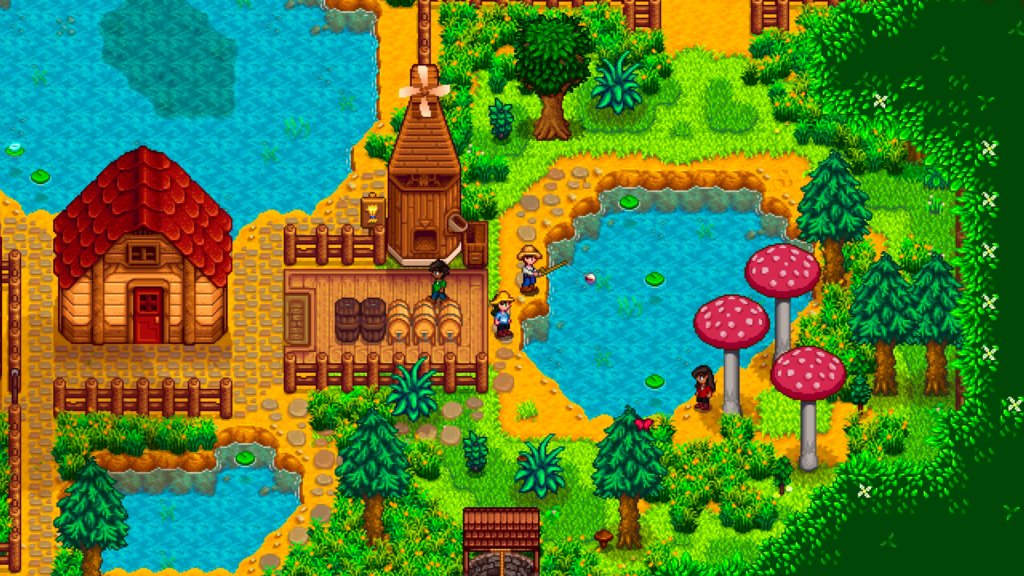
Indie games are created by independent game developers, rather than those who work for large development studios or publishers. [1]
As an indie game developer one does not have to work alone. Of course you can do the whole process by yourself, just like the Stardew Valley developer Eric Barone. But on the other side one can hire multiple team members to bring their project to life. This team can consist of designers, programmers, artists, and sound designers. [2]
How to make an Indie Game?
For creating your own Video Game, you have to first come up with the basic idea of your game. Usually, one would start by creating his own Game Design Document. For that many templates can be found but it should contain all the necessary information of a game.
A Game Design Document, or GDD for short, is typically a detailed guide that can be used to keep track of the core themes, styles, features, mechanics and ideas of your game project. [3]
One also has to decide what engine will be used for creating the game. There are many options from Unity, Unreal Engine to Gamemaker and RPGMaker. It is important to choose the right engine before you start programming your game. A lot of research has to be done to find the right one which suits your needs and can bring your game to its full potential.
It is also important to decide if the game will be 2D or 3D and what genre it will be. When deciding what format to use (2D or 3D) the artstyle has to be defined. With that, one can create the needed game assets that will be used in the game. Those can be made with different softwares like photoshop, aseprite, blender and other design tools.
The most successful indie games are usually defined by an incredible gameplay element, gimmick, or art style that sets them apart from the competition. Indie devs can afford to be bold, so don’t hold back. [4]
An animation explainer uses character animations and/or animated text, combined with music and sometimes voice over, to explain a product, service, concept, or process. An animation explainer is one of the most common types of explainer videos, because it’s easy to make and accessible for audiences.
An explainer video is a short, usually animated video, that concisely and clearly explains an idea or concept. They are often used for marketing purposes but can be used for just about anything.
Explainer videos can be used to explain a new product or service, explain how something works, or even explain an abstract concept.
With explainer videos it is easy to explain complex concepts in a simple way. They can be engaging and entertaining, and they are often more memorable than other forms of communication.
There are many types of explainer videos beside the animation explainer videos. Those are live-action explainer videos, whiteboard explainer videos and screencast explainer videos.
For an explainer video one has to create a script, storyboard, voiceover and ad text, music, footage and illustrations.
It is important that the explainer videos are kept short and that there is enough movement so that the audience stays engaged. It is also important that it contains a professional voiceover and good sound quality. Humor and a strong call to action also play a big role to create a successful explainer video.
Explainer videos can be used in all sorts of platforms.
Why animation explainer videos?
With the help of animation, you can show things that are not normally seen with the human eye. One can create difficult to create content with images that help understand different parts of the spoken text. It is also easier to do changes in animations and add details. Lively animated characters in explainer videos can be eye-catching cartoons and they can trigger strong emotions. The characters can do whatever we want them to do, they can fly in space, dive under water, lift heavy objects and take the role of a superhero or alien.
Game assets are anything that goes into a video game – characters, objects, sound effects, maps, environments, etc. Assets are everything that the player will see or hear during their gameplay.
Steps that are involved in the game asset creation are:
Conceptualizing – researching existing design trends and brainstorming original ideas to be used in the game. It is also important to consider how well their concept will fit into the overall narrative of their gaming experience.
Modeling – after the Concept is finished, game developers begin modeling the actual assets to create dimensions and details.
Texturing – this process is about creating different textures for the models for depth and realism. Textures vary depending on the platform used to play the game.
Animation – Is used if the game assets are meant to move or react dynamically in the game.
Optimization – This process is very important. Game developers conduct a game compression and optimization process, which reduces the size of the model and texture files.
2D assets for games
With 2D assets there is a wide variety of style, from hand drawn to pixel art. 2D assets are more beginner friendly than 3D assets, but still it does not make the workflow any easier.
The process starts with creating a moodboard. After that the first sketches are made with the help of basic shapes. After that the outlines are added and with that colors and shading.
3D assets for games
The 3D process is much more complicated than the 2D process. The steps in the 3D process are drawing the 2D sketch, creation of high-poly model, sculpting, low-poly models, UV unwrapping, baking, texturing, and rigging.
03 // 2D/3D Character Rigging for Real Time Face Tracking
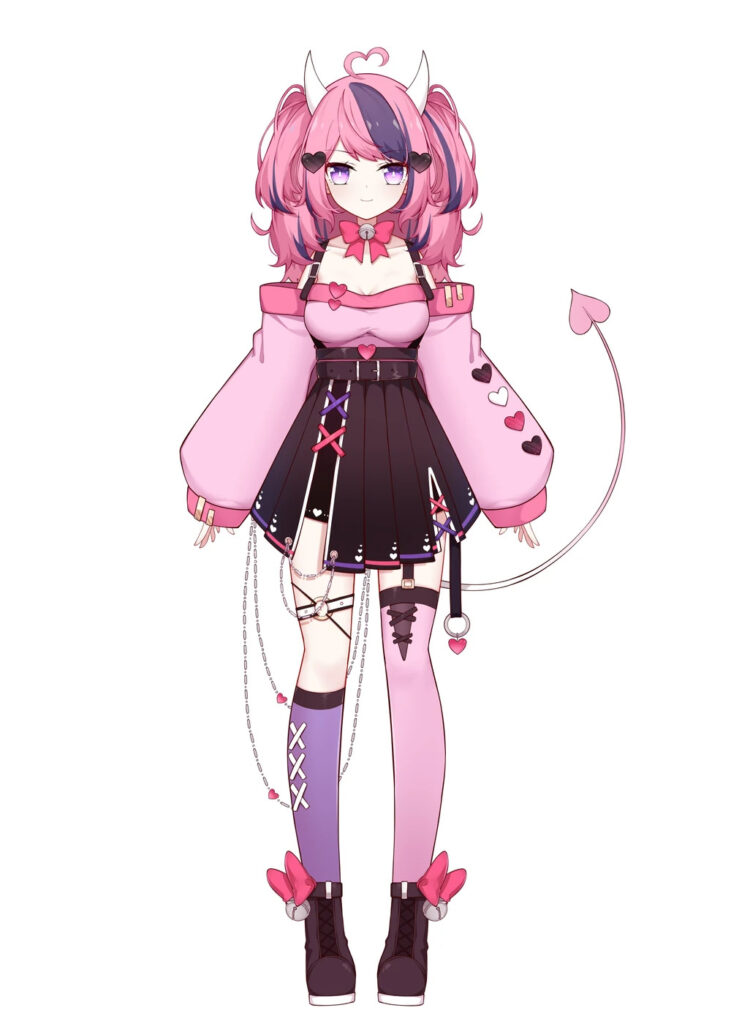
Over the past few years, streaming on platforms like YouTube and Twitch has become a new part of entertainment. There is also a new form of streaming – Vtubing. VTubers are fictional characters that can be in 2D or 3D format.
VTuber characters serve as an avatar for streaming, with the help of which streamers can create new personas and perform with them as new persons. The use of VTubers is becoming more and more popular, but their making is very demanding.
As already mentioned, there are two types of VTuber models, these are 2D and 3D. 2D models are usually inspired by the Japanese style of drawing as we know it from manga and anime. This process is the more challenging one out of these forms of creating VTubers.
2D Characters
For 2D characters, the entire character must first be drawn using a digital drawing program such as Photoshop. It should be kept in mind that each part must be drawn individually. For example, hair is made out of several different parts, so that it can behave correctly when the model is moving its head. It is necessary to draw different emotions on the face and adjust the individual parts of the eyes and mouth accordingly. When the character is drawn and its parts properly divided you can start rigging. For rigging there are special programs. With the help of these programs, you can animate the whole character, but it is necessary to take care that all parts match each other correctly.
3D Characters
With 3D VTubers, the process is a bit easier. You need to create a 3D model. Different software exists, with which you can create a 3D VTuber, without modeling or rigging it yourself. You can also model your own character. This can be done with Blender, where the characters can also be rigged. This process is a bit easier than 2D VTuber creation, but it also requires enough knowledge and patience to get to the end result.
Designing VTuber characters is a time-consuming work that requires a lot of skill.