IMPULSE #4

Recently, I had the opportunity to visit the Natural History Museum in Graz, located in the Joanneumsviertel. It’s a museum known for its extensive collection of natural history artifacts, ranging from fossils to live exhibits, and it offers a unique blend of scientific information and interactive experiences. For someone like me, who is focused on the role of interactivity in public education for my master’s thesis, this visit was an inspiring and thought-provoking experience.

In this blog post, I’ll reflect on how my visit to the museum relates to my ongoing research and how it has sparked new ideas for incorporating interactive elements into educational spaces.

Exploring the Museum: A Blend of History and Technology
The museum itself houses a staggering 2.1 million objects, including 1.1 million animals, 650,000 plants and fungi, 200,000 fossils and rocks, and 100,000 minerals. One thing that stood out to me was the diversity of the exhibits—not just in terms of the specimens, but in how they were presented. The museum is divided into several areas, including a main exhibition house in the Joanneumsviertel and other specialized locations like the House of Biodiversity and a study center.

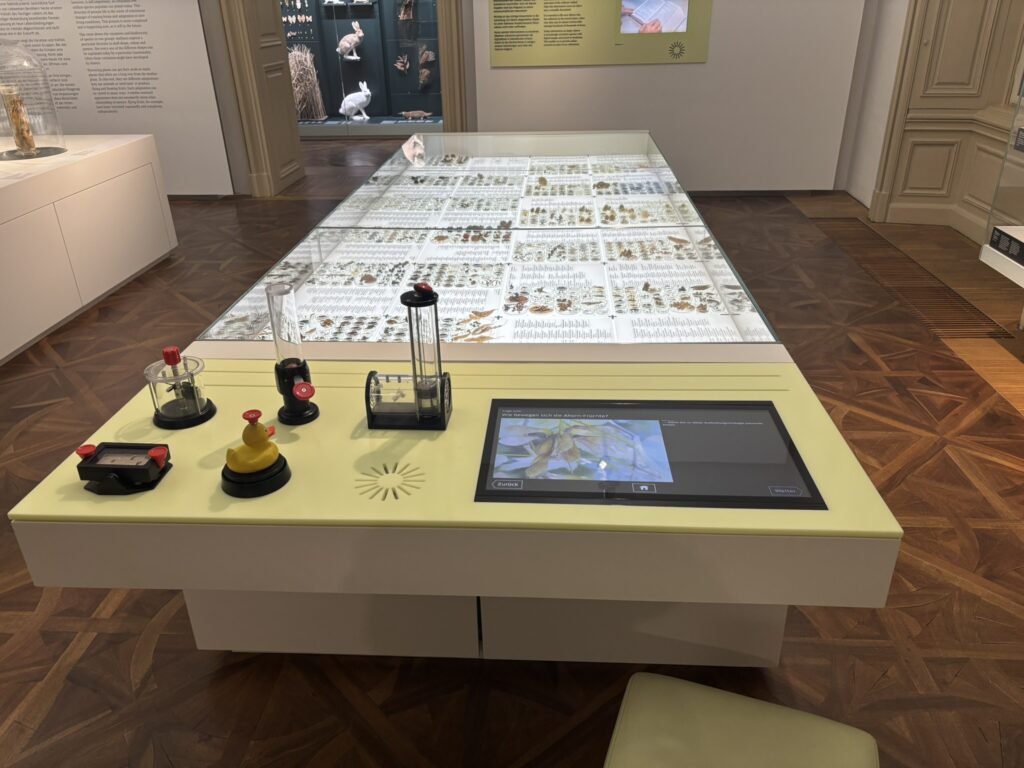
What made the museum especially interesting was the way it integrates modern interactive elements into its exhibits. For instance, there were various touchscreens, video stations, quizzes, and mini-games designed to engage visitors of all ages. The use of these interactive tools helped to bring the information to life, allowing visitors to engage with scientific concepts in a more immersive and hands-on way.
Observation of Visitors and Their Interactions
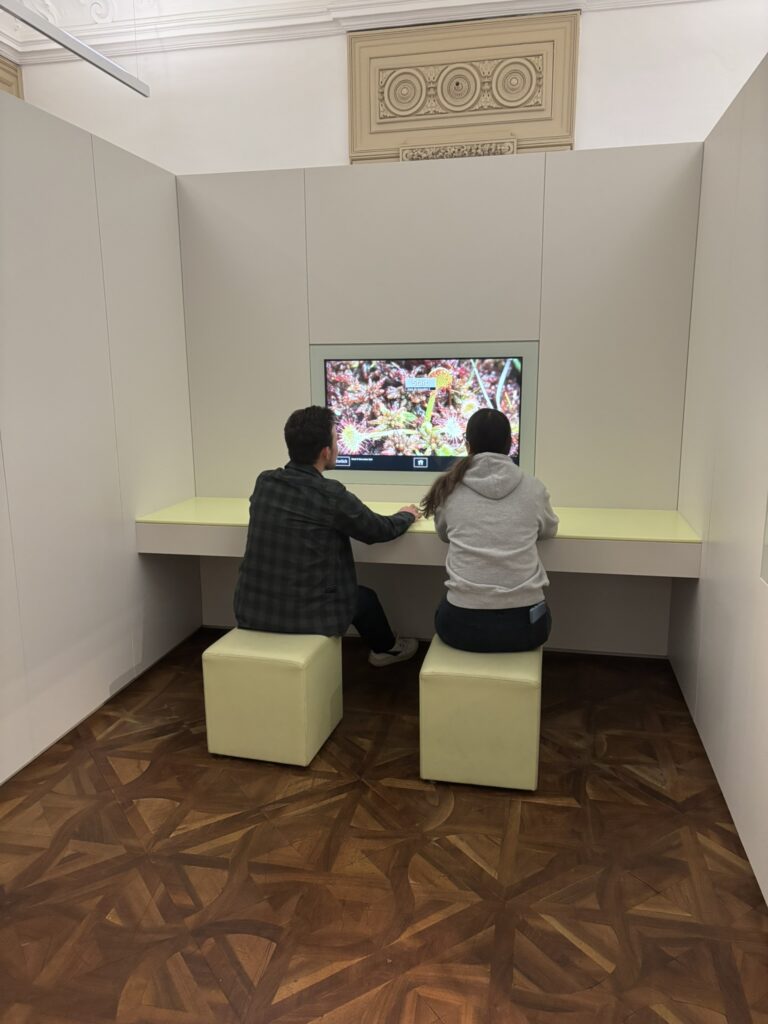
One of the most insightful parts of my visit was observing how other visitors interacted with the exhibits. It was fascinating to see how people—especially children—were drawn to the interactive components. Instead of passively looking at static displays, they could actively engage with the material. For example, touchscreens allowed visitors to explore different animal species or geological formations at their own pace, and the quizzes added a gamified element that made learning fun.

I paid particular attention to how different people used these interactive stations. Some immediately gravitated toward them, eager to try the mini-games or watch the educational videos, while others preferred to observe first before engaging. It became clear to me that offering a variety of interaction types—both digital and physical—is key to capturing a wider audience. This is something I want to explore more in my own research: how different types of interactivity appeal to different types of learners and visitors.

The educational value of these interactive exhibits also became apparent. Visitors seemed to retain more information when they were able to manipulate objects on a screen or participate in an activity. It’s one thing to read about fossils or minerals in a textbook, but it’s another to be able to zoom in on a high-resolution image of a specimen and explore its details or even simulate a fossil excavation in a mini-game.
Inspiration for My Master’s Thesis: Interactivity in Educational Spaces
This visit was particularly valuable for my master’s thesis, which focuses on how interactive design can be used to educate the public about complex topics, like biodiversity and conservation. The Natural History Museum in Graz gave me a lot of inspiration for how museums can implement these elements successfully.

I’ve been reflecting on how these interactive stations could be translated into different settings—like zoos or aquariums, where I’m researching alternatives to traditional animal exhibits. Imagine an exhibit where, instead of seeing a captive animal, visitors interact with a touchscreen that shows the animal in its natural habitat through high-quality video or even virtual reality. They could learn about the animal’s behavior, its role in the ecosystem, and the threats it faces in the wild without ever needing to keep it in a cage.

Another exciting idea is how gamification can be used in educational settings. During my visit, I saw several examples of interactive quizzes and mini-games that made learning fun. This is something I’d love to explore further in my research—how introducing game-like elements can make learning about complex subjects, like conservation or animal behavior, more accessible and engaging.

What I found particularly insightful was how the museum tailored the interactivity to different age groups. The touchscreens and games were perfect for younger visitors, while more in-depth video content and quizzes appealed to adults. This layering of content, where different forms of interaction cater to different levels of knowledge, is something I want to explore more as I consider how to design educational exhibits that reach a broad audience.

Key Takeaways and Future Research Directions
One of the most important takeaways from my visit was realizing that interactivity is not just about technology—it’s about creating meaningful experiences for visitors. Whether it’s through touchscreens, games, or videos, the goal should be to immerse visitors in the subject matter and encourage them to actively engage with it. I’ve seen how this can work in a museum setting, and I’m excited to see how I can apply these principles to other spaces, like zoos or aquariums, where the focus can shift from passive observation to active learning.

For my thesis, this visit has reinforced the idea that technology can be used as a tool to deepen engagement without relying on outdated models like captivity or static displays. By creating interactive experiences that are informative, fun, and dynamic, we can foster a deeper connection between the public and the natural world.

Overall, my visit to the Natural History Museum in Graz was not just a fun and educational day out—it was an essential step in gathering inspiration for my research. The museum’s use of interactivity and its focus on making complex topics accessible to all kinds of visitors showed me what’s possible when we think creatively about how we share scientific knowledge. I’m excited to keep exploring these ideas and to see how they evolve as I continue working on my thesis.

Futher Reading
Eine Community für Naturfreunde · iNaturalist
BOLD – The Barcode of Life Data Systems
Naturkundemuseum und Studienzentrum: 20 Museen und 1 Zoo in Graz und der Steiermark

IMPULSE #3

A few days ago, I listened to a really powerful podcast featuring John Hargrove, a former SeaWorld killer whale trainer turned whistleblower. Hargrove spent over a decade living his childhood dream of working with orcas, but what he experienced behind the scenes at SeaWorld eventually pushed him to speak out against the inhumane treatment of these animals. He was also one of the main voices in the Blackfish documentary that exposed the reality of orca captivity.

This podcast struck a personal chord with me, especially since my current research is focused on animal welfare and the ethical challenges zoos and marine parks face. Listening to Hargrove’s firsthand account of his experiences made me think even more deeply about how captivity affects not only animals‘ physical well-being but also their mental health. In this blog post, I want to reflect on what I learned from Hargrove’s story and how it’s shaping my own research on finding better, more humane ways to educate people about animals without confining them to small tanks or cages.

Hargrove’s Journey: From Dream to Disillusionment
Hargrove shared that his obsession with becoming a killer whale trainer started when he was just six years old. After visiting SeaWorld, he was captivated by the shows and the trainers swimming with these giant creatures. That passion stuck with him all the way into adulthood, and by 19, he was living his dream, working at SeaWorld as a trainer.

But over the years, Hargrove began to see a much darker side to the world he had idolized. He explained in the podcast how he and other trainers were initially blinded by SeaWorld’s polished image. They believed they were helping these animals and educating the public. However, as Hargrove advanced in his career, he started noticing things that didn’t sit right—whales showing signs of stress, aggression, and physical damage from living in such confined spaces. He described this realization as a slow and painful process, as the truth about how the whales were being treated became impossible to ignore.

What really hit me was when Hargrove talked about how SeaWorld’s corporate interests often took precedence over the well-being of the animals. He gave specific examples of how the park neglected the whales’ needs, such as refusing to spend money on repainting the tanks, despite the whales peeling off and ingesting the paint out of boredom. Yet, they were willing to spend over a million dollars on fancy new LED lights to make the shows more visually appealing for the audience. It’s shocking, and it reveals how these parks prioritize profit over the very animals that draw in their revenue.

The Reality of Orca Captivity: More Than Just Physical Harm
One of the most heartbreaking parts of the podcast was when Hargrove described the psychological toll that captivity takes on orcas. He compared their lives in tanks to human solitary confinement, which, after hearing it, makes total sense. Orcas are incredibly intelligent and social animals, but in captivity, they’re often isolated, cramped into tiny spaces, and have almost no stimulation. Hargrove shared that the whales often become so bored and stressed that they self-mutilate by rubbing their bodies against the concrete walls of their tanks until they bleed. This was something I hadn’t fully grasped before—just how much of their behavior in captivity stems from deep psychological distress.

Hargrove also talked about his personal relationship with one of the orcas, Takara. He spent years working with her and described the emotional pain he felt when she was subjected to artificial insemination, something he was powerless to stop. He recounted how he would apologize to her during the procedure, knowing it was wrong, but also feeling trapped in his role as her trainer. This part of the podcast really hit me hard because it showed that even those who love these animals feel helpless in the face of corporate decisions that prioritize profit over ethics.

The Impact on My Research: Rethinking Education and Captivity
Listening to Hargrove’s experiences has made me reflect on the larger issue of how we educate people about animals. For many of us, zoos and marine parks are places we go to learn about wildlife, but how much can we really learn when the animals are confined to spaces that are nothing like their natural habitats? Hargrove made a great point: the animals we see in these parks aren’t behaving as they would in the wild. They’re stressed, unhealthy, and often medicated just to keep them alive. So, what kind of educational value is there in that?

This podcast has sparked even more ideas for my own research, particularly around how we can use technology to create more ethical alternatives. I’ve been thinking a lot about how virtual reality (VR) and interactive exhibits could replace traditional animal parks. For example, instead of seeing an orca perform tricks in a tank, why not create a VR experience where people can observe orcas in the wild, learning about their behaviors, social structures, and the environmental threats they face? This way, people could gain a deeper understanding and appreciation for these animals without contributing to the harmful practice of captivity.

Another area I’m now interested in exploring is legislation. Hargrove was an expert witness for the legislation that banned orca breeding in California, and it’s inspiring to see how real change can happen when the public becomes aware of the issues. My research could potentially focus on how design can not only educate people but also advocate for policy changes that protect animals from exploitation.

Moving Forward: A New Vision for Animal Welfare
Listening to Hargrove speak about his journey from being a passionate trainer to a vocal advocate for orca welfare really resonated with me. His story reminded me of the ethical dilemmas that come with trying to balance animal welfare with public education. As I continue my research, I’m more convinced than ever that there’s a better way to achieve both goals—one that doesn’t involve keeping animals in captivity.

I’m excited to explore how technology, design, and storytelling can offer new ways for people to connect with wildlife. Whether it’s through VR experiences or interactive exhibits in museums, I believe there’s huge potential to educate the public in a way that’s both engaging and ethical. Hopefully, by rethinking how we approach animal education, we can inspire a new generation of people to care about conservation—without needing to imprison animals for it.

Further Reading
World Orca Day: The cruel reality of marine parks | World Animal Protection UK
Mistreatment towards orcas, dolphins at SeaWorld leave them distressed – The Lancer Feed
Fate of orcas in captivity – Whale and Dolphin Conservation

Impulse 02 // CoSA A(R)dventure

A(R)dventure – CoSA | CoSA – Center of Science Activities

For my second impusle blog post I decided to visit an exhibition at the CoSa Museum in Graz together with my fellow student Vinzenz. The A(R)dventure 3: Habitat Red 6. This installation combines augmented reality through Microsoft’s HoloLens with physical interactions, creating an experience that was not only fun & engaging, but also made me think about climate change and the future possibilities of AR technology in the field of interaction design.

When I arrived, I was greeted by an enthusiastic member of the Project, who explained the concept thoroughly and helped me get started using the HoloLens. The adventure began as I followed H.I.G.G.S., a digital drone guide, through a fascinating time vortex that took me digitally through the lenses and physically by foot to a habitat on another planet in need of maintenance and care.
The first task was to manage the atmosphere control system. What made this interaction particularly interesting was the combination of physical valve controls with digital displays. As I turned the real knobs, I could see the atmospheric parameters changing on virtual graphs floating in front of my eyes. This immediate feedback loop between physical action and digital response created a natural and intuitive experience.

The next task took me to the power management system, where I found myself adjusting solar panels using a physical turning wheel. Through the HoloLens, I could see a window showing the actual panels moving outside the habitat, demonstrating how my actions directly affected the station’s power supply. This mix of tangible control and virtual feedback made adjusting something as small as a solar panel very important and interesting, and made me realise that solar power is very location dependent.
One of the less interactive tasks was plant pollination. Starting in a physical test chamber, I learned about the process on a small scale through an animation, before seeing it applied to a larger virtual plantation visible through digital windows. This move from small scale learning to larger scale implementation helped by first understanding the concept and then seeing it applied and its effects on the displayed plantation biosphere.
After pollination, the water filtration system needed some attention. Using a physical joystick, I operated a virtual crane to service the water purification system. Replacing an old filter with a new one. The amount of work required to have clean water was highlighted by this task, showing the importance of clean water, something we often take for granted on Earth.

Perhaps the most tactile experience was selecting materials for heat shield repairs. I was able to physically touch and examine different materials while receiving digital information about their properties and suitability for the repair job. This combination of sensory feedback and augmented information created a powerful learning experience about materials science.
The final task involved fine-tuning the habitat’s environmental controls using spring-loaded dials. As I adjusted humidity and other parameters, the digital graphs responded in real time and, importantly, these changes, like all other changes, persisted in the virtual environment, creating an immersive feeling that demonstrated the lasting impact of my actions.

The exhibition successfully communicated its underlying message about the Earth’s ecosystem without hitting you on the head, which is a difficult line to walk. By asking visitors to maintain artificial living conditions, it effectively illustrated the complexity of our planet’s natural systems, which we often take for granted. Each challenge in maintaining the habitat served as a reminder of the Earth’s perfectly balanced ecosystem. All in all, I found it a great experience and would advise anyone to try something similar if they have the opportunity.

What struck me most about this experience was how it challenged my previous assumptions about calm technology. As someone researching this area for my Master’s thesis, I had initially leaned towards purely analogue solutions and viewed AR and VR as potentially intrusive technologies. However, Habitat Red 6 demonstrated that a thoughtful combination of physical and digital interactions can create experiences that are both engaging and intuitive. The digital layer added depth and dynamics to the physical interactions, while the tangible elements grounded the experience in reality. This hybrid approach retained the benefits of physical feedback, while using digital technology to provide additional context and visualisation that would not be possible with purely analogue interfaces.

This experience significantly influenced my perspective on interaction design. Instead of seeing analogue and digital as opposing approaches, I now see the potential in combining tangible objects with digital layers of information to create interfaces that offer the best of both worlds. This insight will definitely influence the direction of my Master’s research, opening up new possibilities for designing more intuitive and meaningful interactions.

IMPULSE #2

Recently, I watched the 2013 documentary Blackfish, directed by Gabriela Cowperthwaite, which explores the controversial practice of keeping orcas (commonly known as killer whales) in captivity, particularly within the SeaWorld parks. The film, centered on the story of Tilikum, an orca involved in the deaths of three people, including trainer Dawn Brancheau, sparked deep reflections on the ethics of animal captivity. Moreover, it has significantly impacted my approach to research, pushing me to think critically about animal conservation, public education, and the role of zoos and marine parks.

In this blog post, I will reflect on how Blackfish shaped my understanding of orcas in captivity and how it relates to my broader research on animal welfare and interactive design solutions for raising public awareness.

The Tragic Story of Tilikum
The core of Blackfish revolves around Tilikum, a male orca captured off the coast of Iceland in 1983 and transferred between different marine parks, including SeaWorld Orlando, where he spent most of his life. What the film effectively conveys is not just the tragedy of the fatal incidents involving Tilikum, but the systemic issues surrounding orca captivity. Through interviews with former trainers, scientists, and experts, the film paints a grim picture of how these intelligent, social creatures suffer both physically and mentally when confined in small tanks for entertainment purposes.

Blackfish highlights several key points:

  1. Psychological Impact: Orcas are highly social animals, often living in complex family groups in the wild. The film demonstrates how the isolation and separation from family members can lead to severe psychological distress for orcas in captivity. This stress, Blackfish argues, contributes to the aggressive behaviors observed in Tilikum, behaviors that are rarely, if ever, seen in the wild.
  2. Physical Deterioration: In captivity, orcas are kept in tanks that are a fraction of the size of their natural habitats. This confinement leads to physical issues, such as collapsed dorsal fins, which affect the majority of captive orcas but are rarely seen in wild populations. The film also emphasizes the lower life expectancy of captive orcas, contrasting SeaWorld’s public claims that orcas live just as long in captivity as they do in the wild.
  3. Deceptive Practices: One of the more shocking revelations in Blackfish is how marine parks like SeaWorld have historically provided the public with misleading information about orcas, including exaggerated claims about their well-being in captivity. The documentary exposes the commercial motives behind the captivity industry, especially through the use of captive orcas in breeding programs, including Tilikum, despite his involvement in multiple fatal incidents.

Ethical Concerns and the Role of Zoos
Watching Blackfish stirred a deeper contemplation of the ethical dilemmas surrounding the captivity of large, intelligent animals like orcas. One of the most impactful aspects of the documentary is its ability to humanize the orcas, showing how these magnificent creatures suffer in confinement. The personal stories of former trainers also highlight the moral conflict many employees faced when they realized the harmful impacts of captivity on these animals.

For me, the documentary reinforced the notion that captivity, particularly in environments that prioritize entertainment over education, is inherently problematic. It aligns with my earlier reflections from a zoo visit where I observed the distress and unnatural behavior of other captive animals like primates, lions, and dolphins. The primary takeaway here is that traditional zoos and marine parks are often ill-equipped to provide the complex environments that these animals need to thrive. Instead of truly educating the public about the animals‘ natural behaviors and habitats, these facilities often present a highly edited, commodified version of wildlife that glosses over the harsh realities of captivity.

Inspiration for Further Research
One of the most powerful effects Blackfish had on me is its ability to inspire further learning and action. Orcas have always fascinated me, but this documentary deepened my interest in studying them, particularly in their natural environments. It became clear to me that the only way to truly understand these animals is to observe them where they belong: in the wild. Blackfish reinforced the idea that captivity not only deprives orcas of their freedom but also deprives us, as the public, of the chance to witness their authentic behavior.

This idea directly impacts my master’s research, which focuses on public education and the role of interactive design in raising awareness about animal welfare. The film highlights the need for alternatives to traditional zoos and marine parks—alternatives that don’t rely on confinement but instead use technology to educate the public. Inspired by this, I am now exploring ways to design interactive storytelling experiences that allow people to learn about orcas and other wild animals in a more ethical and impactful way. One possibility is the creation of virtual reality exhibits where visitors can experience orcas’ natural behaviors in their expansive ocean habitats, learning about their social structures, communication methods, and the environmental threats they face, without the ethical implications of captivity.

In addition to VR, interactive installations in public spaces could be another avenue for teaching the public about the lives of these animals. For example, an interactive exhibit could allow users to explore the migration patterns of wild orcas, offering a dynamic way to engage with and learn about their natural environments and conservation needs. The key here is to move away from the traditional zoo model and toward experiences that are both educational and ethically responsible.

Orca Captivity: A Catalyst for Change
Ultimately, Blackfish is more than just a documentary; it is a call to action. It not only exposes the ethical and moral issues inherent in keeping orcas in captivity, but it also challenges the public to rethink their relationship with animals in entertainment settings. For me, the film has provided a significant impulse for my own research, pushing me to explore innovative, technology-driven solutions that prioritize education, conservation, and empathy for wild animals.

As I continue to develop my master’s thesis, I intend to focus more on how we can use interactive design to foster a deeper understanding of animals like orcas in their natural habitats. By creating immersive, educational experiences, we can inspire a new generation to value and protect these animals without contributing to their suffering in captivity.

Further Reading
Blackfish – Wikipedia
Doku „Blackfish“: Warum ein Wal seinen Menschen tötete – WELT
Tierquälerei : TUI streicht Ausflüge zu Delfin- und Orca-Shows – WELT

IMPULSE #1

During a recent visit to the Tiergarten Nürnberg, I found myself grappling with a number of conflicting emotions. As a researcher focused on design and public awareness, this experience was especially impactful. Not only did it stir personal reflections on animal welfare, but it also provided significant inspiration for my master’s thesis. This blog post serves as both a reflection of my visit and an analysis of the potential research opportunities it has sparked, particularly concerning animal welfare, zoo alternatives, and interactive design for public education.

The Zoo: Between Nature and Captivity
The Tiergarten Nürnberg, opened in 1912 and relocated to its current site in 1939, covers an expansive 65 hectares, making it one of Europe’s largest zoos. Home to 310 different species and over 6,800 individual animals (as of 2020), it houses many notable attractions, including Germany’s first outdoor dolphin lagoon, a tropical rainforest-themed manatee house, and an aquatic park showcasing polar bears, sea lions, and penguins. With visitor numbers exceeding 1 million annually, it is undeniably a popular destination for locals and tourists alike.

Despite the beauty of its natural setting, complete with sandstone formations and water bodies, my experience visiting the zoo was far from serene. The animals, especially the primates, seemed distressed, constantly fighting in their enclosures. This created a chaotic atmosphere, and I couldn’t shake the feeling that many of the enclosures, such as those for the tigers, lions, and dolphins, were far too small. The discomfort I felt watching these animals in such confined spaces was palpable. Zoos, at their core, are spaces designed to educate and entertain, but I left the zoo with more questions than answers. The limited educational signage offered little insight into the animals‘ natural behaviors or conservation statuses. The lack of information and the unnatural behavior of the animals stood out to me as problematic aspects that need addressing in zoos today.

Criticisms of Zoo Practices: An Ongoing Debate
The ethical dilemmas surrounding zoos are not new, but they remain controversial. Critics, particularly animal rights organizations like PETA, have long challenged the captivity of wild animals, especially marine mammals like dolphins. The Tiergarten Nürnberg’s dolphin lagoon has faced significant criticism, with opponents arguing that no captive environment can truly simulate the expansive, complex habitats these intelligent creatures are accustomed to in the wild. Critics also raise concerns about the transparency of the zoo’s management, particularly in light of its past proposals to cull animals, such as baboons, to manage overpopulation.

The overarching ethical question is whether zoos, as institutions, have a right to confine wild animals for the sake of public education and entertainment. While zoos like Tiergarten Nürnberg contribute to conservation efforts and research, particularly in the realm of endangered marine mammals, the trade-offs are significant. Can the potential conservation benefits justify the confinement of large, intelligent animals like dolphins and tigers in relatively small enclosures?

This leads to broader questions that are central to my research: How can we, as designers and researchers, address these ethical concerns? Can zoos evolve to focus more on education, empathy, and immersive learning, rather than solely entertainment?

Designing Alternatives: Toward Interactive and Educational Experiences
My visit to the zoo, coupled with these ethical considerations, provided me with valuable insights for my master’s thesis, which focuses on zoo alternatives and the role of design in public education about animal welfare. I am particularly interested in how we can leverage interactive storytelling and exhibit design to create more impactful, educational experiences for the public, while simultaneously promoting conservation and animal welfare.

One idea that emerged from this visit is the potential for interactive installations in place of traditional zoos. Imagine a space where visitors could engage with interactive simulations or augmented reality experiences that allow them to learn about animals in a way that is both immersive and ethical. For example, rather than viewing a distressed dolphin in a small pool, visitors could experience a virtual reality exhibit that simulates the life of an orca in the wild, complete with educational content about the threats these animals face due to captivity, pollution, and climate change.

This approach could be especially impactful when considering highly intelligent species like dolphins or primates. Interactive storytelling could be used to teach visitors about the natural behaviors of these animals, their social structures, and the importance of their conservation. By using technology, we could create an exhibit that not only informs but also elicits empathy, perhaps even encouraging visitors to take action toward protecting these animals in the wild.

The Impact on My Research: A Clear Path Forward
This zoo visit has provided me with a clear impulse for my future research. It has reinforced my desire to explore alternatives to traditional zoo models, focusing on interactive, technology-driven solutions that prioritize animal welfare while still serving educational purposes. The tension between conservation and captivity is at the core of this debate, and I believe that immersive, interactive experiences could offer a way to bridge this gap.

Additionally, the lack of informative content in the zoo’s current exhibits has inspired me to think about how interactive exhibit design could enhance learning in public spaces like zoos, aquariums, and museums. Creating exhibits that both educate and engage the public, particularly on complex issues like animal conservation, could have a lasting impact on public awareness and behavior.

In conclusion, my visit to the Tiergarten Nürnberg was not just an eye-opening experience regarding the ethical challenges zoos face today, but also a catalyst for exploring new, innovative ways to educate the public about animal welfare. By using design to reimagine the visitor experience, we can create alternatives that are both ethical and educational, ultimately contributing to a deeper understanding and protection of wildlife.

Further Reading:
Tiergarten Nürnberg: Eine Frage der Moral – Bayern – SZ.de
tiergarten.nuernberg.de: Entdecken
Tiergarten Nürnberg: 50 Jahre Tierquälerei im Delfinarium

FC Bayern München vs Eintracht Frankfurt – IMPULS #3

4.11.24 – Anpfiff: 18:00

Ich habe ein Frauenfußballspiel (FC Bayern München gegen Eintracht Frankfurt) aufgenommen, transkribiert und dann analysiert. Ich wollte herausfinden, ob die Sprecher:innen ein Frauenfußballspiel anders kommentieren als ein Männerfußballspiel. Deswegen werde ich für den nächsten Blogpost, ein Männerfußballspiel analysieren und im nächsten Schritt die Unterschiede herausarbeiten. Es gab eine weibliche Kommentatorin und einen männlichen Experten. Die Schiedsrichterinnen waren alle weiblich. Das ist beispielsweise ein Unterschied zu einem Männerfußballspiel.

In den Transkripten der Spielberichterstattung finden sich keine explizit sexistischen Formulierungen, jedoch könnten einige Phrasen und Kontexte subtil auf stereotypische oder herablassende Einstellungen hinweisen, die im Kontext von Frauenfußball kritisiert werden könnten. Ein paar Beobachtungen dazu:

Fokussierung auf Körperlichkeit und Attribute wie Schnelligkeit

Es wird mehrfach erwähnt, dass Spielerinnen „eine brutale Schnelligkeit“ oder „eine Wucht“ haben und dass dies im Frauenfußball selten sei. Diese Betonung könnte implizieren, dass solche Attribute bei Frauen unerwartet oder ungewöhnlich sind, was als unterschwellige Abwertung wahrgenommen werden könnte.

Vergleiche mit Männerfußball

Aussagen wie „egal, ob das Männer- oder Frauenfußball ist“ suggerieren, dass der Frauenfußball oft als weniger relevant oder ernsthaft wahrgenommen wird und die Qualitäten der Spielerinnen im Vergleich zu Männern validiert werden müssen.

Bezeichnung “Mädels”

Einmal sagt die Stadionsprecherin folgendes: “ob du unterbrichst und sagst passt auf Mädels, Leibchen.” Es geht um die schlechte Sicht im Stadion wegen Nebel, und der Trainer würde das zu dem Team sagen, damit sie besser gesehen werden würden. Erwachsene Frauen “Mädels” zu nennen, ist jedoch fragwürdig. 

Erwähnung Persönlichkeit

Es wird über Nicole Anyomi gesprochen, und folgender Satz fällt “weil sie ja von vielen wegen ihrer großartigen Persönlichkeit hoch geschätzt wird.” Dass die Persönlichkeit von den Spielerinnen angesprochen wird, finde ich seltsam. Ich bin gespannt, ob das bei den Männern ebenfalls der Fall ist oder nicht.

Gesichtsverletzungen

“Da steht die Gesundheit der Spielerin immer immer an allererster Stelle gerade bei Gesichtstreffern. Insofern muss da auch Vorsicht geboten sein”. So die Stadionsprecherin zu der Gesichtsverletzung einer Spielerin. Hat das etwas damit zu tun, dass Frauen ein schönes Gesicht haben sollen? Oder gelten im Fußball Gesichtsverletzungen als die gefährlichsten. Hier bin ich auch gespannt auf den Vergleich mit dem Männerfußballspiel.

Die Sprache der Sprecher:innen enthält keine direkten oder absichtlichen sexistischen Äußerungen, zeigt aber Stellen, die typische Stereotype oder unterschiedliche Maßstäbe zwischen Männer- und Frauenfußball offenbaren könnten. Dies spiegelt möglicherweise tief verwurzelte gesellschaftliche Erwartungen wider, wie über Frauen im Sport gesprochen wird.

IMPULSE #4: Understanding Epilepsy – Key Insights from an Online Training

Being in contact with Tanja from Institut für Epilepsie in Graz, I received a lot of resources about epilepsy. One resource immediately caught my attention: selpers.com is a Vienna based online platform, which offers scientific and free online courses. Its mission is to help people with chronic diseases to understand their condition, ease treatment and increase their quality of life. At its core selpers believes, that patients can influence their course of the disease through their behavior.

Besides trainings and livestream events users can use texts, video interviews, animations, podcasts and checklists to receive what they need to know in an interactive and easy-to-understand way. A blog features interviews with experts, new research and stories.

I chose the training course „Epilepsie verstehen“ held by Assoc. Prof. Dr. Gerhard Luef. I expected the course to be a good refresher and overview of the topic of epilepsy, because I felt I still have some blindspots that would need to be filled. In the following I will go through the contents and what I’ve learned.

1. What is epilepsy?

Dr. Luef starts with giving a definition about the chronic disease. Epilepsy is one of the most common chronic diseases worldwide. Around 10% of people will experience a seizure at some point in their lives and approximately 5% of them will develop epilepsy. Seizures can happen to basically anyone, even individuals without prior diseases, such as students experiencing lack of sleep. While a single seizure does not necessarily mean someone has epilepsy, multiple unprovoked seizures typically characterize the disorder. Although epilepsy is not curable, it is manageable through medication for two-thirds of affected individuals. Surgical intervention can offer a permanent solution in some cases.

A seizure occurs when brain cells discharge electrical signals in an uncontrolled manner, much like a „short circuit“ or „electrical storm“ in a specific brain region. In some cases, the entire brain is affected, leading to disruptions in all senses, including loss of smell, taste or even hallucinations. The most common type of seizure is focal, which arise from specific brain regions. Generalized seizures, on the other hand, involve widespread electrical discharges across the brain. Although epilepsy does not usually cause permanent damage, untreated seizures can lead to memory impairment over time.

2. Causes of epilepsy

Dr. Luef explains epilepsy itself is not inheritable, but a genetic predisposition can increase the likelihood of experiencing a seizure. Some genetic and pre-exisiting disorders, such as Landau-Kleffner syndrome or Down syndrome, may promote epilepsy. Additionally, brain injuries caused by stroke, tumors, head trauma or severe concussions can lead to epilepsy because of a developed long-term instability in brain function. In general, anything harmful to the brain, including sleep deprivation and excessive alcohol consumption, increases the risk of seizures.

3. Symptoms and course of disease

Focal seizures may begin with an aura – a warning sign like nausea or sensory disturbances – before leading to loss of consciousness. Symptoms may include unusual smells, tastes, or involuntary movements like hand twitching. Dr. Luef claims that observers often find seizures distressing, especially when symptoms such as foaming at the mouth or bleeding occur. However, people with epilepsy typically do not feel pain during a seizure, though they may experience muscle soreness or injuries afterwards.

Absence seizures, very common for children and teenagers, are characterized as brief episodes of unresponsiveness, often mistaken for daydreaming. After a severe seizure, individuals may fall into deep sleep and/or experience disorientation for minutes to an hour possibly. Those who suffer generalized seizures usually have no memories of the event. Dr. Luef states that minimal intervention for bystanders during a seizure is best: To ensure a safe environment is the priority. If warning signs like sensory changes occur before a seizure, documenting them if possible can help with diagnosis of doctors and management of the disease.

4. Diagnosis of epilepsy

According to Dr. Luef’s opinion first seizures should always be examined by a medical professional as soon as possible, ideally within 20 hours. Common symptoms include tingling sensations, regularly occurring déjà vu episodes or sudden nausea. Neurologists and pediatricians use various diagnostic tools to differentiate epilepsy from similar conditions like syncope (fainting) or psychogenic seizures.

A proper evaluation in a clinical setting includes medical history, eyewitness reports, and physical examinations, followed by an electroencephalogram (EEG) and an MRI. EEGs measure electrical activity in the brain to detect abnormal patterns. After a first seizure, patients may need to stay in the hospital for further monitoring.

5. Living with epilepsy

For most people with epilepsy, lifelong medication and therapy is necessary. In emergency situations, placing a person in the recovery position and minimizing injury risk is essential. For individuals planning a family, proper medical advice is crucial since some epilepsy medications can cause birth defects. Seizures during pregnancy pose risks for both the mother and baby, but this according to Dr. Luef should not prevent expectant parents to not have children.

Avoiding seizure triggers, such as sleep deprivation and alcohol misuse in relation to the specific form of epilepsy, is important. It can be dangerous to forget medication, especially during activities like hiking, swimming or driving. Certain careers, such as pilot, train conductor or military service, consciously exclude people with epilepsy due to safety concerns.

Epilepsy can be life-threatening in rare cases, such as Sudden Unexpected Death in Epilepsy (SUDEP), which occurs in about 1 in 1,000 patients. But most people with epilepsy can lead full and unrestricted lives. Open discussions about epilepsy, participation in support groups and spreading awareness are key to improving quality of life for those affected.

6. My message to you

In the last part Dr. Luef addresses affected people and their dependants directly. Epilepsy is not something affected people need to be ashamed of. It is a normal disease like any other. The affected should talk openly about their disease and get into an exchange. They should stick to their medication plan and ask a medical professional for help, when intolerances occur. Last but not least major risks should be avoided. Following all this makes living with epilepsy very easy for the affected.

Reflections

Overall, this online training provided a very good and comprehensive overview. I felt quite well informed and wished I had taken this training earlier. It really helped to fill in the gaps in my knowledge. It was interesting to hear an expert’s perspective on the disease, especially the part about people being shocked when they witness an epileptic seizure. This is valuable to know for what I would like to test in my potential master’s thesis: Is a mobile device capable of delivering first aid information to public untrained bystanders? Finally, hearing all the aspects of what can cause seizures and how basically anyone can be affected left me feeling grounded and grateful for my health and the choices I make in my daily life, such as not wearing a helmet when riding a bike.

Resources

https://selpers.com/ueber-selpers

https://selpers.com/epilepsie

https://selpers.com/epilepsie/epilepsie-verstehen

Impuls #5 – Bewerte ein Buch (nicht) am Cover

Es wird vielen Buchwürmern ähnlich gehen wie mir: Bei der Auswahl des nächsten Lesestoffs lassen wir uns oft von der Gestaltung des Buchcovers leiten – denn der erste Eindruck zählt.

Wann immer ich einen Buchladen betrete, neige ich dazu, nur die Bücher in die Hand zu nehmen, die mich visuell ansprechen. Bücher in den Regalen finde ich hingegen selten, da die Auswahl anhand der Buchrücken und das notwendige Verdrehen des Kopfes deutlich schwieriger ist, als wenn die Bücher offen auf Tischen präsentiert werden. Deshalb bin ich überzeugt, dass die Gestaltung eines Buchcovers eine entscheidende Rolle spielt – insbesondere, um mir einen ersten Eindruck von der Geschichte zu vermitteln. Ich würde sogar behaupten, dass Buchcover, Klappentexte und die ersten Seiten (oder letzten Seiten – abhängig von der Platzierung des Impressums) größtenteils dieselbe Funktion erfüllen wie Titelsequenzen im Film. Aus diesem Grund widmet sich dieser Beitrag meinem bewussten Erleben eines Buchladenbesuchs.

Beobachtungen im Buchladen

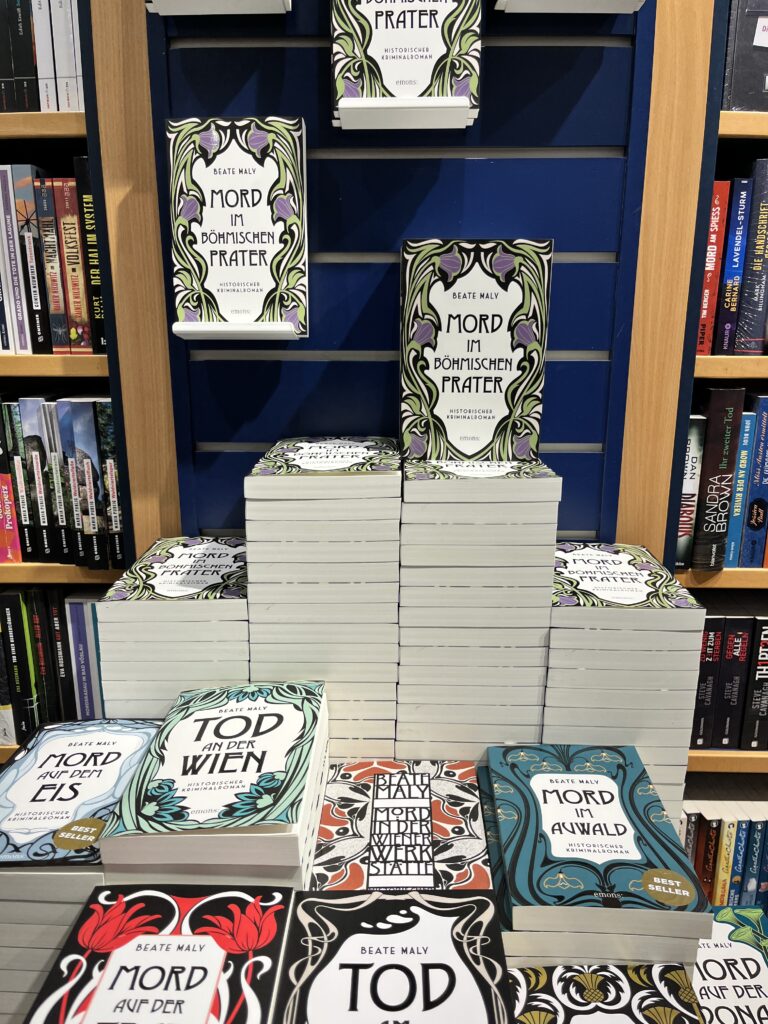
Bei meinem Besuch habe ich versucht, mein Verhalten im Buchladen gezielt zu beobachten. Schon beim Betreten fiel mir sofort der erste Tisch ins Auge. Ich musste nicht einmal die Titel lesen, um zu erkennen, dass es sich um eine Auswahl von Thrillern handelte. Betrachtet man diese Bücher, könnte man fast glauben, sie seien Teil einer großen Buchreihe: Viele Cover wirken düster, mit Blaustichen und oft einem kräftigen Farbakzent, meist in Rot – eine Anspielung auf Blut. Wenn das Genre visuell nicht eindeutig erkennbar ist, helfen oft die Titel, in denen Begriffe wie „Tod“ oder andere negative, mysteriöse oder kriminelle Wörter vorkommen.

Direkt neben diesem Tisch befand sich ein weiterer, der kaum gegensätzlicher hätte sein können. Hier dominierten Pastellfarben, verschnörkelte Schriften und niedliche, minimalistische Illustrationen – unverkennbar Bücher aus dem Bereich der Romanzen. Auch bei diesen Titeln ließen sich die Cover nahezu austauschen, ohne dass sie weniger passend wirken würden.

Zwar gibt es innerhalb der großen Genres Variationen, doch diese dienen vor allem dazu, das jeweilige Subgenre zu kennzeichnen. Beispielsweise sind Bücher aus dem Bereich Dark Romance selten in Pastellfarben gehalten, sondern tendieren zu dunkleren Tönen. Dennoch zeigt die Covergestaltung auch hier klar, dass eine Liebesgeschichte im Mittelpunkt steht.

Im allgemeinen Bereich der Romane scheint die Gestaltung der Bücher zunächst abwechslungsreicher als bei den thematischen Tischen. Doch auch hier lassen sich Muster erkennen. So ähneln sich beispielsweise historische Romane oder Nacherzählungen griechischer Mythologie oft stark, auch wenn sie in meinem Fall nicht alle auf demselben Tisch präsentiert wurden.

Andere Gründe für die Ähnlichkeit von Buchcovern liegen auf der Hand: Zum einen gehören die Bücher oft zu einer Reihe, zum anderen stammen sie möglicherweise von derselben Autorin oder demselben Autor. Auch der Verlag kann eine Rolle spielen, da manche Verlage ein einheitliches Grundlayout für ihre Bücher verwenden. Beispiele dafür sind die Reclam- oder Diogenes-Bücher. Zudem kann ein Verlag für bestimmte Kollektionen – etwa Klassiker – ein einheitliches Design wählen.

Integration von rechtlichen Bestimmungen

Die meisten Bücher beginnen nicht direkt mit der Geschichte, sondern nutzen die ersten Seiten für rechtliche und informative Hinweise. Wie Titelsequenzen im Film benennen Bücher stets bestimmte grundlegende Informationen: den Titel, den Namen der Autorin oder des Autors, den Verlag, die Auflage oder die ISBN. Das Öffnen eines Buches könnte beispielsweise so aussehen: Auf der ersten rechten Seite stehen Titel und Autorenschaft, auf der Rückseite das Impressum mit Verlags- und Auflagendetails. Die nächste Seite enthält häufig eine Widmung, und darauf folgt ein Zitat, das die Lesenden auf die nachfolgende Handlung einstimmen soll. Erst beim weiteren Umblättern beginnt die eigentliche Geschichte. So können schnell sechs bis zehn Seiten vergehen, bevor man in die Handlung einsteigt.

Abschließende Gedanken

Im Vergleich zu meiner ursprünglichen Behauptung kann man Buchcover und die ersten Seiten nicht vollständig mit Titelsequenzen in Filmen gleichsetzen. Das Buchcover lässt sich auch mit anderen Elementen der Filmvermarktung vergleichen, etwa mit einem Filmplakat. Der Klappentext könnte mit einem Trailer oder Teaser gleichgesetzt werden. Unsicher bin ich, ob sich ein Prolog oder Epilog eines Buches mit einem Vorspann oder Abspann im Film vergleichen lässt. Trotzdem passt diese nicht genaue Einteilung wieder haargenau zur Thematik. Titelsequenzen gehen oft auch in die Einleitung der Handlung über (Die Kreditierung werden direkt in die beginnende Handlung eingebettet. Es gibt keinen eigenen Vorspann.). Auch verfolgen verschiedene Werbematerialen für die Filmvermarktung dieselben Ziele wie die Titelsequenz, beispielsweise wollen alle Lust, darauf machen, den Film anzuschauen. 

Die „Uniformierung“ von Büchern innerhalb eines Genres bringt sowohl Vor- als auch Nachteile. Ein großer Vorteil ist die Orientierungshilfe: Ohne den Klappentext lesen zu müssen, kann man bereits eine Einschätzung des Genres vornehmen. So werde ich mich beispielsweise kaum in der Romanzen-Abteilung aufhalten, wenn ich eigentlich nach einem Thriller suche. Ähnlich helfen auch Titelsequenzen, sich in den möglichen Filmgenres zurechtzufinden. Außerdem kann ich mir vorstellen – bzw. habe ich das bei meinem Aufenthalt in der Buchhandlung bemerkt, dass Bücher mit einer visuellen Verwandtschaft zu anderen Büchern, welche mir gefallen haben, vor mir sofort positiv assoziiert werden und ich nach diesen greife. Es kann bei mir aber auch genau das Gegenteil auslösen: Ein Buch, dass einem anderen ähnelt, dass mir gar nicht gefallen hat, kann von mir durchaus ignoriert werden. Der wohl größte Nachteil der Einheitlichkeit ist jedoch das fehlende Gefühl von Einzigartigkeit.

Aus meiner Beobachtung und Analyse nehme ich mit, dass die Genrebildung in der Buchgestaltung und in Titelsequenzen viele Parallelen aufweist. Ein gutes Buchcover kann die Stimmung und den Inhalt eines Buches perfekt widerspiegeln – ganz ähnlich wie eine gelungene Titelsequenz die Essenz eines Films einfängt.

Weitere Quellen

Für visuelle Inspiration: 

http://bookcoverarchive.com

https://abcoverd.co.uk/archive?year=2022

Aufbau von Buchcovern:

https://www.artfuleditor.com/blog/2020/12/18/what-makes-an-eye-catching-book-cover

Einfluss der Gestaltung von Buchcover im Marketing

indiereader

https://www.thebookdesigner.com/value-of-a-professional-book-cover

Beispiel von Classic Penguins:

IMPULSE #3

Recap of World Usability Day Austria 2024

UX Graz Meetup event offered me a unique chance to connect theoretical knowledge with valuable, real-life perspectives from the UX community. The event, provided me with the opportunity to examine how casual meetings among industry professionals can influence the development of UX design strategies.
World Usability Day Austria 2024 was held online on November 14, centering on accessibility and usability in design. The agenda featured engaging presentations about how iPhones assist visually impaired individuals in their everyday activities, the #A11yFans initiative that promotes effective accessibility design, and conversations regarding typographic selections for better accessibility.

Various UX communities throughout Austria took part, including notable speakers like Claudio Zeni and Oliver Schöndorfer. The event was wrapped up with an open networking session, allowing participants to share insights and connect with each other. This event was free and open to attendees from around the world.

UX Community Engagement – Insights for my thesis

One of the most significant takeaways from the event was understanding the importance of community engagement in UX. The Meetup’s informal, open format encouraged dialogue between UX professionals, developers, and researchers, highlighting the role of such events in refining UX strategies.
While my thesis emphasizes a structured UX process—through stages like “Understanding the User” and “Mapping the User Journey”—the Meetup demonstrated that community-driven interactions often spark new insights into user needs and challenges.

While World Usability Day Austria 2024 was a pleasant experience with excellent networking prospects and a well-structured agenda, I personally thought it fell short in delivering innovative, impactful insights. The presentations and sessions were educational, but most of the material seemed repetitive and didn’t offer any unexpected or revolutionary findings. For those already knowledgeable about UX and usability, the event may not present many new viewpoints. Nevertheless, if you’re a beginner in the field or looking for a casual introduction to usability subjects, it could still be worth your while for the community aspect and general understanding.

https://www.meetup.com/uxgraz/events/304402433
https://worldusabilityday.at
https://www.youtube.com/watch?reload=9&v=mZ_O0eSX8GM&embeds_referring_euri=https%3A%2F%2Fworldusabilityday.at%2F

IMPULSE #2

Reading exercise – Jamie Levy „Ux Strategy„.

Inspired by Jamie Levy’s speech and personality during the UX Conference in Graz last year, I finally decided to purchase her book in my native language and audiobook – both for my personal development and master’s thesis. I was surprised to hear her voice while listening to her audiobook on Audible. (no product placement.) We get not only UX but also tips on business and marketing approaches.

UX Strategy is a book that guides us through the whole UX process step by step, incorporating real-life storytelling into the plot. As the author explains, „UX Strategy starts with the product vision and ends on a roadmap on how to tactically get there.“ The Strategy is to bring the product to the market.

„UX Strategy = Business Strategy + Value Innovation + Validated User Research + UX Frictionless“
UX Strategy = Delivering Value to users and achieveing business goals.

Jaime Levy’s UX Strategy provides a clear framework for designing digital products that not only meet user needs but also align with business goals.

The book emphasizes four core tenets of UX strategy:

  1. Business Strategy: A successful product must align with the business’s overall goals. Understanding market trends, business models, and competitive positioning is key.
  2. Value Innovation: To stand out, products must offer unique solutions that address real user problems in ways competitors do not.
  3. Validated User Research: Gathering insights directly from target users ensures that the product is solving the right problems for the right audience.
  4. Killer UX Design: An engaging, intuitive, and aesthetically pleasing design is critical to user satisfaction and product success.

The process for creating a UX strategy includes several steps:

  • Market Research: Analyze competitors to identify market gaps and opportunities. This helps teams avoid “reinventing the wheel” and focus on delivering unique value.
  • User Research: Understand the target users‘ identities, needs, and behaviors. Tools like personas and customer journeys clarify these insights.
  • Value Proposition Design: Brainstorm and refine innovative ideas that differentiate the product while solving core user problems.
  • Prototyping and Validation: Create prototypes or mockups to test the product’s concepts with real users. Feedback from usability tests and business viability checks helps refine the idea.
  • Iterative Design and Improvement: As the product evolves, it should continuously be tested and improved based on user feedback and market dynamics.

Throughout the book, Levy uses real-world case studies to demonstrate how companies have successfully implemented these strategies.
In summary, UX Strategy is a step-by-step guide for teams looking to create digital products that are both user-friendly and strategically positioned for success in competitive markets. It equips designers, product managers, and business leaders with tools to innovate, validate, and deliver exceptional user experiences while achieving business objectives.ols to innovate, validate, and deliver exceptional user experiences while achieving business objectives.

Applying the book into my Master Thesis:
1. Business goals: I would like to mirror her strategy for identifying measurable goals to guide UX decisions. Value proposition mapping or competitive research.
2. User behavior: Use her techniques for identifying gaps in the market or user frustrations to create a solid foundation for analyzing pain points and opportunities.
3. Understanding the user: Incorporate her strategies for synthesizing user insights to prioritize actionable outcomes, such as defining personas and refining user needs.
4. Killer UX Design: An engaging, intuitive, and aesthetically pleasing design is critical to user satisfaction and product success.
5. Ideation: Use her tools like the “Value Proposition Canvas” or prioritization frameworks to evaluate and refine ideas based on their potential to fulfill both business and user needs.
6. Prototyping: Adopt her methods for testing hypotheses through prototypes, ensuring they align with your defined business goals and user needs.
7. Continous Improvement: Align her approach to tracking KPIs and post-launch analytics with your matrix’s emphasis on continuous improvement and stakeholder collaboration.

https://www.audible.de/pd/UX-Strategy-Hoerbuch/B09B4GMXPX?qid=1732812601&sr=1-1&ref_pageloadid=not_applicable&pf_rd_p=e54013e2-074a-460e-861f-7feac676b789&pf_rd_r=DQRH41N4Z0DHTRAFRMBZ&plink=76Uz5k6N9hWarsL8&pageLoadId=RM3tSP0fPhtA46yg&creativeId=41e85e98-10b8-40e2-907d-6b663f04a42d&ref=a_search_c3_lProduct_1_1
https://www.blinkist.com/en/books/ux-strategy-en
https://worldusabilitycongress.com/