Road to M.A. 4: Redefining/Shifting Focus

In order to dive deeper into my master thesis topic, it was vital to reconsider the focus of my topic and gain different perspectives. Therefore, I went back to the beginning and asked myself what the original purpose of my master thesis was. In the beginning I wanted to gain awareness on the topic of female portrayal in film and how rage is portrayed in these characters. I picked on the topic of rage because, for me, it is one of the strongest emotions. There are tons of ways to express fury. While I was watching films or series, I noticed that the way of the female portrayal of rage differs from the male experience. The anger inside of a woman is more than tears streaming down her face and falling to the floor.

There is change in the media when it comes to acknowledging the existing and portray of female rage. This change comes with the influence of platforms like tiktok, Instagram. The younger generation stumbles upon films like „Girl, Interrupted“ or „Promising Young Women“ and interpret it with the way they were raised. In a time where you can openly speak about smashing the patriarchy and „what they do to practise micro feminism every day“, these generations are rethinking the female way of living and expressing emotions.

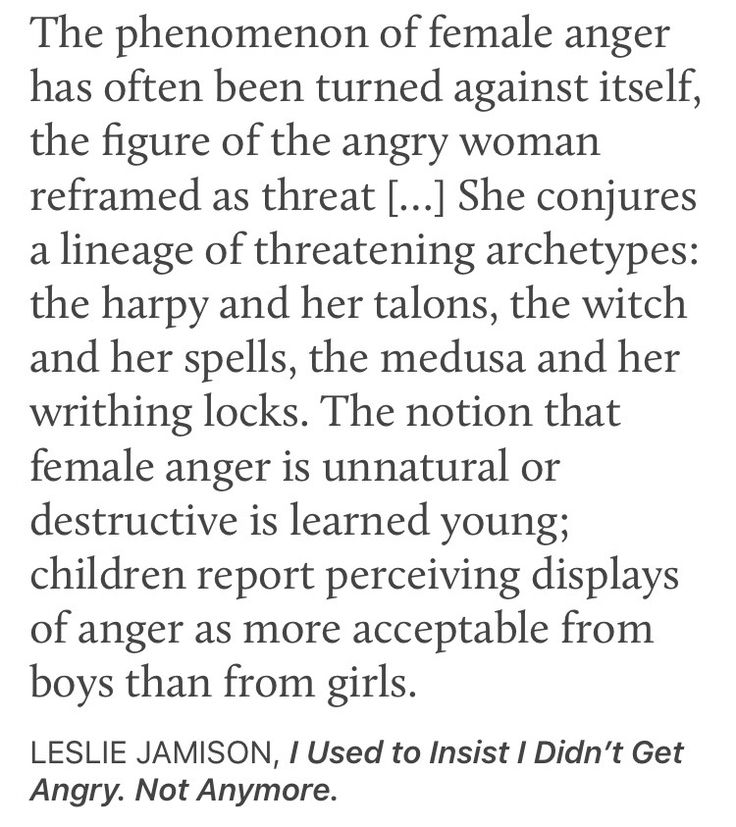
It is vital for female empowerment to be able to express such strong feeling and not feel as too loud, crazy, bitchy or unattractive. Female rage demonstrates the world what happens when women are pushed to the brink, not able to express themselves due to growing up in the patriarchy conventions. The author Emma Wallace compares this phenomenon with the result of an ongoing regression. Regarding to her, anger does not exist in a vacuum – it’s the result of circumstances that need to be worked on. This statement ties to the essay of the feminist philosopher Amia Srinivasan that she published in 2018. In this essay Srinivasan states that anger is not counterproductive, it is a response to injustice. Those people who express their anger are told to tone down their emotions in order to have a more productive discussion. Example for that is the phrase that every woman experiences in their lifetime: “Calm down”. Srinivasan calls this phenomenon the affective injustice. Furthermore, Wallace writes about the imbalance within the expressions of anger. The most examples on female rage that are celebrated display a white woman. “The more intersectional a woman’s identity, the more threatening her anger becomes to oppressors”, so Wallace. Wallace believes that the main point of female rage is that the anger is there for a reason and it should be listened to not downplayed.

These articles and perspectives were the reason why I wanted to shift my focus. Back to where the phenomenon of female rage comes from and it’s evolution, representation in film and media, and its influence on Gen Z (or more the influence of Gen Z on female Rage 🙂 ).

Sources: https://theconcordian.com/2024/03/whats-this-about-female-rage/

IMPULSE #8 | Two YouTube Videos – Critical Voices on Digital Fashion 

Critical voices on the topic of “Digital Fashion” are numerous online. I recently watched two YouTube videos of creators voicing their skepticism on certain aspects of digital fashion.

YouTuber “Izzzyzz” offers a critical examination of the digital fashion industry, particularly focusing on the company DressX. Through a blend of humor, skepticism, and detailed analysis, she dissects the lofty promises of this burgeoning field, shedding light on its technological flaws, cultural implications, and environmental contradictions.

In recent years, the tech world has made bold forays into the fashion industry, promising a future where digital clothing would redefine how we dress, consume, and express ourselves. One company at the forefront of this movement, DressX, claims to revolutionize fashion through augmented reality (AR), virtual reality (VR), and artificial intelligence (AI). However, as explored by Izzzyzz, this vision may be more fanciful than feasible, marred by technological shortcomings, questionable environmental benefits, and cultural insensitivity.

Founded in 2020 by Ukrainian entrepreneurs Natalia Modenova and Daria Shapovalova, DressX markets itself as a digital fashion retailer, offering garments designed to be worn virtually—whether in metaverse environments like Roblox and Snapchat or through photos and videos using their Meta Closet app. This app allows users to map 3D-rendered clothing onto their images, ostensibly blending sustainability goals with tech innovation. On paper, the initiative sounds groundbreaking, yet in practice, its execution raises serious concerns.

One of DressX’s primary pitches is sustainability. By replacing physical garments with digital ones, the company aims to address overconsumption and waste in the fashion industry. Influencers, notorious for purchasing fast fashion in bulk to maintain fresh content, are a key target audience. However, the practical limitations of digital fashion—such as poorly rendered designs and awkward interactions with physical bodies—render it a hard sell. Furthermore, the company’s involvement in NFTs contradicts its sustainability ethos, as blockchain technologies are widely criticized for their substantial environmental impact.

Technological flaws also plague DressX’s offerings. The app’s functionality is often compared to basic Snapchat filters, with clothing options frequently clipping, shifting awkwardly, or looking amateurish. These failings are especially jarring considering the high cost of these virtual garments, which range from tens to hundreds of dollars. Even their flagship marketing content, aimed at showcasing the technology’s capabilities, features glaring imperfections that undermine their promise of a high-tech revolution.

Beyond technical inefficiencies, DressX’s broader implications raise cultural and ethical concerns. The app’s clothing frequently appears to favor slim, conventionally attractive bodies, reinforcing harmful beauty standards. Moreover, some of its marketing materials evoke problematic themes, such as the ability to change race or body type through virtual avatars, which risk trivializing significant social and cultural identities.

Despite these challenges, DressX has garnered attention from major brands and media outlets. Publications like Vogue and The New York Times have praised the company’s vision, while luxury labels like Fendi and Diesel have partnered with them to create digital garments. This acclaim has translated into financial success, with the company securing $15 million in funding in 2023. Yet, outside of the tech and fashion elite, consumer reception remains tepid at best. Online forums and social media comments often ridicule the product for its aesthetic shortcomings and inflated promises.

Izzzyzz’s critique highlights a recurring pattern in the tech industry: the promise of innovation often outpaces its practical application. Digital fashion might someday redefine how we engage with clothing, but DressX’s current iteration seems more like a tech gimmick than a revolutionary solution. While the concept of virtual clothing opens intriguing possibilities for creativity and sustainability, its realization requires far greater refinement and cultural sensitivity to truly resonate with the broader public.

Digital fashion remains a nascent field filled with potential and pitfalls. Companies like DressX are navigating uncharted waters, but the road to meaningful impact will require a commitment to addressing technological, environmental, and ethical shortcomings. Until then, the dream of replacing physical wardrobes with digital ones seems more like a speculative fantasy than a viable reality.

Another creator, fashion journalist Bliss Foster highlights in his somewhat critical video “The Problem with Digital Fashion” that he does not have a problem with digital fashion per se, but rather with how it is treated and talked about, as a part of a trend cycle and a technical fad. He acknowledges the value of digital fashion design itself, but also makes the argument that it should rather be treated as a separate discipline altogether. He exemplifies this by discussing a physical shirt that he owns and how all the material qualities and aspects of it are such integral parts of the design that it is impossible to reduce them away from fashion design. 


Sources

Bliss Foster. “The Problem With Digital Fashion,” April 4, 2022. Accessed January 5, 2025. https://www.youtube.com/watch?v=who1-kptZzo.

Izzzyzzz. “‘Digital Clothing’ Is the Newest Tech Scam,” November 15, 2024. Accessed January 5, 2025. https://www.youtube.com/watch?v=dWKrK91fk2U.

IMPULS #5 Adobe Livestream mit Michael Flarup

In diesem Adobe-Live-Stream während der OFFF16 spricht Michael Flarup, ein Designer und Experte für Icon-Design, über seine Arbeit und gibt praktische Tipps. Er teilt seine Leidenschaft für Icons, die er als die „Juwelen des Designs“ beschreibt, da sie eine präzise und komprimierte Form der visuellen Kommunikation darstellen.

Schwerpunkte des Streams:

  1. Hintergrund und Inspiration: Flarup hat über 15 Jahre Erfahrung als Designer und arbeitet weltweit an Projekten in verschiedenen Bereichen wie Spiele, Produkte und Interface-Design.Seine Arbeiten umfassen sowohl Illustrationen als auch funktionale Icons.
  1. Techniken und Tools:
  • Er betont die Bedeutung von Details und Präzision, besonders bei Icons, die oft in verschiedenen Größen erstellt werden müssen.
  • Flarup verwendet Photoshop für rasterbasierte Icons und empfiehlt ein Icon Template, welches die Erstellung und Anpassung von Icons in unterschiedlichen Größen erleichtert.
  • Die Kombination aus realen Texturen und digitalen Elementen gehört zu seinem typischen Stil.
  1. Kreative Ansätze:
  • Flarup experimentiert gerne mit Farben, Formen und Einschränkungen, um einzigartige Icons zu schaffen, die ästhetisch und funktional überzeugen.
  • Er spricht darüber, wie man durch Vereinfachung und visuelle Harmonie stärkere Designs entwickelt.
  1. Lernressourcen:
  • Neben Fachliteratur empfiehlt er, andere Designs zu analysieren und eigene Experimente zu machen.
  • Flarup bietet auf seinem YouTube-Kanal weitere Tutorials und Tipps, um anderen Designern den Einstieg in das Icon-Design zu erleichtern.

Bezug zur Masterarbeit „Iconic Type“

Flarups Fokus auf die visuelle Harmonie und die detaillierte Ausarbeitung von Icons passt sehr gut zu meinem Thema. Seine Methode und Tipps, durch Reduktion und gezielte Akzente visuell überzeugende Ergebnisse zu erzielen, bietet wertvolle Ansätze für die Gestaltung typographisch  abgestimmter Icons.

IMPULSE #7 | Business of Fashion Masterclass: “The Opportunity in Digital Fashion and Avatars” 

The digital transformation is no longer a distant concept for the fashion industry; it is an immediate reality that is reshaping consumer behavior, brand strategies, and the very nature of creative expression. This was the focus of an online session hosted by the Business of Fashion (BoF) on 18.11.2021, which explored the rapidly expanding opportunities in digital fashion and avatars. Industry leaders from Burberry and Jimmy Choo joined the discussion, sharing insights on how their brands are navigating this evolving landscape and embracing new possibilities offered by digital assets.

The event revolved around the rise of digital assets and their implications for the fashion industry. These assets encompass a range of categories, including virtual garments, customizable avatars, gaming-related digital items, and non-fungible tokens (NFTs). Research conducted by BoF underscored the growing consumer interest in these areas, revealing that half of the U.S. population is considering purchasing digital assets within the next twelve months. This trend is being driven by advancements in blockchain technology, the meteoric rise of gaming platforms, and the societal shifts catalyzed by the pandemic, which blurred the boundaries between the physical and virtual worlds.

Representatives from Burberry and Jimmy Choo offered vivid examples of how luxury brands are engaging with digital assets. Burberry’s collaboration with Mythical Games, for instance, led to the creation of „Sharky B,“ a digital NFT character featured in the game Blankos Block Party. The brand emphasized the importance of authenticity and creativity in its approach, going so far as to involve its physical design teams in the crafting of this virtual product. This ensured that Sharky B retained the exclusivity and attention to detail associated with Burberry’s legacy, while also allowing the brand to connect with gaming communities in a meaningful way.

Jimmy Choo, on the other hand, took a different route, partnering with artist Eric Haze to release a series of NFTs tied to a capsule collection. Their project included a charity auction of a unique digital-physical hybrid sneaker and a set of collectible “mystery boxes” featuring virtual designs. This initiative allowed Jimmy Choo to test the waters of digital engagement, attracting new, digitally savvy audiences while exploring how its brand identity could translate into the virtual space.

The session also examined the opportunities and challenges that digital assets present to the fashion industry. Gaming emerged as a particularly promising avenue for brands to engage with consumers. With billions of players worldwide, games provide an immersive environment where fashion brands can integrate their offerings, whether through skins, exclusive collaborations, or virtual runways. Additionally, NFTs and digital fashion enable brands to create and nurture communities, redefining the traditional notions of loyalty and membership. For instance, NFTs offer the potential to establish exclusive clubs or communities where membership confers both digital and real-world benefits. This blending of virtual and physical experiences is becoming increasingly significant as consumers spend more time in online spaces.

However, the journey is not without challenges. The rapid evolution of technologies like blockchain creates complexity in platform selection and strategy development. Brands must balance the allure of short-term experimentation with the need to build sustainable, long-term consumer relationships. As panelists noted, the volatility of NFTs and the speculative nature of the market require brands to be strategic in their approach, ensuring that their digital initiatives are grounded in their core values and resonate authentically with their audiences.

A recurring theme in the discussion was the importance of partnerships. Both Burberry and Jimmy Choo emphasized the value of collaborating with the right partners to navigate the complexities of the digital ecosystem. Burberry worked closely with Mythical Games to ensure its NFT character integrated seamlessly into the gaming environment, while Jimmy Choo partnered with a platform specializing in blockchain and digital collectibles to launch its NFTs. Such collaborations allow brands to tap into specialized expertise, ensuring they show up authentically and effectively in these new spaces.

Looking ahead, panelists shared their predictions for the future of digital assets in fashion. Gaming was identified as a particularly fertile ground for innovation and consumer engagement. The integration of play-to-earn models, where players can own and trade in-game assets as NFTs, offers a new layer of interactivity and value creation. At the same time, the panelists cautioned against rigid thinking and emphasized the need for brands to remain adaptable. The digital space is evolving rapidly, and those who can think creatively and redefine traditional notions of luxury behavior will be best positioned to succeed.

Another area of optimism was the potential for NFTs to build lasting connections between brands and consumers. NFTs offer an unparalleled opportunity to create a sense of exclusivity and authenticity, fostering deeper engagement and loyalty. For instance, owning a brand’s NFT could grant access to exclusive events, limited-edition products, or even virtual worlds where consumers can further engage with the brand’s story.

The fashion industry is uniquely positioned to thrive in the digital realm. With its emphasis on storytelling, creativity, and identity, the industry can leverage digital assets to craft compelling narratives and help consumers curate their digital identities. As consumers increasingly value self-expression in virtual environments, brands that invest in innovation, authenticity, and meaningful partnerships will lead the way into this exciting new frontier.


Sources

The Business of Fashion. “The Opportunity in Digital Fashion and Avatars | #BoFMasterclass,” November 18, 2021. Accessed January 5, 2025. https://www.youtube.com/watch?v=1IpRFzcYqkU.


BoF INSIGHTS. “The Opportunity in Digital Fashion and Avatars.” Accessed January 5, 2025. https://insights.businessoffashion.com/products/the-opportunity-in-digital-fashion-and-avatars.

IMPULSE #6

Conducting a Preliminary Group UX Survey Activity for My Master’s Thesis

Introduction
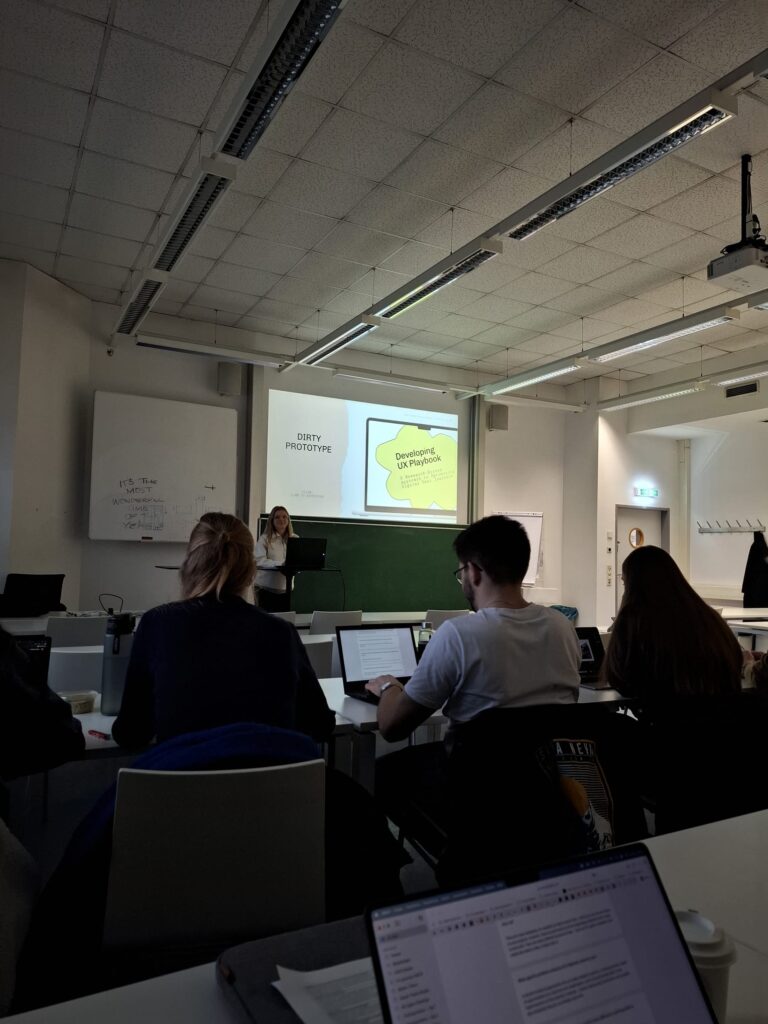
As part of my Master’s thesis, Developing the UX Playbook: A Research-Driven Approach to Optimizing Digital User Journeys, I conducted a group UX survey during class to gather valuable insights from my peers and colleagues. The goal was to explore the challenges designers face in advocating for UX research, assess the demand for a UX Playbook, and understand preferences for its format and features. This collaborative exercise not only provided critical feedback but also validated the relevance of my research questions and objectives.

Why Conduct a Group Survey?

The survey aimed to address these key objectives:

  1. Identify the obstacles UX professionals face when integrating research into workflows.
  2. Determine the value of a structured UX Playbook for improving processes and stakeholder communication.
  3. Gather insights into preferred formats, features, and real-world applications for the Playbook.

Conducting the survey in a classroom setting allowed for immediate feedback and a diverse range of perspectives, with participants varying in experience and professional roles, from designers to developers and researchers.

Key Findings from the Survey

The survey highlighted several critical pain points and needs, summarized as follows:

  1. Challenges Advocating for UX Research
    – Difficulty convincing stakeholders of the value of UX research due to time, budget, and resource constraints.
    – Misconceptions that UX is primarily aesthetic rather than research-driven.
  2. Demand for a UX Playbook
    – Participants expressed strong interest in a tool offering structured guidance and templates for UX research.
    – The Playbook was seen as a valuable aid for advocating research’s ROI to stakeholders.
  3. Current Tools Fall Short
    – Tools like Figma and Miro help with collaboration but lack step-by-step guidance.
    – Many existing tools are theoretical and fail to provide practical application steps.
  4. Preferred Formats
    – Most participants favored a combination of cards, PDFs, and interactive web tools, suggesting flexibility and adaptability to different project types.
    – Other innovative suggestions included digital games and books for increased engagement.
  5. What Makes the Playbook Stand Out
    – Key features desired include customizable templates, real-world case studies, and persuasive arguments tailored to stakeholders.
    – Participants emphasized bridging the understanding gap between designers and clients as a critical success factor.

How These Findings Shape My Thesis

  1. Refining the UX Playbook Concept
    The feedback confirmed the demand for a structured, actionable Playbook that simplifies UX research processes while providing persuasive arguments for stakeholder advocacy.
  2. Designing for Flexibility
    The preference for multiple formats (cards, PDFs, web tools) will guide the Playbook’s development to ensure it meets a variety of use cases and user preferences.
  3. Addressing Stakeholder Challenges
    The Playbook will incorporate ROI-focused arguments and evidence-backed insights to help designers communicate the long-term benefits of UX research.
  4. Iterative Testing and Validation
    The survey results highlight the importance of usability testing during the Playbook’s development to ensure it aligns with real-world needs and workflows.

Takeaways from the Group Survey

The group survey underscored the critical role of user research not only in UX design but also in developing tools like the Playbook. The diverse input from participants helped validate the need for a practical and persuasive resource that empowers designers and bridges communication gaps with stakeholders.

This experience demonstrates the power of collaborative research in shaping actionable solutions for real-world problems. With these findings, I am excited to move forward with prototyping and testing the UX Playbook, ensuring it becomes a valuable tool for designers and businesses alike.

Link to presentation and survey:
https://www.figma.com/deck/8000GnnIX79i1Pe36UXpe4/Playbook-11.12?node-id=1-635&viewport=-92%2C-108%2C0.51&t=4CsTYHWDSlChpfLD-1&scaling=min-zoom&content-scaling=fixed&page-id=0%3A1

Link to Survey Summary:
https://drive.google.com/file/d/1E6TcYw1Bd-nZGiDtmZVfJuY7BYG5qX_y/view?usp=sharing

IMPULSE #6 | Film: “Padmavaat” 

Recently, I watched the Indian movie „Padmavaat“. The film, which released in 2018 stirred up multiple controversies among some communities of the Indian public. Directed by acclaimed Indian director Sanjay Leela Bhansali, „Padmavaat“ is set in medieval Rajasthan. It revolves around the story of Queen Padmavati, who marries a noble king and lives a prosperous live. Soon, an ambitious Sultan hears of Padmavati’s beauty and forms an obsessive love for the Queen, sparking a plan to steal her away for himself.

Director Sanjay Leela Bhansali, who is known for his elaborate period dramas, had faced multiple instances of backlash from the Rajput community since the production of the film started. The controversy hinged mostly on grievances about the portrayal of Rani Padmavati, which were seen as insulting and misrepresenting. Protests even turned violent, with protesters vandalising sets and even attacking the director himself. After a rescheduling, the movie was finally released on 25 January 2018. 

One of the details of the movie which spurred backlash was the performance and costuming featured in the song. “Ghoomar”. Diegetic songs and choreographed dance numbers are a prominent aspect of Indian films and are featured in a large majority of films of all genres. On Twitter, critics argued that the song misrepresented the Rajput queen Padmavati, leading to claims of disrespect. Protests erupted in November 2017, with some asserting that Rajput queens never danced publicly. Women from the Rajput community joined the protests, voicing concerns that the depiction of the queen in revealing attire was inappropriate. They stated that a Rajput queen would neither perform before an audience nor expose her midriff.

The controversy also drew the attention of the Central Board of Film Certification. On 30 December 2017, the board requested edits to scenes showing Padukone’s midriff to present a more modest portrayal of Queen Padmavati. Instead of reshooting, director Sanjay Leela Bhansali used computer-generated imagery to implement the changes. A revised version of „Ghoomar“ was released on 20 January 2018, featuring Padukone’s midriff digitally covered.

The achievement of this digital clothing insertion is quite remarkable, since the dance number features complicated movements that not only pose an immense challenge for rendering a realistic movement and lighting of the fabric but are further complicated by the tracking the body of the actress Deepika Padukone. The original shot was not captured with tracking in mind, which must have made it extremely challenging for the CGI artists. Unfortunately, I was not able to find details on the process of how the digital clothes where inserted. It would have been a fascinating case study.

Why is this Topic Relevant for my Thesis?

The insertion of digital clothing to meet standards of modesty in different film industries around the world is quite a common practice. A different and more recent example apart from “Padmavaat” is the 2023 Hollywood film “Oppenheimer”, in which a nude scene featuring actress Florence Pugh was altered for some distribution markets by inserting a digital black dress.3

This censorship through digital clothes is one application of “digital fashion” that presents a very concrete real world use case. The implications of using these digital clothing insertions are worth discussing as a separate topic. Several aspects can be discussed, such as the validity of these modesty standards in the first place (which of course is a much larger and much more intricate topic). Alterations that are performed to the original vision of the costume designer by inserting these digital garments for censorship reasons are also an interesting discussion to have. I have not been able to find sources discussing whether the digital clothing designs were discussed with the costume designers of the respective movies. But the issue of whether or not they align with the original vision of the costume designer is questionable to say the least.

Images


1 “Padmaavat (2018).”

2 “Padmaavat Before and After: Look How They Secretly Covered up Deepika Padukone’s Midriff in Ghoomar.”

3 Rubin, “Florence Pugh’s Nude Scene in ‘Oppenheimer’ Covered Up by CGI Black Dress in India and Middle East.”

Sources

IMDb. “Padmaavat (2018)” January 25, 2018. Accessed January 5, 2025. https://www.imdb.com/title/tt5935704/.

Hindustan Times. “Padmaavat Before and After: Look How They Secretly Covered up Deepika Padukone’s Midriff in Ghoomar,” January 20, 2018. https://www.hindustantimes.com/bollywood/ghoomar-before-and-after-look-how-they-secretly-covered-up-deepika-padukone-s-midriff-in-padmaavat-song/story-6wceiAO2DAu3u0GgmJhdAM.html.

Rubin, Rebecca. “Florence Pugh’s Nude Scene in ‘Oppenheimer’ Covered Up by CGI Black Dress in India and Middle East.” Variety, July 24, 2023. https://variety.com/2023/film/news/oppenheimer-florence-pugh-nudity-india-cgi-black-dress-1235678665/.

IMPULSE #5

Reading activity: Applying Insights from Lean UX to My Thesis: Developing the UX Playbook

Lean UX: Applying Lean Principles to Improve User Experience by Jeff Gothelf and Josh Seiden offers a modern, collaborative approach to UX design, particularly suited for fast-paced, agile environments. The book emphasizes continuous feedback, cross-functional collaboration, and focusing on outcomes rather than deliverables—principles that align seamlessly with the goals of my thesis, Developing the UX Playbook: A Research-Driven Approach to Optimizing Digital User Journeys.

In this blog post, I’ll explore how key ideas from Lean UX can inform and enhance my research questions and the development of the UX Playbook.

Core Themes of Lean UX

  1. Outcome-Oriented Design:
    Lean UX prioritizes designing for measurable outcomes rather than static deliverables. This aligns with my thesis objective to define key steps in a research-driven UX process by identifying metrics like user retention, satisfaction, and conversion rates as core success indicators.
  2. Collaboration Across Teams:
    The book emphasizes cross-functional collaboration to ensure that all stakeholders—designers, developers, and business teams—are aligned. This directly informs my research question on how the UX Playbook can bridge the gap between designers and stakeholders, promoting shared understanding and decision-making.
  3. Iterative Processes:
    Lean UX advocates for building and testing ideas in small increments, a concept that can guide the iterative development of the UX Playbook itself. This approach ensures that the Playbook is refined based on real-world feedback from both designers and stakeholders.

How Lean UX Contributes to My Thesis

  1. Bridging the Gap Between Designers and Stakeholders
    One of my core research questions is how the Playbook can act as a tool to connect these groups. Lean UX provides a framework for creating shared understanding through collaborative techniques like problem framing, hypothesis generation, and shared outcomes.

    Application: The Playbook can include sections on conducting collaborative workshops inspired by Lean UX, helping designers and stakeholders jointly define goals and solutions.
  2. Key Steps in a Research-Driven UX Design Process
    The book emphasizes iterative cycles of research, design, and validation—steps that will form the backbone of my Playbook.

    Application: Each step in the Playbook can be structured around Lean UX’s Build-Measure-Learn feedback loop, ensuring research is integrated throughout the process.
  3. Simplifying UX Advocacy
    One challenge I’m addressing is the difficulty designers face in advocating for UX research. Lean UX stresses focusing on outcomes that stakeholders value.

    Application: The Playbook can include „killer arguments“ derived from Lean UX principles, such as demonstrating the ROI of iterative testing or the cost-saving benefits of early research.

Research and Playbook Development Inspired by Lean UX

Practical Tool Design

To align with Lean UX’s collaborative ethos, the Playbook will be designed as an interactive, modular tool:

  • Steps and Techniques: Each module will provide actionable steps for key UX activities (e.g., journey mapping, prototyping, usability testing).
  • Flexibility: The Playbook will allow users to start at any point in the process, similar to Lean UX’s adaptable workflows.

Validating the Playbook

  • Inspired by Lean UX, I’ll test the Playbook iteratively, collecting feedback from designers and stakeholders to refine its usability and impact.
  • Surveys and usability tests will ensure the Playbook addresses real-world challenges and improves communication between teams.

Conclusion

Lean UX offers invaluable insights into creating agile, outcome-focused UX tools. Its principles will guide the structure and content of the UX Playbook, ensuring it not only helps designers navigate the research-driven process but also equips them with persuasive arguments to engage stakeholders. By embedding Lean UX ideas, the Playbook will become a practical, collaborative, and impactful tool for optimizing digital user journeys.

https://contentsquare.com/guides/ux/lean

https://medium.com/10x-curiosity/lean-ux-a-summary-from-the-ground-floor-bc195341dbea

https://careerfoundry.com/en/blog/ux-design/lean-ux-for-beginners

Geschlechterstereotype und das Unternehmertum

Unternehmertum als geschlechtsspezifischer Prozess

Unternehmertum wird als männliche Domäne gesehen. Der Unternehmer wird als „captain of industry“ und „trailblazer” beschrieben, was übersetzt so viel heißt wie „Industriekapitän“ und „Pionier“. Wird über eine Person nachgedacht, die ein erfolgreiches Unternehmen führt, halten sich männliche Stereotype hartnäckig. Ihnen werden maskuline Eigenschaften wie Risikobereitschaft und Ehrgeiz zugeschrieben, die sie zu geborenen Führungskräften machen. Dieser männliche Blick auf das Unternehmertum kann laut Ladge, Eddleston und Sugiyama ein Hauptgrund dafür sein, dass Frauen das Gefühl haben, dass sie nicht die notwendigen Fähigkeiten mitbringen, um ein erfolgreiches Unternehmen zu führen. Geschlechtsspezifische Sozialisationsprozesse können Grund für die Unterschiede zwischen weiblichen und männlichen Entrepreneurs sein. Die geschlechtsspezifische Sozialisation ermutigt Frauen und Männer dazu, Eigenschaften und Interessen zu haben, die mit ihrem Geschlecht in Verbindung gebracht werden. Die Kategorisierung in männlich und weiblich bringt Individuen dazu, Geschlechterstereotype zu entwickeln, um sich der eigenen Geschlechtergruppe zugehörig zu fühlen. Dazu zählen unter anderem Verhaltensweisen und Einstellungen, die „typisch weiblich“ bzw. „typisch männlich“ sind. Geschlechterstereotype sind präskriptiv und deskriptiv. Sie beschreiben wie Männer und Frauen tatsächlich sind und können gleichzeitig vorgeben, wie sie sein sollen.  In einer Studie von Eddleston und Powell aus dem Jahr 2008 zeigt, dass Frauen mit starker weiblicher Identität das Führen eines Unternehmens als Chance sehen, Ziele zu verfolgen die sozio-emotional sind. Frauen mit einer starken männlichen Identität streben in erster Linie nach geschäftlichem Erfolg. Die geschlechtsspezifische Identität spielt daher eine große Rolle, bei der Findung der eigenen unternehmerischen Identität und wie Frauen Unternehmertum definieren. 1

Verknüpfung der Geschlechtsidentität mit der unternehmerischen Identität

Die unternehmerische Identität gibt auf die Fragen „Wer sind wir?“ und „Was tun wir?“ eine Antwort. Der Austausch zwischen der eigenen Person und anderen ist Teil des Prozesses der Identitätsfindung. Beim Schaffen der eigenen Identität werden mehrere soziale Identitäten kombiniert, wobei die verschiedenen Identitäten unterschiedlich wichtig für das Selbstkonzept des Individuums sein können.  Die Forschung legt dar, dass Frauen dazu tendieren, erfolgreiche Unternehmen mit Eigenschaften in Verbindung zu bringen, die stereotyperweise Männern zugeschrieben werden. Entrepreneurship wird als unvereinbar mit der weiblichen Rolle wahrgenommen. Laut Ladge, Eddleston und Sugiyama wird das Selbstbild der Frauen durch die maskulinen Eigenschaften, die mit dem Unternehmertum in Verbindung gebracht werden, negativ beeinflusst. Geschlechterstereotype hindern Frauen daran, ihr volles Potenzial zu entfalten, wenn sie sich in Rollen wiederfinden, die als vermeintlich männlich gelten. Im Vergleich zu Männern nehmen sich Frauen in „männlichen“ Rollen mit weniger Selbstvertrauen und geringerem Status wahr. Personen mit Identitäten, die viele Eigenschaften aufweisen, die dem männlichen Geschlecht zugewiesen sind, haben stärkere unternehmerische Absichten als Personen mit „schwachen männlichen Identitäten“. Die Geschlechtsidentitätstheorie beschäftigt sich mit Eigenschaften und Verhaltensweisen, die mehr mit dem männlichen bzw. dem weiblichen Geschlecht assoziiert wird. Somit kann die Geschlechtsidentität einer Unternehmerin das Ausmaß beeinflussen, inwieweit sie sich selbst als Unternehmerin sieht. Welche Rolle eine Frau in der Gesellschaft als angemessen wahrnimmt, wird durch die Geschlechtsidentität beeinflusst. Frauen, die durch ihre Sozialisation eine stark weibliche Identität entwickelt haben, werden sich in Rollen wohler fühlen, die mit der gesellschaftlichen Erwartung an Frauen übereinstimmt. Wenn Frauen eine Identität aufweisen, die stark männlich ist, werden sie sich in Rollen sicherer fühlen, die weniger den gesellschaftlichen Erwartungen an Frauen entsprechen. Es kann zur Inkongruenz zwischen der weiblichen Geschlechtsidentität und dem Unternehmertum kommen. Laut Ladge, Eddleston und Sugiyama kann das ein Grund dafür sein, weshalb Frauen das Unternehmenswachstum beschränken. 2

Unternehmerische Identität

Die Identität ist treibende Kraft für eine erfolgreiche Karriere. Für Karriereentscheidungen ist es wichtig ein klares Gefühl dafür zu haben, wer man ist und was die eigenen Werte sind. Wie viel Zeit und Energie in eine Rolle gesteckt werden, hängt von der eigenen Identität ab. Ladge, Eddleston und Sugiyama sprechen von Individuen mit starker Arbeitsidentität, die all ihre Ressourcen in ihren Beruf stecken und daher eine höhere Chance auf beruflichen Erfolg haben.  Neben der potenziellen Inkongruenz zwischen der weiblichen Identität und der unternehmerischen Identität kann auch das Imposter-Syndrom Frauen daran hindern ihr volles Potenzial zu entfalten. Außerdem beeinflussen Geschlechterstereotype wie Frauen und Männer Kompetenzen und den Wert ihres Status in bestimmten Kontexten wahrnehmen. Wenn Frauen traditionell männliche Rollen einnehmen, wird dies abgewertet und nicht ernst genommen. Das Unternehmertum wird immer noch als männliche Domäne gesehen, in welcher Frauen ihre eigene unternehmerische Legitimität anzweifeln. Sowohl Frauen mit stark weiblichen Identitäten als auch Frauen mit stark männlichen Identitäten können negativ vom Imposter-Syndrom beeinflusst werden. Neben der Unvereinbarkeit mit der Rolle als Unternehmerin kann das Imposter-Syndrom jedoch besonders bei Frauen mit starker weiblicher Identität, Selbstzweifel und Ängste noch weiter verstärken. Das Imposter-Syndrom kann es Frauen zusätzlich erschweren, sich selbst als Unternehmerin zu sehen. 3

1 vgl. Ladge/Eddleston/Sugiyama 2019, S. 617f

2 vgl. Ladge/Eddleston/Sugiyama 2019, S. 618

3 vgl. Ladge/Eddleston/Sugiyama 2019, S. 618f

Literaturverzeichnis:

Ladge, Jamie/Eddleston, Kimberly/Sugiyama,Keimei: Am I an entrepreneur? How imposter fears hinder women entrepreneurs’ business growth. In: Business Horizons 62,5 (2019), S.615-624

Impulse #5

Temple Grandin: “The Autistic Brain”

As part of my research, I watched Temple Grandin’s talk at the Chicago Humanities Festival about her book The Autistic Brain. She shared powerful insights on autism, different ways of thinking, and how society often overlooks the strengths of neurodivergent individuals. Her talk made me reflect on the role of inclusive education and design, especially in creating tools that support different learning styles.

One of the key points she made is that autism isn’t a single condition—it’s a broad spectrum. Some people on the spectrum struggle with communication and daily tasks, while others, like Albert Einstein or Steve Jobs, may have been considered autistic by today’s standards but thrived in their fields. Grandin pointed out that traits like intense focus, pattern recognition, and logical thinking—often seen in autistic individuals—are what led to major technological and scientific advancements.

She made a really interesting comment:
„If we got rid of all the genetics that make autism, we wouldn’t have computers, we wouldn’t have electricity.“

This really stuck with me because it challenges the idea of autism as just a disorder—instead, it can be a different but valuable way of thinking. The challenge isn’t autism itself but how society fails to accommodate and nurture these unique abilities.

Grandin emphasized that people process information in different ways, and understanding these differences is key to inclusive education. She identified four main types of thinkers:

  1. Visual Thinkers (like herself) – Think in images, great at design, spatial awareness, and mechanics but struggle with algebra.
  2. Pattern Thinkers – See complex patterns, often excel in math, music, and abstract problem-solving.
  3. Verbal Thinkers – Think in words, strong in language-based tasks but may struggle with spatial skills.
  4. Auditory Thinkers – Process information through sounds and spoken words rather than visuals.

This made me think a lot about how traditional education systems fail to recognize these differences. Schools often push one way of learning—text-heavy, memorization-based approaches—which might work for verbal thinkers but leave out students who learn best through hands-on or visual methods.

Her talk reinforced the importance of creating diverse learning tools that cater to different ways of thinking. She talked about how many highly intelligent autistic children struggle in school simply because they aren’t given the right support.

This directly connects to my thesis—designing interactive, sensory-friendly learning tools can help bridge the gap between education and the different ways autistic children process information. Gamified learning, multi-sensory tools, and interactive design could make subjects like math, reading, and social skills more accessible to those who think differently.

The Importance of Pushing Kids to Be Independent

Another takeaway from Grandin’s speech was her concern about overprotection. She shared how her mother encouraged her to step out of her comfort zone, whether it was ordering food at a restaurant or hosting guests. She believes that helping autistic children develop independence early on is crucial, yet many parents and educators shield them too much, preventing them from gaining real-world experience.

This made me think about how learning tools should also help children develop practical skills—not just academic knowledge, but things like communication, problem-solving, and adaptability.

Watching Grandin’s talk was incredibly inspiring. It helped me realize that inclusive education isn’t just about making things easier—it’s about recognizing different strengths and giving all children the chance to thrive.

Some key ideas I want to apply to my work:

  • Designing for different types of thinkers – Creating educational tools that support visual, verbal, pattern, and auditory learning styles.
  • Encouraging independence – Developing tools that not only teach information but also life skills.
  • Promoting neurodiversity awareness – Highlighting the strengths of autistic individuals rather than just their challenges.

Temple Grandin’s perspective reinforced why design matters in education. It’s not just about creating “accessible” tools—it’s about making sure every child, no matter how they think, has the opportunity to learn, grow, and contribute in their own way.

IMPULS 6

Curatorial Lesson – Kuratoren-Workshop
Sommer 2024

Im Sommer 2024 hatte ich die Gelegenheit, an einem internationalen Kuratoren-Workshop teilzunehmen, der von der ACE – Association for Curatorial Education organisiert wurde. Der einwöchige Workshop bot eine inspirierende Mischung aus theoretischen Inputs, praxisnahen Einblicken und spannenden Exkursionen.

Renommierte Speaker, Künstlerinnen und Designerinnen teilten ihr Wissen und ihre Erfahrungen, wodurch wir tiefere Einblicke in die Welt der kuratorischen Praxis erhielten. Neben den Vorträgen und Diskussionen standen Besuche bei verschiedenen Kunstinstitutionen und Museen in Graz auf dem Programm, die uns neue Perspektiven auf zeitgenössische Kunst und ihre Präsentation ermöglichten.

Einige der Highlights des Workshops waren:

  • Rotor – Center for Contemporary Art
  • Ziegel – Plattform für Kunst und Kultur
  • Graz Museum
  • Reagenz Ost
  • Künstlerhaus Graz

Diese Besuche boten nicht nur Gelegenheit, unterschiedliche kuratorische Ansätze kennenzulernen, sondern auch, die Vielfalt und Dynamik der Grazer Kunstszene zu erleben.