Impulse #08 – Coachings And Talks

Links

The Critical Engineering Working Group: https://criticalengineering.org/

Studio Brückner: https://studio-uwe-brueckner.com/

Julian Oliver: https://julianoliver.com/
→ Impulse_08 | Feedback on my Thesis Topic & Next steps

For my last Impulse, I want to talk about the feedbacks I gather from 3 different experts. This week I had to chance to talk about my thesis expose with Ursula Lagger, Mr. Horst Hörtner from Ars Electronica Futurelab, and Mr. Kaltenbrunner from the University of Art and Design in Linz.

Ms. Lagger focused on my methods and the clarity of my exposé. She advised me to decide whether interviews are necessary and to refine my research focus. Her feedback reminded me of the importance of making my approach as clear as possible.

Mr. Hörtner gave me advice on presenting my work. After showing him my projects and portfolio, he suggested highlighting only three main projects that I want to pursue in the future. This helped me think about how to present my research in a more structured and impactful way.

Mr. Kaltenbrunner provided useful resources for my research and emphasized the importance of planning my installation. He suggested creating a draft, either in 3D or as a sketch, to clarify my concept. Since I already have experience with conceptual design, he encouraged me to refine my idea before moving into the production phase.

From these discussions, I learned that having a clear and focused exposé is crucial for my thesis. I also realized the importance of structuring my future projects and visually planning my installation before execution. These insights will help me stay organized and make my work more effective.

This feedback helped me see my next steps more clearly. Now, I will refine my thesis exposé, and start planning my thesis installation in a more structured way. Now, I feel more confident about how to move forward. These conversations really showed me the importance of balancing research with practical application!

IMPULSE #1.8

Talking to experts in your field can be intimidating. You go in expecting deep, philosophical discussions, maybe some critique, and — if you’re lucky — a few words of encouragement. Over the last two days, I had the chance to speak with two experts in human-computer interaction: Horst Hörtner from Ars Electronica Futurelab and Mr. Kaltenbrunner from the University of Art and Design in Linz. These conversations were part of my university schedule, but what I got out of them was much more than just academic feedback.  

One conversation felt like a motivational boost (with a healthy dose of honesty), while the other was more of a crash course in rethinking my approach to my master’s thesis. Both were interesting, challenging, and, at times, unintentionally hilarious. 

Horst Hörtner: Put Some Ego Into It!

First up was Horst Hörtner, a leading expert in human-computer interaction and the managing director of Ars Electronica Futurelab — an institution at the cutting edge of digital media, design, art, and technology. So, you know, no pressure. 

From the moment we started talking, it was clear that Horst is not one to sugarcoat things. He gave me some incredibly encouraging feedback about my work, calling it kinda impressive — which, coming from someone at Ars Electronica, felt like getting a thumbs-up from the tech gods. But then he followed up with something unexpected:  

“You should definitely put more ego into talking about your work.”

I had to laugh because, honestly, he’s not wrong. I’ve always believed in my work, but I tend to present it in a more straightforward, no-big-deal way. Horst, however, made it clear that confidence is not just about knowing you’re good — it’s about making sure everyone else knows it too. He said I already sound confident (as I should, apparently, because I’m “very good” at what I do — his words, not mine! 😆), but I need to own it even more.  

Then came the part that didn’t surprise me at all.  

“Everything I see here shows me that you’re a workaholic.”

Guilty as charged. I don’t even know how to argue with that one. But it’s nice when someone at one of the most important digital media institutions in Austria recognizes my dedication — workaholism and all.  

Mr. Kaltenbrunner: A Masterclass in Master’s-Thesis Thinking

Next, I had my conversation with Mr. Kaltenbrunner, professor at the Institute of Media Studies in Linz, head of the Tangible Music Lab, and co-inventor of the Reactivision framework. Basically, a serious expert in my field. This talk, though… this was an experience.  

I had roughly five minutes to present my master’s thesis topic, then in between the few rare moments I was allowed to answer his questions, I got some very insightful feedback. 

Here are the key takeaways from our conversation:  

1. Collaboration is key.

   – One of his biggest concerns was that my prototype shouldn’t feel like I just send my grandpa a link and then never check in again (Which, to be fair, would be kind of rude, but if you take a few seconds to listen to me, you would know that would never be the case for me and my prototype.)  

   – The app needs to focus on genuine collaboration — a space where family members actively contribute rather than just passively consuming information.  

   – This made me rethink how to design interactions that actually bring families together, rather than just giving them access to shared content.  

2. Storytelling, Legacies, and Family Heirlooms.

   – He suggested I go deeper into the storytelling aspect — not just digital legacies but also physical heirlooms (letters, objects, photos).  And I know this one as it makes total sense because, honestly, what’s family history without the things we pass down? Whether it’s an old watch, a recipe book, or that one piece of furniture nobody wants to get rid of, heirlooms hold as much history as the people who owned them. 

   – It made me realize that my app prototype could include ways to document objects and their stories, turning them into digital keepsakes. 

3. Version 1.0 is Enough (For Now).  

   – Mr. Kaltenbrunner reminded me that my master’s thesis doesn’t have to be the final, polished version of my project. It can be a solid Version 1.0, and I can build on it later.  

   – This was honestly a relief to hear. As someone who tends to go all-in on projects (see: *workaholic*), I sometimes forget that progress is better than perfection.  

4. Make an Explainer Video. 

   – He suggested that I create a short promotional video to explain my prototype — something that could be shared on social media and clearly demonstrate the app’s purpose.  

   – This was actually an amazing idea. Not only does it help communicate my project visually and concisely, but it’s also a practical way to generate interest and potential future collaborations.  

What These Talks Mean for My Future Work and Design

Both of these conversations reinforced some important lessons about confidence, design, and the creative process:  

– Confidence matters. If I’m good at what I do (and, apparently, I am), I need to talk about my work with pride and conviction.  

– Collaboration should be at the heart of my project. The prototype isn’t just a digital archive — it’s a space for families to interact, share, and co-create their history.  

– Objects tell stories too. My prototype should allow users to document not just people, but the heirlooms and artifacts that carry family history.  

– Version 1.0 is enough. My thesis is just the beginning, and I can continue refining and expanding my project long after I submit it.  

– Explaining ideas visually is crucial. A well-crafted video can make an abstract concept tangible, which is a skill I’ll definitely need in future projects.  

Final Thoughts: Two Days, Two Experts, Tons of Inspiration

Talking to Horst Hörtner and Mr. Kaltenbrunner gave me exactly what I needed — encouragement, constructive critique, and fresh ideas to push my thesis forward.  

Horst reminded me to own my skills and talk about my work with more confidence (and also called me out for being a workaholic, which… fair). Mr. Kaltenbrunner, on the other hand, helped refine my thesis direction, giving me a clearer vision of how to make my prototype more collaborative and meaningful.  

After these conversations, I feel more motivated, focused, and — dare I say it — ready to embrace my inner workaholic to bring this project to life.

And who knows? Maybe next time, I’ll talk about my work with a *little* more ego. After all, if you’re good at something, why not let everybody know? 😏  

Impulse #8 // Revision, Discussion and Refinement of my Master’s Thesis Topic

As I look back on the final week of my studies at the FH, I had the chance to engage in several feedback sessions that have proven to be incredibly insightful in shaping the direction of my Master Thesis. These discussions have given me a clearer understanding of how to proceed with my research. While the feedback varied, it has helped me refine my focus and define the next steps for my thesis, allowing me to consider several potential directions.

Narrowing the Focus

The first round of feedback centered on my Exposé, and the main takeaway was that my topic needed further narrowing. Although I had already considered focusing the topic, hearing this point helped me realize the importance of it again. My research idea is initially quite broad, and the feedback highlighted that by refining my focus, I could dive deeper into the subject matter and avoid becoming overwhelmed by its scope. This feedback has been essential in helping me move from a general concept to something more precise, but I know there is still work to be done to define it even further.

Exploring Awareness Control

On Thursday, I had a discussion with an external expert who helped me gain a better understanding of the significance of my thesis in the broader design field. The expert highlighted that the topic is intriguing and important, especially in the context of adaptive interfaces and awareness control – and that there is still much to explore, particularly in the design domain. The expert also suggested focusing on a single system where adaptive changes would be valuable, rather than trying to address multiple systems with uncertain demand. One of the most helpful insights was the emphasis on perception psychology and the way external factors, such as lighting and user attention, influence how an environment is perceived. These insights reinforced the idea that I should aim to create adaptive interfaces that respond to specific contextual factors, such as lighting conditions or the user’s level of awareness. By narrowing the focus to one such system, I would be able to provide more meaningful insights. It became clear that the next step should be to dive into awareness control studies and related research, to better understand how one adaptive interface could be implemented in various contexts.

A Broad Start

In my meeting with my thesis supervisor, the advice was to start with a broader focus and then refine it as I gathered more data. This approach seemed very practical, as it allowed me to work in a more flexible way, without feeling pressured to make a final decision right away. Instead of committing to a single example immediately, I was encouraged to start working in the area and refine my focus as I moved forward. This felt liberating, as it gives me the opportunity to explore the general topic before narrowing it down based on my findings. My supervisor also suggested focusing on one practical use case later one, such as maps or mobility systems for example – an area I had already considered but hadn’t fully committed to yet. Given that adaptive design could add significant value in these systems, I began to realize that this could be a potential direction to explore. However, I also decided that this focus is not yet fixed, and I have the flexibility to decide later on whether I want to pursue mobility systems or something else entirely.

Practical Applications and Testing

As I continued to reflect on the feedback, another external expert reminded me of the importance of context when designing adaptive interfaces. This expert emphasized that different contexts – such as different environments or use cases – have a huge impact on how interfaces should adapt. For instance, navigation systems for bicycles need to account for lighting conditions and external factors like weather or speed, which wouldn’t be as critical in other contexts, such as car navigation systems. This feedback underscored the importance of considering real-world scenarios and environmental factors when developing adaptive prototypes. By simulating these conditions, I could better understand how adaptive interfaces perform and how users interact with them

Deepening Research and Exploring Directions

Given all the feedback I’ve received, I have decided that the next step is to begin with deeper research into adaptive interfaces and awareness control. I will start by exploring existing research and looking into studies across various fields, including design, technology, psychology, and sociology. This will provide me with a better understanding of where the gaps in research lie and help me refine my focus. While I have already gathered substantial feedback about the potential of mobility systems and maps as an application for my thesis, I’m still undecided on whether this is the direction I want to take. The feedback has given me many solid entry points into this area, but I need to carefully consider whether this focus aligns with my interests and the goals of my thesis. There’s still the possibility that I might decide to explore another area entirely. If I choose to go in a different direction, I can still apply the same feedback to other systems and contexts. The decision will be made once I continue my research and start exploring practical examples and case studies. By reviewing papers and understanding the different challenges in the design of adaptive interfaces, I will be able to determine if mobility systems and maps are indeed the right focus, or if another domain would offer more opportunities for meaningful exploration.

Moving Forward with Flexibility

In conclusion, this final week of feedback sessions has been crucial in helping me define the next steps for my Master Thesis. While mobility systems and maps are strong potential directions, I’m still open to exploring other areas. My immediate next step is to begin deepening my research into adaptive interfaces and awareness control, and based on this research, I will make an informed decision on whether to pursue mobility systems or another area. With a clear plan for starting my research and refining my focus as I go, I am excited to move forward and see where my thesis journey leads.

IMPULSE #8

Erfahrungsbericht: Wiener Symphoniker im Congress Graz

About the Event

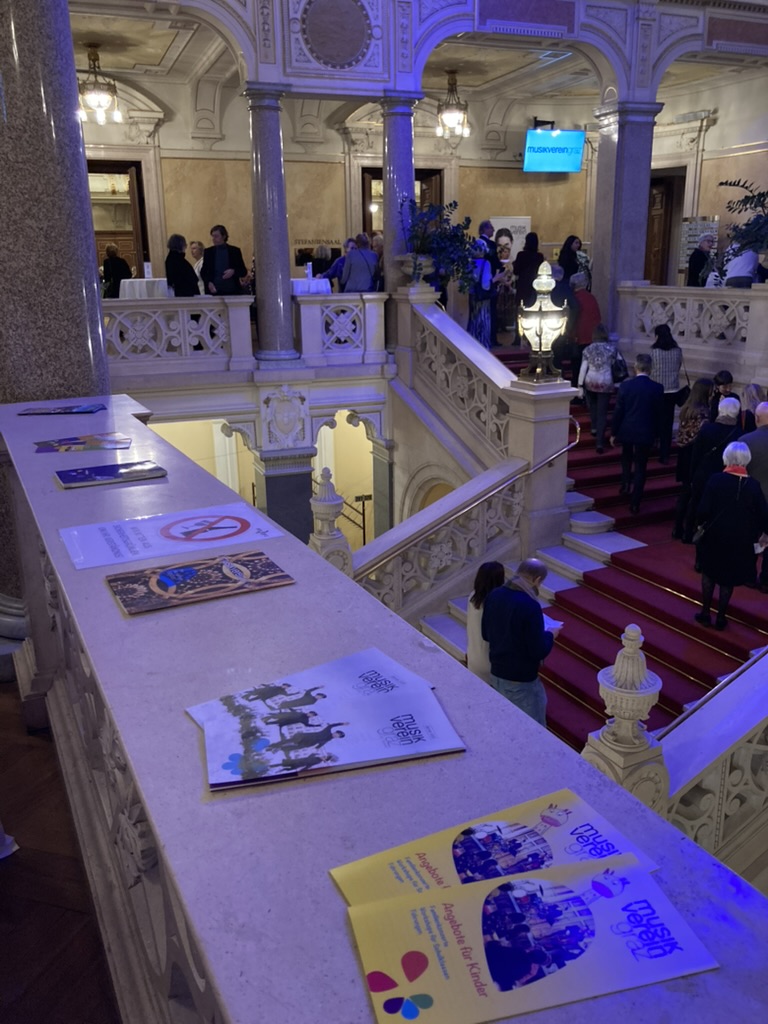
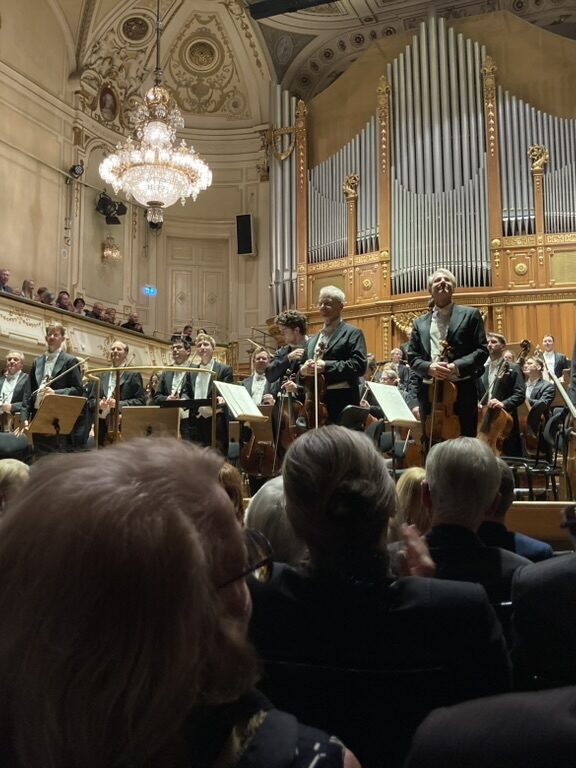
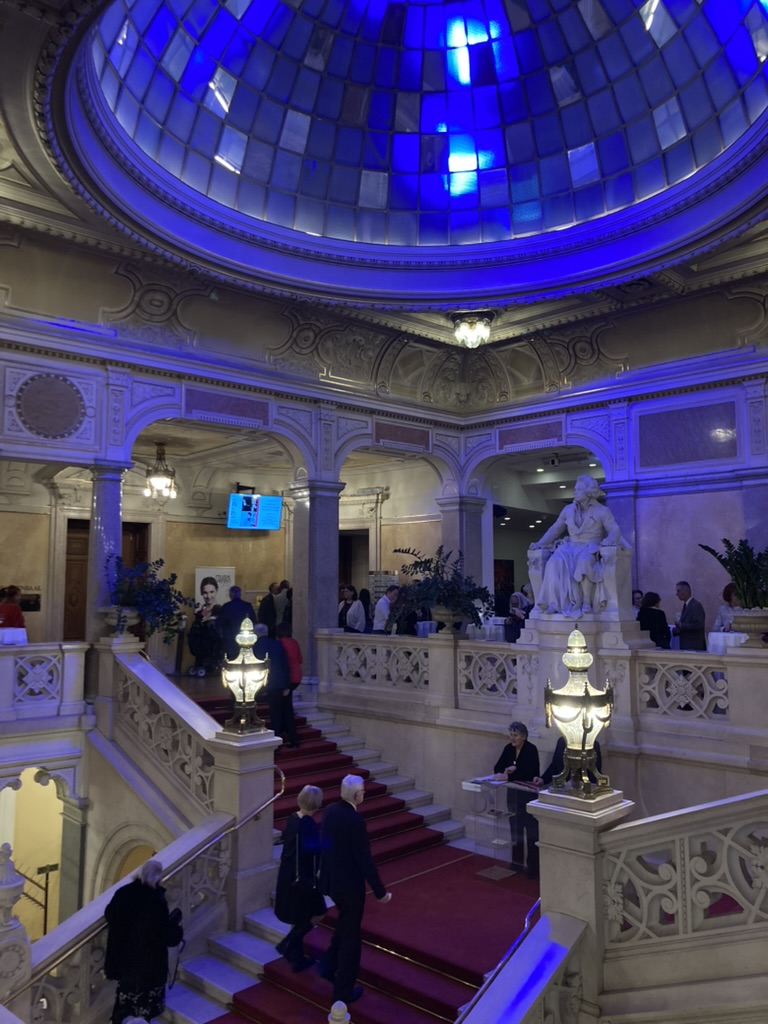
Am 20. Januar 2025 besuchte ich ein klassisches Konzert im Congress Center Graz. Die Veranstaltung wurde von den renommierten Wiener Symphonikern unter der Leitung von Patrick Hahn gespielt, mit Kian Soltani als Solisten. Das Programm war sorgfältig kuratiert und kombinierte klassische Meisterwerke mit ausdrucksstarken Interpretationen. Die Akustik des Saals bot ein immersives Hörerlebnis und brachte die feinen Nuancen der Orchesterdarbietung zur Geltung.

Bereits beim Betreten des Konzertsaals fiel mir auf, dass das Publikum hauptsächlich aus älteren, wohlhabend wirkenden Menschen bestand. Die Atmosphäre wirkte elitär, was mich als Neuling in der Welt der klassischen Musik etwas unsicher machte. Ich fragte mich, ob ich hier überhaupt richtig war. Ein Konzert dieser Art hatte ich zuvor noch nie besucht, und obwohl ich offen für Neues war, fühlte ich mich in diesem Umfeld zunächst etwas fehl am Platz.

Outcome

Die Körperhaltung der Musiker war unerwartet wild, was eine besondere Dynamik in das Konzert brachte. Gleichzeitig fühlte ich mich als Außenstehende – ich wusste nicht einmal genau, was eine Symphonie ist. Das Orchester spielte mit beeindruckender Präzision, die Synchronität der Musiker:innen war faszinierend. Es wurde schnell deutlich, wie viel Disziplin und Übung in solch einer Performance stecken muss. Besonders Patrick Hahn dirigierte mit solch einer Energie, dass es fast wie ein Tanz-Workout wirkte.

Die Sitzplatzgestaltung im Saal stellte sich als problematisch heraus. Die grünen Kinosessel waren so ausgerichtet, dass ich mir durch das ständige Drehen zur Bühne meinen Nacken verrenkte. Nach der ersten Hälfte bekam ich Kopfschmerzen. Eine Drehung der Sitze um 30° Richtung Bühne wäre eine echte Verbesserung.

Die Zielgruppe des Konzerts war mir nicht sofort klar. In den Pausen und nach dem Konzert wirkten viele Besucher:innen unsicher, ob es weitergeht oder ob die Veranstaltung zu Ende ist. Es herrschten gedämpfte, fast erzwungene Gespräche, was mich noch fehlplatzierter fühlen ließ. Besonders auffällig war, dass einige Gäste in der zweiten Hälfte (zumindest in den ersten Reihen) ihre Plätze tauschten – ein Phänomen, das mir zunächst rätselhaft erschien.

Beim Verlassen des Saals wurde ich mehrfach unhöflich angerempelt – es fühlte sich an, als ob wohlhabendere Konzertbesucher:innen sich einfach mehr herausnehmen könnten. Draußen gab es nur wenige Tische, die bereits vor Konzertbeginn von besonders schnellen Besucher:innen erobert wurden. Diese Dynamik überraschte mich und ließ mich darüber nachdenken, wie viel unausgesprochene Regeln es in solchen Umfeldern gibt.

Besonders hilfreich fand ich die lauten Kommentare einiger Gäste, die mir Orientierung gaben. Es gab ein ungeschriebenes Regelwerk: Ein einzelner Gong bedeutete „Es geht los!“, mehrere Gongs signalisierten ein noch dringlicheres „Jetzt aber wirklich rein!“. Musiker hörten auf zu spielen, das Publikum klatschte – oder eben nicht. Ich fragte mich, woher alle wussten, wann das Klatschen angebracht war. Der Mann hinter mir kommentierte: „Ah, Pause! Gehen wir uns die Beine vertreten.“ Diese Hinweise halfen mir, das Konzert besser zu verstehen und gaben mir Sicherheit.

Reflection/ Key Takeaways

Trotz meines anfänglichen Gefühls des Fremdseins konnte ich viel aus dem Konzert mitnehmen. Es war beeindruckend zu sehen, mit welcher Hingabe die Musiker:innen spielten und wie sehr sie in ihrer Kunst aufgingen. Das Konzert zeigte mir, dass Musik eine universelle Sprache ist, auch wenn sie für mich als Zuhörerin zunächst fremd erschien.

Allerdings wurde mir auch bewusst, dass klassische Konzerte mit einer gewissen Exklusivität behaftet sind. Die Atmosphäre wirkte distanziert, und es gab viele unausgesprochene Verhaltensregeln, die für Außenstehende nicht sofort verständlich waren. Die Sitzplatzgestaltung, die Unsicherheiten in den Pausen und das Verhalten des Publikums deuten darauf hin, dass es Verbesserungsmöglichkeiten in der Gestaltung des Konzerterlebnisses gibt, um es inklusiver und zugänglicher zu machen.

Impact on my Thesis

Dieses Konzert lieferte mir wertvolle Erkenntnisse für meine Masterarbeit zur Optimierung der Prozesse im Musikverein Graz. Besonders die Besucherführung und deren Unsicherheiten bieten interessante Ansatzpunkte. Beispielsweise könnten verständlichere Hinweise für Pausen und das Konzertende das Erlebnis verbessern. Auch die Gestaltung der Sitzordnung und der allgemeinen Besucherführung wäre ein Bereich mit Potenzial.

Ein weiterer relevanter Aspekt ist die Barrierefreiheit – nicht nur physisch, sondern auch in Bezug auf die Verständlichkeit der Abläufe. Viele Menschen könnten sich durch die Atmosphäre eines klassischen Konzerts abgeschreckt fühlen. Durch eine benutzerzentrierte Gestaltung von Hinweisen, eine interaktive Einführung oder eine optimierte Kommunikation könnten solche Veranstaltungen einem breiteren Publikum zugänglich gemacht werden.

Die emotionale Verbindung, die durch die Performance geschaffen wurde, verdeutlicht außerdem die Bedeutung einer durchdachten Veranstaltungsplanung im Kulturbereich. Mein persönliches Erlebnis unterstreicht die Relevanz von Usability und User Experience auch in nicht-digitalen Räumen wie Konzertsälen. Diese Erkenntnisse werde ich in meine weitere Forschung einfließen lassen und analysieren, wie klassische Musikveranstaltungen zugänglicher gestaltet werden können.

Links

IMPULSE #1.7

Some ideas never lose relevance, no matter how much time passes. The three TED Talks I reviewed — Taryn Simon’s The Stories Behind the Bloodlines, Andrew Solomon’s Love, No Matter What, and Jeffrey Kluger’s The Sibling Bond — all explore themes of family, identity, and the ways our relationships shape us. Even though these talks were given over a decade ago, their messages feel just as urgent today, especially in the context of my master’s thesis and the genealogy app prototype I am developing.  

Each of these talks, in its own way, challenges how we think about lineage, love, and human connection. They don’t just focus on where we come from  they explore what family means, how we define it, and how we preserve those relationships over time. These themes are deeply relevant not only for my thesis but also for designing better tools that bring people together, both in digital and physical spaces.  

Taryn Simon: The Stories Behind the Bloodlines

Taryn Simon’s talk takes a fascinating approach to genealogy — not as a simple record of who begat whom, but as a collision of order and chaos. She traveled the world documenting bloodlines and their complicated, often painful histories. Some families were torn apart by corruption, genocide, or war, while others carried legacies of political power, migration, or survival — and this hit close to home, because not too long ago all of this happened in my home country too. Her project, A Living Man Declared Dead and Other Chapters, exposes how bureaucracy, history, and fate shape family narratives, sometimes erasing people altogether.  

One of the most haunting stories she tells is about a man in India who was declared legally dead because his relatives bribed officials to take over his land. On paper, he does not exist. And yet, here he is — a living contradiction. This highlights a deeper truth: our official records do not always reflect our lived realities.  

Why this matters for my thesis and my prototype:  

– Many genealogy tools focus on official documentation, like birth certificates and census records. But what happens when those records are missing, manipulated, or just wrong?  

– My prototype should allow users to tell their family stories in a way that goes beyond bureaucracy — through photos, voice recordings, and personal memories.  

– The way Simon presents her research — structured bloodlines clashing with fragmented footnotes — reminds me once again that genealogy isn’t just about names and dates; it’s about the tension between order and disorder, memory and erasure.

Andrew Solomon: Love, No Matter What

Andrew Solomon’s talk is about identity, acceptance, and the complexity of family love. He explores the idea that some identities — like race or nationality — are passed down through generations (vertical identities), while others — like being deaf, gay, or neurodivergent — do not match what parents expect (horizontal identities). Families often struggle with these differences, sometimes rejecting their own children because they do not fit traditional molds.  

Solomon tells heartbreaking and hopeful stories of parents learning to accept children they once feared they would never understand — parents of children with Down Syndrome, disabilities, or even children who became violent. One mother, whose son was a perpetrator of the Columbine massacre, wrestles with the painful reality of loving a child who caused immense harm. Solomon’s point is clear: love and acceptance are choices, not automatic responses.  

Why this matters for my thesis and my app prototype:

– Genealogy is often treated as a linear inheritance, but real families are far more complicated. A family tree does not always reflect the relationships that truly shape us.  

– My prototype should maybe allow users to define family beyond biology — including adopted family members, close friends, or mentors who have played essential roles in shaping their lives.  

– Solomon’s discussion of acceptance and difference is relevant to design itself. Good design is inclusive — it acknowledges that not everyone fits into a neat category. Whether designing for accessibility or creating a platform that allows for non-traditional family structures — these ideas could shape my work, but I’ll cross that bridge when I come to it.

Jeffrey Kluger: The Sibling Bond

Jeffrey Kluger’s talk is a love letter to sibling relationships — the longest and often most formative relationships in our lives. He argues that siblings shape us in ways parents never can, influencing our personalities, our social skills, and even our career paths. Unlike parents, who eventually leave us, and children, who come into our lives later, siblings walk the entire journey with us (hopefully).  

Kluger also dives into birth order psychology, explaining how firstborns tend to be more responsible and achievement-oriented, while younger siblings develop charm and humor as survival mechanisms. He talks about favoritism in families, the impact of competition, and the deep, often unspoken loyalty between siblings — even when they drive each other crazy.  And as someone who has a much older brother, I can say that I agree with most of things said, but of course, every relationship is different.

Why this matters for my thesis and my app prototype:

– Sibling relationships are often overlooked in genealogy research. Most apps focus on parent-child connections, but my app could include features that highlight the influence of siblings — shared experiences, childhood memories, and inside jokes.  That is why I’m putting so much emphasis on storytelling.

– Kluger’s insights on birth order could inspire new ways to visualize family history. Imagine an interactive feature where users could see how birth order shaped different generations in their family.  

– More broadly, his talk reinforces that family history is not just about tracing ancestors — it’s about understanding the relationships that made us who we are and I’m all here for it.  

Why These Talks Matter for Design and My Future Work 

All three talks remind me that family is not just about genetics — it’s about stories, connections, and human experiences. This is directly relevant not only for my master’s thesis but also for the future of interactive design, digital storytelling, and genealogy apps.  

1. Storytelling is just as important as data. 

   – Genealogy tools should not just be family trees with facts — they should help people tell their family’s stories in rich and interactive ways. Taryn Simon’s approach to visually documenting bloodlines reminds me that history is not always clean and structured. My prototype should reflect both the order and the messiness of family history.  

2. Relationships shape us more than we realize.

   – Kluger’s discussion on sibling influence reminds me that genealogy apps should capture family dynamics, not just names. Whether designing genealogy tools, interactive exhibitions, or user-centered platforms, I want to focus on how people relate to one another — not just how they are related.  

Conclusion

These TED Talks reaffirm something I already believed: family history is not just about looking backward — it’s about understanding who we are today. Taryn Simon reveals how official records don’t always tell the full story, Andrew Solomon reminds us that family love is sometimes a journey, not an instant fact, and Jeffrey Kluger proves that our siblings shape us more than we think. 

For my thesis, for my app prototype, and for my future as a designer, these lessons will stay with me. Whether I’m working on genealogy, interactive storytelling, or user experience, the goal is the same: to create spaces where people can connect, reflect, and preserve the stories that truly matter.

IMPULSE #6

Briefing mit dem Musikverien Graz

About the Event

Ein paar Tage nach dem ersten Gespräch mit Herrn Baumann habe ich mich mit ihm, Dr. Michael Nemeth und Mag. Livia Krisch, BA im Musikverein getroffen. Gemeinsam haben wir besprochen, was die Anliegen sind und wohin eine Kooperation und eine Thesis möglicherweise laufen könnten.

Nachdem sich alle vorgestellt hatten, habe ich ihnen präsentiert, was ich in meiner Thesis gerne alles inhaltlich abdecken würde und sie haben mir Themen vorgestellt, bei denen sie Bedarf hätten, bzw. bei denen ich sie unterstützen könnte.

Outcome

Schnell haben wir einen gemeinsamen Nenner gefunden, uns grob auf einen Themenbereich geeinigt und einen Termin ausgemacht für ein weiteres Treffen, bei dem ich Interviews mit allen möglichen Mitarbeiter:innen führen, mich im Verein umsehen und Fragen stellen dürfte. Dieses sollte direkt nach den Weihnachtsfeiertagen stattfinden.

Zudem wollen sie meine Thesis in einem Newsletter ausschicken, um mich so mit weiteren Interviewpartnern (Mitgliedern des Musikvereins) zusammenzuführen.

Außerdem wurde besprochen, dass es wohl sinnvoll wäre, wenn ich zusätzlich dazu auch mit anderen, externen Personen über das Thema sprechen würde, da eines der Ziele, die sie gerne erreichen würden ist, dass sie mehr Mitglieder gewinnen möchten, bzw. neue/ mehr Besucher in die Konzerte bringen wollen.

Reflection/ Key Takeaways

Das Gespräch ging gerade einmal eine halbe Stunde, dennoch haben wir alle Rahmenbedingungen, sowie das weitere Vorgehen grob besrpochen. Alle Beteiligten gingen mit einem guten Gefühl aus der Besprechung und wissen, wie es weitergehen soll.

Impact on my Thesis

Das Thema für meine Thesis wurde genauer definiert und festgelegt. Zudem habe ich mit Herrn Baumann besprochen, dass er mein Betreuer für die Thesis werden soll.

Links

IMPULSE #5

1st Meeting with Mr. Baumann

About the Event

Während des ersten 1:1 Meetings mit Herrn Baumann haben wir über verschiedene mögliche Master Themen gesprochen, ich habe ihm nicht nur meine bisherigen Themen vorgestellt und erklärt, weshalb diese immer wieder gescheitert sind und nicht weitergeführt wurden, sondern auch über mögliche andere Themen mit ihm gesprochen, die mich sowohl vom Inhalt her interessieren würden, als auch über Design-Bereiche, die ich mit meiner Thesis gerne abdecken würde.

Outcome

Nachdem wir über alle Themen ausgiebig gesprochen haben wurde ich gefragt, ob ich mir auch eine Kooperation mit einer Firma etc. vorstellen könnte. Da mir bisher immer von Kooperationen abgeraten wurde war ich zunächst skeptisch, doch im Verlauf des Gespräches erläuterte er mir, dass er vor einigen Wochen den Chef des Musikvereins Graz auf einem Konzert kennengelernt hatte. Im Laufe ihres Kennenlernens sprachen sie unter anderem über ihre Jobs und stellten fest, dass Herr Dr. Michael Nemeth, der Chef des Musikvereins bereits seit einigen Monaten nach einem Kooperationspartner suchte, der sich nicht nur um den Social Media Auftritt des Musikvereins kümmert und die Website analysieren könnte, sondern darüber hinaus auch das Nutzererlebnis steigern könnte. Er sei, alles in allem ziemlich offen, was eine mögliche Kooperation und damit zusammenhängende Themen angeht.

Ich willigte einem Treffen mit Dr. Michael Nemeth ein, in dem die weiteren Details besprochen werden sollten.

Impact on my Thesis

Durch das Gespräch mit Herrn Baumann habe ich mein Thema für die Thesis gefunden. Vor dem Gespräch hatte ich viele Ideen und vage Themen-Vorschläge. Danach hatte ich ein fixes Thema. Mir hat dieses Gespräch daher gefunden, mich auf ein Thema zu fokussieren und eine Entscheidung zu treffen.

Links

Impulse #8

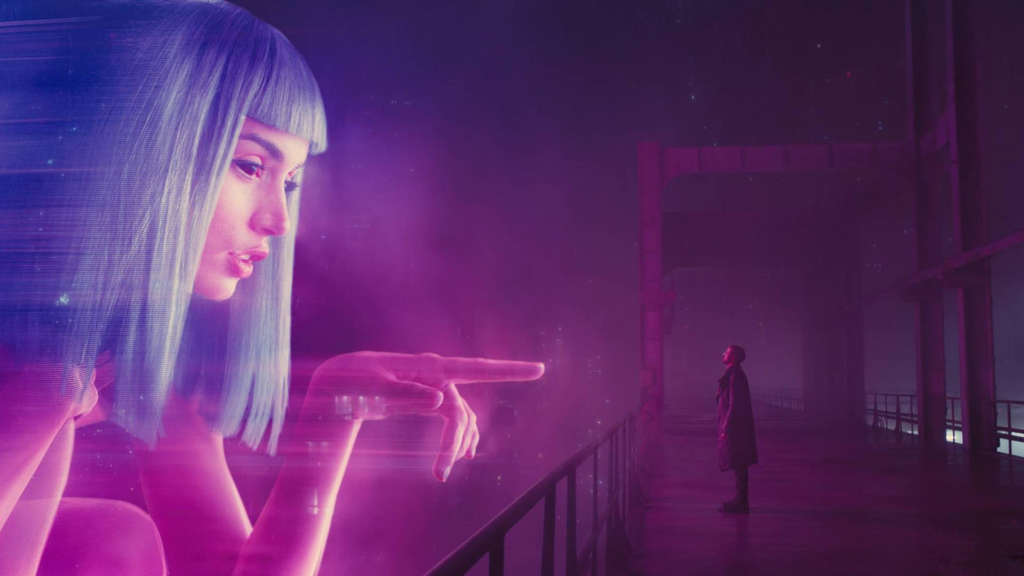
In the Beginning of the Semester, I watched Blade Runner, the iconic sci-fi film that paints a vivid picture of a future where technology and humanity are deeply intertwined. Beyond its gripping story and stunning visuals, the movie left me with a lot to think about—especially how its portrayal of holograms and augmented reality (AR) mirrors the possibilities and pitfalls of our own technological advancements.

Holograms and AR: A Glimpse into the Future

One of the most striking elements of Blade Runner is its use of holograms. From the giant, shimmering advertisements to the intimate, lifelike projections, these holograms feel like a natural part of the world. But what’s fascinating is how close this vision is to becoming reality—not through actual holograms, but through AR glasses.

In the film, the holograms aren’t physically present; they’re projections that only certain characters can see. This is exactly how AR works today. With AR glasses, digital elements are overlaid onto the real world, visible only to the wearer. It’s a subtle but powerful way to blend the physical and digital, much like the holograms in Blade Runner.

This got me thinking: what if AR glasses became as ubiquitous as smartphones? We could have personalized ads floating in the air, virtual assistants walking beside us, or even holographic companions. The potential is exciting, but it also raises questions about privacy, distraction, and the line between reality and illusion.

The Dystopian Side of Progress

Blade Runner doesn’t just showcase the wonders of technology—it also highlights its darker side. The film’s world is a dystopia where technological advances have led to environmental decay, social inequality, and a loss of humanity. The holograms, while mesmerizing, are part of a society that’s become overly reliant on technology, to the point where it’s hard to tell what’s real and what’s artificial.

This dystopian vision resonates with some of the concerns surrounding AR and other immersive technologies. As we push further into technological innovation, we risk creating a world where digital overlays dominate our perception, blurring the boundaries between reality and simulation. What happens when we spend more time in augmented worlds than in the real one? How do we ensure that technology enhances our lives without eroding our connection to the physical world and each other?

Inspiration for the Future

Despite its cautionary tone, Blade Runner is also a source of inspiration. It shows us what’s possible when creativity and technology come together. The holograms, the neon-lit cityscapes, and the seamless integration of digital and physical elements are a testament to the power of imagination.

For me, the film is a reminder to approach AR and other immersive technologies with both excitement and caution. As designers and developers, we have the opportunity to shape how these technologies are used. We can create experiences that enhance reality without overwhelming it, that bring people together without isolating them, and that push boundaries without losing sight of what makes us human.

„Body and Violin Fusion“ – Latest Compositional Concept IX

The piece is based on both the played and recorded materials. While it holds an overall concept, it is not a traditional written score but rather, it depends heavily on and is closely connected to the processed sounds and the programming aspect. The core idea of the piece revolves around the transition from the acoustic sound of the violin to processed and electronic sounds. This transition reflects with my own musical journey, from a classical violinist to an electroacoustic musician. Although the piece is not fully improvised, it still allows for a sense of freedom, enabling the performer to interact with the processed sounds, which vary each time during the performance. The structure of the piece is sectional, and with each step, it shifts further into the electronic domain. The starting point of that is a loop of each buffer, where the sounds are heard not being played in real-time by the performer.

Pieces like Suspensions by Atau Tanaka[1] and Weapon of Choice by Alexander Schubert[2] and also the book of Marije Baalman Composing Interactions[3], played a significant role in shaping the artistic direction of this set up. They helped me establish a connection between the technical and artistic aspects of the it, and to blend improvisation with electronic manipulation in a meaningful way.

My intention was to unify the entire piece, where in addition to the processed sound, the performer also plays live. This way, the piece does not entirely become electronic, instead it creates a polyphonic sound where different materials blend into each other. I also aimed to incorporate extended techniques on the violin, such as bowing on the body of the instrument, to capture the texture of the wood’s sound, among others. These techniques create variations with each performance attempt.

Since there is no fixed score for the piece, the timing is inherently variable. It depends not only on the recorded materials but also on the length and nature of the interactions between the performer and the electronic sounds. The performer’s engagement with the processed sounds can fluctuate, leading to different pacing and moments of intensity. Although that there is more or less clear that the most intense or the chaotic part is the moment that granular patches arise.

Towards the end of the piece I considered two possible approaches, both of which could be easily implemented within the patch. The first scenario involved abruptly cutting off the sound while the piece remained in its chaotic phase, with the violin accompanying this sudden act. The second scenario entailed first progressively increasing in intensity and then gradually fading out, so this version has a more gradual transition. These two variations could significantly alter the conceptual framework of the piece as well, either aligning with my intention to conclude with a sense of resolution or opening the door to further exploration and discovery. For now, I have chosen to conclude the piece by gradually reducing its dynamic intensity and stabilizing the sound. However this decision is not necessarily final, as the compositional process remains open to further refinement.