06 // Color psychology in marketing and branding

The world of marketing and branding is colorful, but the decision behind the colors chosen is far more than a purely aesthetic consideration. This blog post is about the psychology of color in the context of marketing and branding. Colors are used as a strategic tool in this context.

This topic plays a crucial role in the context of my work, as the conscious choice of colors not only influences the perception of products or services, but also shapes the emotional connection between brand and consumer. A deep understanding of color psychology enables me to make targeted decisions in the design of brand identities and to better understand resonance points in the target group.

Color perception is subjective, but studies show that there are broader patterns. The study „Influence of Color on Marketing“ found that up to 90% of product reviews are strongly influenced by color, depending on the category. The relationship between brands and color depends on perceived appropriateness. Research such as „Exciting Red and Competent Blue“ confirms that colors influence purchase intent and shape the perceived personality of a brand. Research emphasizes that predicting the consumer’s reaction to color accuracy is more important than selecting the individual color itself to create targeted emotions and associations.

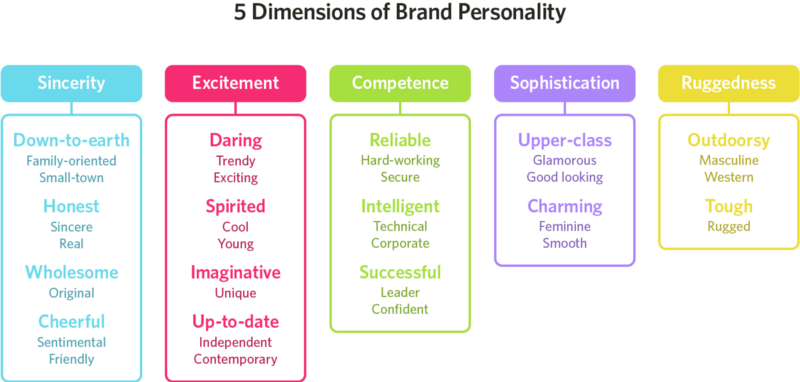
5 dimensions of brand personality:

Jennifer Aaker, psychologist and Stanford professor, identified five core dimensions in her study. These dimensions play a decisive role in shaping the personality of a brand.

Image source: https://www.bee.digital/blog/die-psychologie-der-farbe-im-marketing-und-branding

Brands can overlap between two characteristics, but are usually dominated by one. Colors are often associated with certain traits, yet academic studies emphasize that it is more important for colors to support the desired personality of the brand rather than to align with stereotypical associations.

Color trends for men and women:

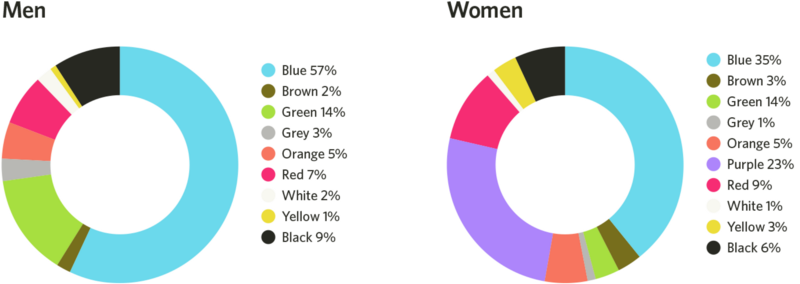
An interesting study on this topic is Joe Hallock’s work on „color mapping.“ His data shows clear preferences for certain colors across both genders, with blue standing out in particular, and there are differences in the groups for the color purple. Individual decisions about color preferences are strongly influenced by one’s environment and cultural perceptions.

Favorite colors of men and women:

Image source: https://www.bee.digital/blog/die-psychologie-der-farbe-im-marketing-und-branding

The least favorite colors of men and women:

Image source: https://www.bee.digital/blog/die-psychologie-der-farbe-im-marketing-und-branding

Additional research in color perception and color preference studies suggests that men tend to prefer bold colors, while women like softer colors. Men also tend to prefer hues, while women are more receptive to hues.


Works Cited for the entire article:

Fürst, Christina. “Die Psychologie Der Farbe Im Marketing Und Branding.” Www.bee.digital, 2 Apr. 2019, www.bee.digital/blog/die-psychologie-der-farbe-im-marketing-und-branding. Accessed 9 Jan. 2024.

Marketing example: FreeWater

FreeWater: A Philanthropic Revolution in Advertising and Beverage Industry

In the bustling world of marketing and beverage consumption, an Austin-based startup is making waves with an innovative approach that challenges the traditional norms. FreeWater, founded by Josh Cliffords, isn’t just another beverage company; it’s a philanthropic marketing channel that’s reshaping the way we think about advertising and access to essential resources.

A Philanthropic Vision

FreeWater’s journey began with a vision that transcends profit margins and traditional marketing tactics. Josh Cliffords, inspired by his experiences volunteering with refugees, recognized the pressing issue of water scarcity on a global scale. With 800 million people lacking access to safe drinking water and almost half the world’s population facing water scarcity at least one month each year, Cliffords sought to create a for-profit solution with a philanthropic core.

The Innovative Business Model

What sets FreeWater apart is its ingenious revenue generation strategy. The product, eco-friendly and BPA-free, is adorned with advertisements directly printed onto aluminum bottles and cartons. Advertisers can choose to distribute the water for free or sell it for profit, providing a unique blend of philanthropy and business acumen.

Bridging the Gap with QR Codes

FreeWater leverages its physical packaging with QR codes, offering consumers a gateway to various benefits. From collecting coupons and watching videos to ordering food and participating in surveys, the interactive features go beyond traditional advertising. The company’s B-to-C model ensures that the water is always free, aligning with their mission to make philanthropy accessible through daily consumer choices.

Positive Advertising Impact

In a world saturated with intrusive advertising, FreeWater stands out by aiming to be a positive and non-intrusive advertising channel. Rather than annoying consumers, the company aims to bring happiness by saving them money, contributing to charitable causes, and fostering environmental sustainability.

Beyond Water: The Free Supermarket Vision

Water is just the beginning for FreeWater. Josh Cliffords envisions expanding into the realm of becoming the world’s first free supermarket. The goal is to disrupt the traditional food and beverage industry, offering a wide array of products supported by advertising, creating a positive impact on both consumers and the environment.

Partnerships for a Greater Cause

FreeWater isn’t just about its own success; it’s about building partnerships for a greater cause. The company welcomes collaborations with 501(c)(3) organizations, church groups, sports programs, and schools. Through specially crafted partnerships, FreeWater extends its philanthropic mission, providing a fundraising avenue where partners can sell ad space, and FreeWater contributes a portion of the proceeds.

In a world where advertising can be invasive and philanthropy sometimes feels distant, FreeWater emerges as a beacon of change. It’s a reminder that businesses can thrive while making a positive impact on society, one bottle of water at a time. As FreeWater continues to evolve, it’s not just redefining advertising; it’s rewriting the narrative of what a socially conscious business can achieve.

Links:

Marketing example: Nutella Unica

Nutella Unica: A Palette of Seven Million Individual Jar Designs

In 2017, Ferrero’s Nutella has come up with a unique and innovative approach to it’s packaging. It was by all means a marketing move that has successfully captivated its audience. In a campaign called „Nutella Unica,“ Ferrero collaborated with Ogilvy & Mather Italia, marking a turning point in the world of chocolate hazelnut spreads. Let’s delve into the details of this unique and successful venture that left Italy, and subsequently the world, craving for more.

A Splash of Color and Individuality

In June 2017, Ferrero unveiled Nutella Unica, an ingenious campaign that harnessed the power of algorithms to create seven million unique Nutella jar labels. The campaign aimed to redefine the packaging game by introducing individuality to each jar, turning them into limited-edition collector’s items.

The Algorithmic Artistry

Partnering with Ogilvy & Mather Italia, Ferrero employed a specially crafted algorithm that drew from a vast database of patterns and colors. This algorithm worked its magic to generate a staggering seven million distinct Nutella labels. From pink and green to striped and polka-dotted, each label became a piece of art, with its own unique ID code.

Italy’s Nutella Frenzy

When Nutella Unica hit the shelves in Italy in February 2017, the response was nothing short of phenomenal. The campaign sold out within a month, with enthusiasts scrambling to get their hands on these colorful and uniquely labeled jars. To put the success into perspective, approximately 11% of Italy’s population snagged a jar, making Nutella Unica an instant sensation.

The Global Expansion

Buoyed by the campaign’s triumph in Italy, Ferrero decided to take Nutella Unica beyond borders. The campaign made its way to France, where it continued to win hearts, and eventually to Germany, extending its reach even further. The colorful and individually designed jars continued to leave an indelible mark on Nutella enthusiasts worldwide.

The Technology Behind the Magic

The success of Nutella Unica was not only about aesthetics but also about cutting-edge technology. The algorithm, developed in collaboration with HP, combined diverse patterns and colors, resulting in millions of unique label combinations. Eurostampa, an Italian printing company, played a crucial role in creating a new printing process that allowed for the production of 250,000 unique labels per week.

Nutella with a Message

Beyond the visual appeal and technological prowess, Nutella Unica carried a meaningful message. The individual jar designs were conceived to symbolize the diversity of people, echoing the campaign’s tagline, „Nutella Unique – As Unique as You.“

Ferrero’s Nutella Unica campaign stands as a testament to the power of creativity, technology, and a profound connection with consumers. What started as a colorful experiment in Italy transformed into a global sensation, leaving a sweet mark on Nutella’s rich history.

Links:

The Art of Packaging: Transforming Products into Experiences

In a world where products jostle for attention on crowded shelves and digital marketplaces, packaging has transcended its conventional role of protection and containment. It has emerged as a silent ambassador, a storyteller, and a bridge between the physical and digital realms. This blog explores the intricate dance of packaging as a compelling analog marketing tool, drawing insights from diverse perspectives.

Unboxing Magic: Elevating the Customer Experience

Unboxing experience is a key element in turning packaging into a marketing powerhouse. Imagine the anticipation and thrill of lifting the lid on a sleek, minimalist box to reveal your prized possession. This level of care and attention transforms the act of opening a package into a memorable event. Brands can learn from the consumer electronics industry, where unboxing videos go viral on platforms like YouTube and Instagram.

The message is clear: turbocharging the unboxing experience can turn customers into brand advocates. Social media becomes a stage for your product, with customers willingly sharing their excitement and creating organic marketing content across platforms.

Let Your Packages Do the Talking: Communicating Values

Packaging is a powerful communicator. The package is often the first visual interaction customers have with your product. Brands are encouraged to make their packages shout about their values – whether it’s eco-friendly, plant-based, or featuring unique characteristics.

In a marketplace saturated with choices, your packaging becomes a powerful tool for carving a unique brand identity. It reassures customers about the safety and integrity of your product while narrating a tale of commitment to quality and care. Creative packaging solutions, such as collaborating with a reliable packaging company, can transform your packaging from a container into a communication channel.

Social Media Integration: From Package to Platform

In the digital age, no brand can afford to be absent from social media. Incorporating social media handles on packaging extends an open invitation for customers to connect, share feedback, and build a community around your product. This direct link between the physical and digital realms amplifies brand engagement, transforming your product into a conversation starter online.

Seasonal Charm: Packaging for the Festive Spirit

Dressing your packages for the season adds a touch of magic. Whether it’s Christmas with reindeers or International Women’s Day with limited edition packaging, tapping into emotional vibes creates a buzz. Seasonal packages not only showcase adaptability but also make your product more relatable and memorable, aligning your brand with the spirit of the times.

Going Green: Eco-Friendly Packaging for a Sustainable Future

In the contemporary landscape of consumer preferences, sustainability has transcended the status of a fleeting trend and evolved into an unwavering expectation. Brands, in response to this societal shift, have a profound opportunity to integrate eco-friendly practices into their packaging choices. This may involve a strategic embrace of recyclable materials, the incorporation of bioplastics, exploration of compostable options, or the introduction of reusable containers. But there are other approaches going beyond production methods and materials. Giving the packaging a second life by introducing a second purpose once unwrapped is one example.

Furthermore, the crux lies in the artful communication of a brand’s commitment to environmental responsibility through thoughtful and intentional design. This involves a conscious selection of design elements that not only align with sustainable practices but also serve as a visual manifesto of the brand’s eco-conscious ethos.

Consider the impactful use of earthy tones, reminiscent of nature’s palette, weaving a visual narrative that echoes the brand’s dedication to ecological harmony. Nature-inspired illustrations further contribute to the visual symphony, creating a seamless connection between the product and the environment it seeks to preserve. Additionally, incorporating eco-badges into the packaging design acts as a bold declaration, shouting to the consumer, „Sustainability is not just a consideration; it is our guiding mantra.“

In essence, the adoption of sustainable packaging practices extends beyond being a responsible choice; it transforms into a holistic and visual representation of a brand’s commitment to a greener future. By weaving sustainability into the very fabric of design, brands not only align with the evolving expectations of conscious consumers but also establish themselves as stewards of environmental well-being.

Packaging with a Purpose: Education and Information

Packaging isn’t just a vessel; it’s a platform for education. Adding QR codes or interactive elements turns packaging into a treasure trove of insights. Every unboxing becomes an opportunity to captivate customers with both the product and a dash of knowledge, creating a holistic brand experience.

Golden Rules for Packaging

The amalgamation of insights leads to some golden rules for effective packaging:

– Know Your Audience: Tailor your packaging to resonate with your target demographic.

– Grab Attention: In a world of short attention spans, make your packaging visually striking.

– Stay True to Your Brand Essence: Let your brand values shine through in your packaging design.

Wrapping It Up: The First Date with the Customer

In summary, the packaging serves as the initial encounter between your product and the customer, akin to a first date. Its significance surpasses mere protective functions; it’s a platform for fostering love at first sight. By internalizing these perspectives, brands have the potential to metamorphose their packaging into a nuanced analog marketing instrument that captivates, communicates, and cultivates enduring connections. Navigating the intricate world of packaging may benefit from the guidance of seasoned experts, ensuring that the packaging not only stands out but also resonates, conveying a narrative that lingers in the minds of consumers. In the expansive landscape of commerce, the journey often commences with a meticulously wrapped package, setting the stage for a lasting and impactful relationship between the brand and its audience.

Links:
Overview of ten key philosophers

The article Zehn Denker kompakt (Maus, 2008) provides an overview of key philosophers from Plato to Wittgenstein. Here are the key points for each philosopher:

Plato (427-347 BC):

  • Biography: Disciple of Socrates, founded the Academy in Athens.
  • Core Thesis: Allegory of the Cave – Search for unshakable principles and Ideas.
  • Relevance Today: Call to seek truth beyond media, trust in the soul.

Aristotle (384-322 BC):

  • Biography: Student of Plato, tutor to Alexander the Great.
  • Core Thesis: Realism, emphasis on facts, systematization of science.
  • Relevance Today: Emphasis on knowledge for gaining understanding and maximal happiness.

René Descartes (1596-1650):

  • Biography: Mathematician, founder of analytical geometry.
  • Core Thesis: Mathematical method, systematic doubt, „Cogito, ergo sum“ („I think, therefore I am“).
  • Relevance Today: Emphasis on analytical thinking, courage for radical doubt.

Immanuel Kant (1724-1804):

  • Biography: Königsberg professor, intensive thinker.
  • Core Thesis: Critique of Pure Reason, emphasis on reason and ethical foundation.
  • Relevance Today: Ethical basis for a decent life, importance of reason.

Georg Wilhelm Friedrich Hegel (1770-1831):

  • Biography: Berlin professor, state philosopher.
  • Core Thesis: Dialectic – Thesis, Antithesis, Synthesis, search for the law of the world spirit.
  • Relevance Today: Belief in the power of the spirit, possibility of uniting opposites.

Arthur Schopenhauer (1788-1860):

  • Biography: Loner, misanthropic.
  • Core Thesis: Everything is suffering, redemption through detachment from the will.
  • Relevance Today: Pessimism but also a source of freedom through detachment from the will.

Søren Kierkegaard (1813-1855):

  • Biography: Nervous thinker, existential philosopher.
  • Core Thesis: Radical subjectivity, freedom through decisions.
  • Relevance Today: Emphasis on individual freedom and the necessity to make decisions.

Karl Marx (1818-1883):

  • Biography: Critic of capitalism, author of the „Communist Manifesto.“
  • Core Thesis: Economic relations determine history, class struggle, communism.
  • Relevance Today: Analysis of economic structures, relevance for understanding society.

Friedrich Nietzsche (1844-1900):

  • Biography: Sensitive character, creator of the Übermensch.
  • Core Thesis: Revaluation of all values, „God is dead,“ Übermensch.
  • Relevance Today: Critique of traditional values, challenge to create new values.

Ludwig Wittgenstein (1889-1951):

  • Biography: Constructivist, lived simply, intense thinking phases.
  • Core Thesis: Language analysis, focus on clear core statements about facts.
  • Relevance Today: Philosophy decluttering, emphasis on clear language, avoidance of metaphysical questions.

Source:

Maus, Stephan (26.11.2008, 17:16). Zehn Denker kompakt. Stern. https://www.stern.de/panorama/wissen/mensch/philosophie-zehn-denker-kompakt-3749076.html

Why do we need Philosophy (from a designer’s perspective)?

Philosophy serves several important functions in human intellectual and cultural development. While it may seem abstract at times, its abstract nature is a product of its pursuit of fundamental questions about existence, knowledge, values, reason, mind, and language. Philosophy is important for designers for several reasons, as it can significantly enhance their approach to problem-solving, creativity, and the overall design process. Here are some key reasons why philosophy is valuable for designers:

  1. Critical Thinking: Philosophical training encourages critical thinking and the examination of assumptions. By questioning and analyzing concepts, arguments, and beliefs, individuals can develop better reasoning skills and make more informed decisions.
  2. Ethical Considerations: Design choices can have significant ethical implications, especially when it comes to user experience, environmental impact, and societal well-being. Philosophical inquiry into ethics can guide designers in making responsible and morally sound decisions.
  3. Understanding User Experience: Philosophy can help designers understand the human experience on a deeper level. Exploring questions related to perception, consciousness, and meaning can inform design choices that resonate with users on a more profound level.
  4. Aesthetic Exploration: Philosophical discussions on aesthetics and beauty can inspire designers to think more deeply about the visual and sensory aspects of their work. Understanding different theories of aesthetics can broaden a designer’s perspective on what is considered visually appealing.
  5. Cultural and Social Awareness: Philosophy often intersects with cultural and social issues. Designers who engage with philosophical ideas can develop a heightened awareness of cultural contexts, social norms, and diverse perspectives, leading to more inclusive and culturally sensitive designs.
  6. Interdisciplinary Insights: Philosophy is interdisciplinary and can connect with various fields such as psychology, sociology, and technology. Designers who draw on philosophical insights can create more holistic and integrated solutions by incorporating knowledge from different disciplines.
  7. Problem Framing: Philosophers are skilled at framing and reframing problems, a skill that is crucial for designers in defining design challenges and understanding the underlying issues they aim to address. Philosophy can help designers articulate and approach problems in a more nuanced way.
  8. Innovation and Creativity: Philosophy encourages thinking beyond conventional boundaries. Designers who engage with philosophical ideas may be more inclined to think creatively, challenge assumptions, and push the boundaries of traditional design thinking.
  9. Communication Skills: Philosophical training often involves effective communication of complex ideas. Designers who can articulate and communicate their design rationale, principles, and concepts more clearly can foster better collaboration with team members and stakeholders.
  10. Long-Term Vision: Philosophy often deals with long-term and timeless questions. Designers who incorporate philosophical thinking into their practice may develop a more forward-thinking and visionary approach, considering the enduring impact of their designs.

In summary, philosophy enriches the designer’s toolkit by fostering critical thinking, ethical awareness, cultural understanding, and interdisciplinary insights. By engaging with philosophical ideas, designers can enhance their ability to create meaningful, innovative, and ethically sound designs that resonate with users and contribute positively to society.

Translating philosophical concepts

Translating philosophical concepts into visual designs can be a creative and effective way to communicate complex ideas to a wider audience. Here are some tips on how to make philosophical concepts visible through infographics, posters, or graphic design:

  1. Simplify and Clarify:
    • Identify the core elements of the philosophical concept and simplify them. Break down complex ideas into clear, digestible components.
    • Use straightforward language and avoid jargon. The goal is to make the concept accessible to a broad audience.
  2. Visual Metaphors:
    • Employ metaphors or analogies that can represent the key aspects of the concept visually. Analogies can bridge the gap between abstract ideas and concrete images.
    • For example, if discussing the concept of interconnectedness, you might use a visual metaphor like a web or a network of nodes.
  3. Iconography:
    • Create or choose icons that symbolize different elements of the concept. Icons can serve as visual shorthand, making it easier for viewers to grasp the meaning.
    • Ensure that the chosen icons are universally recognizable and aligned with the essence of the philosophical concept.
  4. Flowcharts and Diagrams:
    • Develop flowcharts or diagrams to illustrate the logical flow or connections between different components of the concept. Visualizing relationships can enhance understanding.
    • Use arrows, lines, and shapes to guide the viewer through the sequence of ideas or the structure of the concept.
  5. Color and Typography:
    • Use color to evoke emotions or highlight specific elements of the concept. Choose a color palette that complements the mood or theme of the philosophical idea.
    • Experiment with typography to emphasize key words or phrases. Different fonts and sizes can convey hierarchy and importance.
  6. Narrative Storytelling:
    • Tell a visual story that unfolds as viewers progress through the infographic or poster. Use a sequence of images to guide them through the development or evolution of the concept.
    • Incorporate captions or brief explanations to provide context and continuity.
  7. Contrast and Emphasis:
    • Create visual contrast to highlight important elements. Use contrast in color, size, or style to draw attention to key points within the design.
    • Ensure that the most critical aspects of the concept are visually prominent.
  8. Interactive Elements:
    • If possible, add interactive elements to engage viewers. This could include clickable sections, pop-ups with additional information, or animated sequences that unfold as the user interacts with the design.
  9. Cohesive Design:
    • Maintain a cohesive design throughout the infographic or poster. Consistent use of colors, fonts, and styles helps create a unified visual language that enhances overall comprehension.
  10. User Testing:
  • Before finalizing your design, gather feedback from potential viewers. Conduct user testing to ensure that the visual representation effectively communicates the intended philosophical concept.

Remember that the goal is not only to make the concept visually appealing but also to enhance understanding. Balancing creativity with clarity is key to creating effective visual representations of philosophical ideas.

To make philosophy more accessible and relevant, focus on:

  1. Practical Applications: Highlight real-world applications and how philosophical concepts can address everyday challenges, making the subject more relatable.
  2. Interactive Platforms: Utilize interactive and engaging platforms, such as apps or social media, to encourage participation and discussion around philosophical ideas.
  3. Visual Representation: Create visually appealing and easily understandable infographics, videos, or other visual content to convey complex philosophical concepts in a more accessible manner.
  4. Conversational Tone: Use a conversational and approachable tone in written or spoken communication to demystify philosophy and make it more inviting to a broader audience.
  5. Relate to Modern Issues: Connect philosophical discussions to contemporary issues, showing how philosophical thinking can provide insights and solutions to current societal challenges.
  6. Collaborative Learning: Foster a sense of community and collaborative learning through forums, discussion groups, or workshops where people can share their perspectives and learn together.
  7. Multimedia Platforms: Utilize various multimedia platforms, such as podcasts and online courses, to cater to different learning preferences and reach a wider audience.
  8. Storytelling: Use storytelling techniques to narrate philosophical ideas, making them more engaging and memorable for a diverse audience.
  9. Integration with Other Disciplines: Emphasize the interdisciplinary nature of philosophy, showing its connections to fields like science, technology, art, and psychology.
  10. Accessible Language: Avoid unnecessary jargon and use language that is clear, concise, and easily understandable, making philosophical concepts more approachable.

By combining these strategies, you can help people perceive philosophy as a relevant and accessible tool for personal growth, critical thinking, and navigating the complexities of modern life.

Source:

ChatGPT

Research 5: Emotional Advertising and how it connects

Advertising uses different strategies in general. Emotions are a big player in advertising as we all know for sure. Emotions drive sales and purchasing decisions are often influenced by feeling and emotions rater than purely logical reasoning. Brands try to create a connection between the customer and their brand or product – they try to appeal to their emotional state, their ego, their need and fears. Strong core emotions. It leads to higher conversion rates and create a desire to interact and connect. Emotions also make ads more memorable.

A highly used emotions is happiness – positive advertisements are also more likely to be shared.

These methods are also being used in campaigns agains animal abuse and for protecting the planet. The strategies which are working in promoting products and getting the customer to pay for it even though they do not need it are also working here if used wisely. People are getting aware of different problems and feel the urge to contribute to the cause – they get emotionally attached to for example the animals or are shocked by what is happening. Different people also require different adverts.

But there are also some discussions about how effective scandal adverts, and highly provocative images are working. Mainly it is all about raising awareness and to get the people to engage – a brand wants that for their product and a non-profit organisation hopes for donations for their project. But people get used to it and there is kind of an consumer resignation. Now more and more subtle and creatively crafted adverts are in demand to ensure highly effective impact.

Emotional Advertising for the good cause.

In summary these features are also wanted in adverts for animal welfare and for the environment. Advertising for these topics is important to raise awareness and get the support that is needed to fight.

Here is how emotional advertisiting connects back to these topics.

  1. Eliciting Empathy & Compassion: With heartwarming images, videos or narratives ads try to evoke empathy and compassion – to connect on a deeper level.
  2. Raising Awareness: The emotional impact captivates audience and grabs their attention. They make them more receptive to the message which is conveyed,
  3. Creating Connection: Creating a Connection between the audience and the cause – it resonates with the content and so they may be more invested themselves.
  4. Driving Action: Every ad has the goal to provoke a positive action – donation, responsible consumer choices or supporting the activism themselves.
  5. Positive Associations: Through the emotional advertising an positive associations can be created. Values like compassion, responsibility, ethnical treating of animals can enhance the brand loyality and reputation.
  6. Highlight Success Stories: Beautiful stories where the project already had made a positive change can convince the audience to also support and believe that it works and they can help. This shows them that individual actions also can make a meaningful difference.
  7. Shared Values: With similar values the viewer has it can create a sense of collective responsibility for a positive change and that nobody is alone in this.
  8. Conversation: Emotional Ads get people to talk about the topic – it gets people in a dialog which is also an important step in animal welfare. If people talk about it it gets more important and bigger and gets more reach.

For non-profit organisations it´s often hard to argue why they also need to advertise and why they sometimes choose this kind of advertising. But they just do the same as other brands do so that they get the support they need to make the effort of change and effort of getting people to reflect on their behavior. What works in normal ads also works in animal & environment protection advertising.

https://www.thedrum.com/opinion/2022/02/14/emotional-advertising-how-and-why-brands-use-it-drive-sales

https://www.indeed.com/career-advice/career-development/emotional-appeal-advertising#:~:text=For example%2C suppose you’re,and helped illicit those emotions.

https://www.trendhunter.com/slideshow/animal-abuse-ads

https://www.springerprofessional.de/werbewirkungsforschung/verkaufstechniken/was-bringt-skandal-werbung-/16266544

The Power of Images Explained Through a PR Example: Why We Prefer to Look Than to Read

A glance at today’s communication landscape reveals that pictures can speak more than a thousand words – and for good reason. In a world where attention spans are diminishing and visual stimuli are on the rise, images are gaining increasing importance in PR. The article Bildeigenschaften – wir schauen lieber als wir lesen (Adlmaier-Herbst 2013) illustrates why people prefer images and underscores their crucial role in public relations.

The loss of interest without images is a common phenomenon, whether it’s reading brochures or browsing the internet. Reading requires effort, and more and more people are reluctant to invest that effort. The visual element is gaining ground because it is perceived and processed more quickly. In presentations, we often remember only images and key phrases, not text deserts. Images have the unique ability to convey emotions more vividly and memorably than texts.

The advantages of images in PR are diverse. They stand out, activate quickly, are easily absorbed, and processed. A glance at an image is enough to form an initial impression, and we can remember images well even after brief observation. Images can convey emotions better and evoke intense experiences by engaging different senses. They are more convincing than text and can influence attitudes, opinions, and even behavior.

Particularly interesting is the unconscious processing of images, which strongly influences opinion formation. Politicians are evaluated in seconds based on visual impressions, regardless of their political expertise. (experiment by social researcher Siegfried Frey, showed students from Germany, France and the USA 180 film clips of 60 politicians from the TV news in the three countries. The clips contained short speech excerpts from these politicians, with the sound switched off. In just a few seconds, the test subjects formed a comprehensive judgment of the politicians. It did not matter whether they knew the politician or not.) This emphasizes the importance of unconscious processes in PR.

In the future, PR will need to focus more on these unconscious processes to fully understand the impact of images. The power of images in PR is not only evident but also profound, and it is up to communication professionals to skillfully harness this power. In a world of rapid consumption, images capture attention that text alone often cannot reach.

Let’s look at some numbers:

In a mere 0.1 seconds, our minds can conjure a rough impression beneath an image. Within a single second, we can swiftly recognize 5 images in rapid succession – a feat not achievable with a critical mindset. Devoting just 2 seconds to observing an image is adequate for secure later recognition. Therefore, for swift and effective communication, the emphasis should be on visuals.

When we contrast the reception of images and texts, an image advertisement captures attention for approximately 1.7 to 2 seconds. Within this brief period, observers grasp around 5 percent of the information; comprehending the entire content would demand 35 to 40 seconds. What is assimilated within the initial 2 seconds? A staggering 76 percent pertains to the image, 16 percent to the headline, and a mere 8 percent to the text. Viewers absorb 50 to 70 percent of the visual information but only 2 percent of the textual information – roughly equivalent to 6 to 7 words.

Insight for my research project: If I want complex content or content in general to be not only understood but also remembered, it would make sense to present it using graphics/pictures. As this article shows, many people prefer visual elements because they are processed faster and require less energy. The advantages of images are their eye-catching nature, quick impact, easy absorption, persuasive power, longer-term retention, and ability to convey intense emotions.

Source:

Adlmaier-Herbst , Prof. Dr. Dieter Georg (2013, February 7th). Bildeigenschaften – wir schauen lieber als wir lesen. https://edition.cnn.com/entertainment/game-of-thrones-timeline-history-cec/index.html.

Research 4: Shock Therapy and Advertising

In 2011 the Oldenburg agency „Frese & Wolff launched a shock campaing by the German Animal Welfare Association (DTSchB). The overarching message of this campaign was „Feel like an animal“. The Posters depict beautiful people with suffer like animals in different situations. The campaign comprises four visuals addressing various animal welfare issues, including the pain of piglet castration without anesthesia, primate experiments, and branding on horses. The creators emphasize that using shock elements is necessary to prompt people into action and raise awareness for animal welfare. The campaign is supported by posters, advertisements, large-scale displays, and a cinema ad, with plans for television broadcast. Positive reactions and increased traffic on the website and Youtube suggest a successful campaign.

On the website of Arche Noah Austria they also give arguments why such campaings are important and why it is also necessary to use money for advertising for animal welfare and enviromental topics. Others might argue why they are not using the money for animals or directly where help is needed. But they say that we have to see the suffering and problems so we can help making a change. Raising awareness of the need for animal welfare is key.
The reality is that many people are not fully aware of the urgent issues animals face. Therefore, it is crucial to educate the public, promote empathy, and bring about changes in behavior and attitudes. Through theyfundraising efforts, they can reach more people and make a significant contribution to animal welfare.

Live Slaughtering

Another interesting documenting i found was from Quarks. They released a youtube video which has already over 2 million views. The topic is a live slaughtering of geese. The accompany a farmer to a market where they normally would sell their already prepared goods. This time they took 10 living geese with them. After some time one customer bought a geese which then got freshly slaughtered for him in front of everybody. Even the police came by to check if this is legal – which it was. A lot of people where frustrated and shocked, whereas others came to the conclusion that if you want to eat meat you have to be aware that this is the reality but normally you do not see it. Later one girl wanted to buy all the geese to save them from their faith. She put together a foundraising and could save them – they later also showed how the geese where rescued and brought to their destination. They also talked about how a goose would live up to 16 years normally but for the meat they just live one year. But the sad thing about this event is that the farmer shown in the documentary is working kind of animal-friendly and its important to him that the short life the animals have is a good life – but he wants is customers to see what is behind that and that in the end every animal has to die for their food. The reactions from all the passersby show how different the perceiption of people is about this topic. Some would never want to see an animal die but do not have a problem to eat it – others are very dry in their opinion in this topic and appreciate that there are farmers who try their best to produce guilt-free products.

Sources:

https://www.wuv.de/Archiv/Frese-Wolff-Drastische-Werbung-für-Tierschutz

https://www.nwzonline.de/wirtschaft/oldenburg-kampagne-schock-plakate-aus-oldenburg-sollen-tierschutz-forcieren_a_1,0,666096220.html

https://www.aktivertierschutz.at/warum-oeffentlichkeitsarbeit-im-tierschutz-so-wichtig-ist

Case Study – Tying knots

Introduction

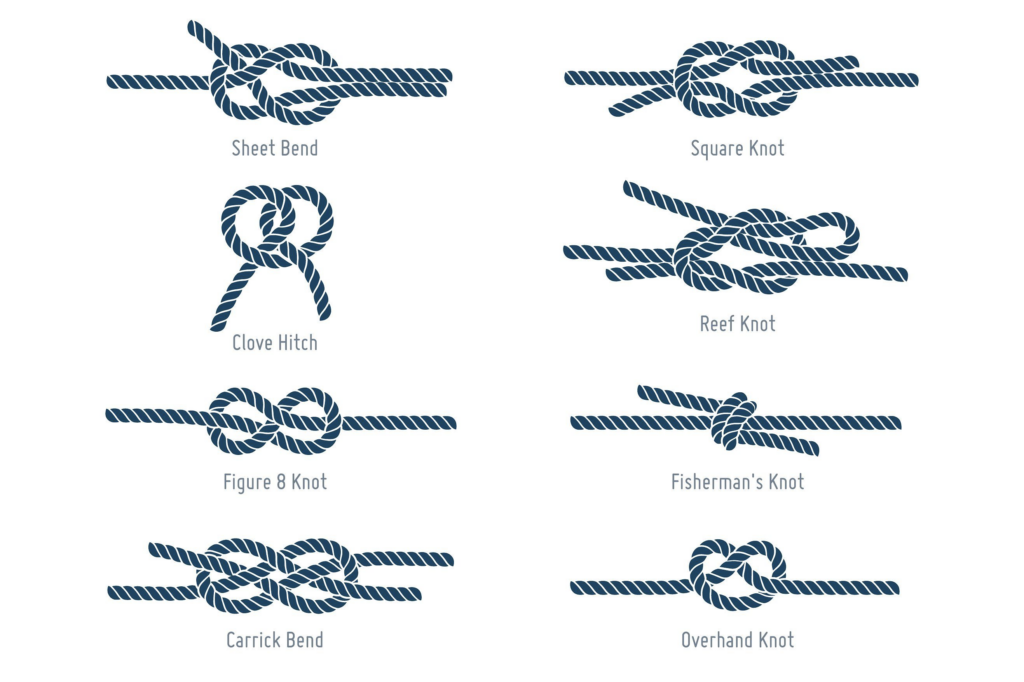
In this blog post I would like to focus on a study that explores under which conditions video instructions aid the learning process. The study specifically focuses on the skill of tying nautical knots, aiming to demonstrate that interactive features can significantly improve learning outcomes under certain conditions.

Why nautical knots?

The researchers of the study opted for nautical knots as the subject for their investigation. This choice was motivated by several factors, including the continuous motor skill nature of knot tying, the convenience and repeatability of video demonstrations, and the potential for variations in complexity that match individual learning needs.

The Experiment

The study involved thirty-six participants with no prior experience in knot tying. They were divided into two groups: one exposed to non-interactive videos, and the other to interactive videos where learners could manipulate time-related parameters like speed and direction. The participants were tasked with learning four different nautical knots and their performance was evaluated based on learning times, viewing times, and practicing times.

Results:

The findings revealed a significant advantage for the interactive group. Learners exposed to interactive features demonstrated faster learning times, distributed their attention unevenly across video frames, and strategically used features like slow motion and time-lapse. The more challenging the knot, the more pronounced the benefits of interactivity.

The study also showed that learners consciously used interactive features to adapt the pace of information presentation to their cognitive processing needs. Despite variations in viewing times, interactive video viewers developed a better understanding of the processes, resulting in more efficient learning.

Conclusion:

The study shows that interactive videos are helpful for learning things like tying knots. But, it’s important to know that not all subjects benefit the same way. For example, when we try to learn complex ideas, like from weather maps, interactive features may not be as useful because these things are more abstract and harder to understand. To sum up he study suggests that interactive videos are great for learning skills like tying knots. It highlights that using interactive features should match what learners need in their minds.

https://www.sciencedirect.com/science/article/pii/S0959475204000337