For the final blog post of this series, I have taken the time to prepare a comprehensive demonstration video, which provides a detailed overview of my low-fidelity prototype. This video is designed to give viewers an understanding of the basic functionalities and design elements of our prototype, showcasing its potential and the direction we are heading in with this project.
Video
Conclusions
The process of prototyping has been incredibly valuable in visualizing the potential of Story Teller. It has allowed me to identify key functionalities and design elements and brought to light areas that need further development and refinement. As I move forward, I plan to conduct further user testing to gain valuable feedback and insights. This feedback will inform my next iterations and help me continually improve and refine the tool. My ultimate goal is to create a user-friendly and intuitive platform that supports the creative process of interactive storytelling, as part of my final Master’s Thesis.
I did receive some feedback, and it was mostly very positive. However, I won’t be posting the feedback here. Instead, I’ll show some of the additional work that I’ve done—not all, because some have to stay a surprise, hehe. I added and implemented icons and a few more details. Now, I’m going to finish recording everything so I can post it, and you can have a little sneak peek of my application.
In this blog post, I want to showcase and discuss my finished prototype. Additionally, I’ll theorize about the future outlook and potential advancements in this area.
For this prototype, I used the sensors embedded in my smartphone, which I found to be a valid approach. However, for future prototypes, using a smartwatch or another tracking device may prove to be more useful. There is also the potential for creating specific health devices, such as a resistance band with sensors to detect how strongly the band is being stretched or pulled.
Device Selection: The weight of the phone was noticeable during use. For a more refined prototype, a lighter device would be preferable. For reference, the phone I used, a Motorola Edge 30, weighs 155 g.
Sensor Integration: Utilizing wearables like smartwatches can provide more accurate and convenient tracking. Alternatively, integrating sensors directly into exercise equipment (e.g., resistance bands) could enhance the user experience and data accuracy.
The research I did and the buidling of the prototype taught me a lot about gamification and therapy methods. It was the first time where I really took a look at how therapy exercises look like and how they should be performed. Also from the technical side I gained many valuable insights. Right now the prototype gives immediate feedback. However, in the future it could be enhanced by creating really gamifying it. This could happen in the form of characters, stories that are being told, audio feedback, rewards, etc. This is definitely something I want to explore more of in the future.
One of the proplems I personally have with most of the gamified approaches to therapy which I have seen during my research phase is that so many of them seem either too silly for my personal taste and that they are old and not up-to-date. Finding something new and novel that is both fun, engaging and yet still serious enough that people will see it as a legitimate form of therapy will be one of the challenges which need to be overcome.
Conclusion
The process of researching and creating the prototype has provided me with valuable insights into the potential of gamified physical therapy. Moving forward, I plan to refine the technology and explore new avenues for enhancing the user experience and effectiveness of these solutions. I am currently in contact with some experts in the field so hopefully there will also be the possbility of cooperation in the future.
This blog post details my first proper implementation of a gamified exercise prototype. I will explain the steps I took and share my thought process along the way.
As mentioned before, there are multiple ways of providing (gamified) feedback to a user. I briefly want to talk about the differences between short-term immediate and long-term delayed feedback:
Timing: Immediate feedback is instantaneous, while long-term feedback is delayed.
Purpose: Immediate feedback enhances the act of exercising, while long-term feedback enhances the overall experience by providing a broader perspective on progress.
Type of Feedback: Immediate feedback is typically corrective and directly related to the action performed, while long-term feedback is cumulative and provides a broader perspective on progress.
Choosing the Exercise and Sensors
When creating an actual prototype, I first looked at:
a) Which exercise I could replicate, and b) Which sensors were available to me.
Selecting the Exercise
I researched various sources and training programs to find exercises that could be easily enhanced digitally. I chose this specific exercise because it seemed easy to track, the resistance band allowed space to mount the phone, and it was a good exercise mentioned in different therapy programs.
Testing the Sensors
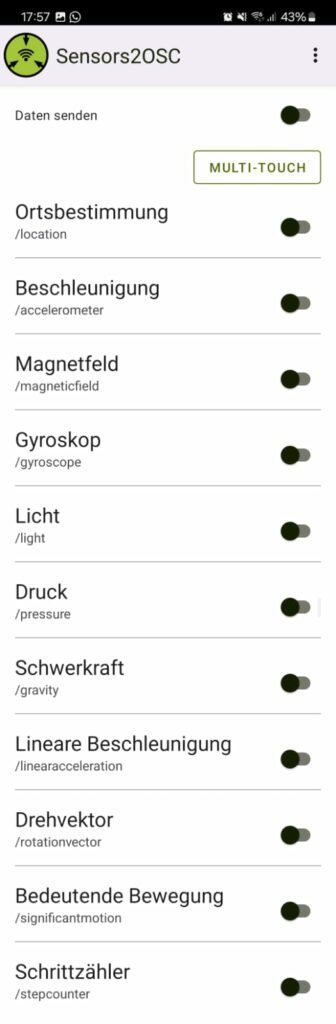
I explored various sensors available through Sensors2OSC. After testing, I found that the gyroscope, gravity, and accelerometer provided the clearest feedback when performing the exercise. I decided to use the gravity.z value as it gave the most reliable data.
Developing the Prototype
I initially wanted to send data to Unity as a Vector3 (using Keijiro’s OSCJack) but encountered issues with proper message transmission from Max 8 to Unity. I eventually decided to send the data as an integer.
Structuring the Code
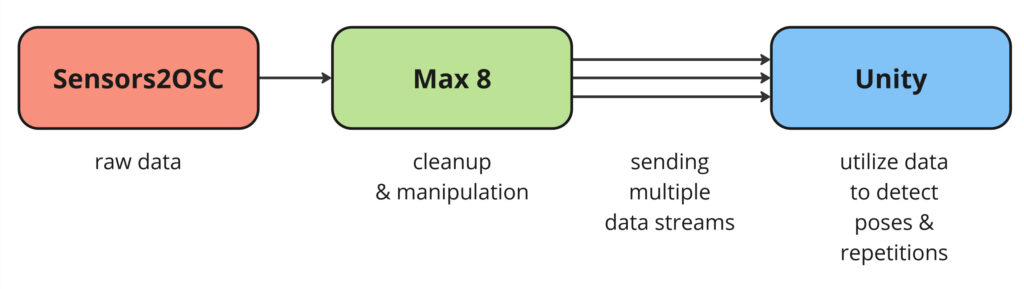
Before starting the actual coding, I planned how to structure it. I modified my previous approach and decided to handle all game logic in Unity, using Max 8 only to receive and send data.
Updated flowchart for the data processing. Now there is a manipulation step in Max 8, and multiple values are sent to Unity for detecting repetitions and triggering actions/events accordingly.
I then modified my script and scene from last time. The UI now tracks repetitions and sets, showing the user when they have successfully performed the exercise. The code has grown significantly to handle these changes. It includes checks to recognize repetitions, locking mechanisms to ensure the count increases only once per repetition, UI updates, etc.
Coding was mostly a matter of planning and trial and error to figure out exact values. Interestingly, some planned functionalities, like setting a base value when pressing the spacebar, turned out unnecessary as the gravity data didn’t require it.
Lessons Learned
For this first prototype, handling all aspects (receiving data, triggering events, checking values, updating UI, etc.) in one script was manageable. However, for future iterations, separating the code into multiple classes and following the principle of data encapsulation from object-oriented programming would provide more structure. Additionally, establishing a naming convention beforehand could help avoid confusion in the future.
In the next blog post, I will show and discuss my findings and results from this prototype, along with a video demonstration.
Here is my final prototype! I ended up making a second hand app for children’s shoes. I chose this user group because children are constantly growing and need a rapid change of shoes. I also have a theory that it might be more acceptable to buy used shoes for children when it comes to the hygiene aspect.
If you want to learn more about the process of making the app, you can read blogpost 18 and 19 (18 | Final Idea & Paper Prototype, 19 | User Testing).
The goal of this blog post is to explore the entire process of creating a gamified application for use in therapy. I will examine the implementation of gamified physical therapy, from identifying the target group to maintaining long-term motivation.
Understanding the Target Group:
The benefits of gamified physical therapy can extend to various demographics, including children, adults recovering from surgery, and elderly patients. Each group has unique needs and preferences:
Children: Engaging games can make therapy feel less like a chore and more like play.
Adults recovering from surgery: Structured challenges can help them regain strength and mobility.
Elderly patients: Gentle, gamified exercises can improve balance and prevent falls.
Conditions such as stroke rehabilitation, chronic pain management, and musculoskeletal injuries are particularly well-suited to gamified therapy.
Designing the Gamified Therapy Program:
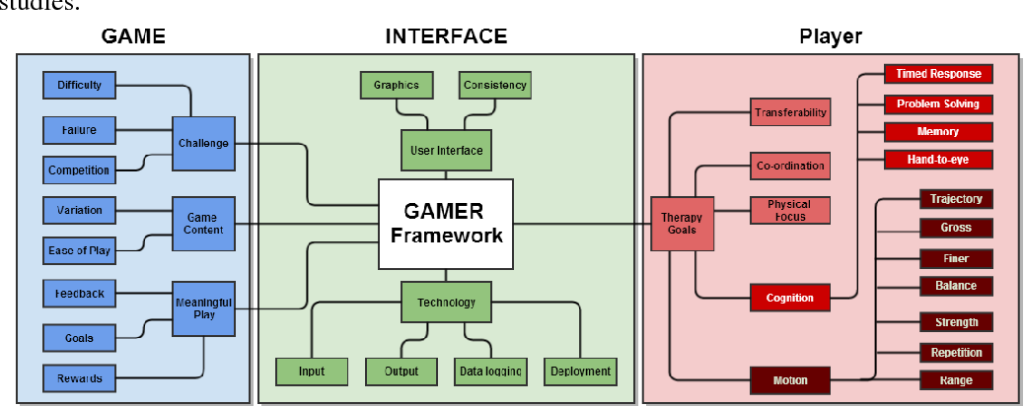
Designing a gamified therapy program requires careful consideration of the specific requirements of both the exercise and the user. Several design frameworks, specifically tailored for therapeutic applications, can aid in this endeavor. Examples include the GAME and PACT (People, Aesthetics, Technology, Context) frameworks. Traditional game design frameworks, such as the well-known MDA (Mechanics, Dynamics, Aesthetics), are also applicable and can help in making design decisions. However, the more specified frameworks provide a more nuanced perspective.
Initial Consultation with a Specialist:
The process begins with a consultation with a physical therapist, who assesses the patient’s condition, sets realistic goals, and determines if a gamified approach is suitable. Customization is key, as the gamification elements must align with the patient’s specific needs and preferences.
Training During Therapy Sessions:
During therapy sessions, patients engage in gamified exercises under the guidance of their therapist. Immediate feedback is crucial, as it helps patients correct their movements and stay motivated. For instance, a VR game might involve reaching and grasping objects to improve hand-eye coordination and strength.
Encouraging Patients to Train in Their Free Time:
Consistency is key in physical therapy, and gamified approaches can help patients stay engaged even outside of scheduled sessions. Mobile apps and home-based VR systems are effective tools for encouraging continued practice. Examples of successful home-based exercises include:
Balance Games: Using a balance board and a connected app to navigate obstacles.
Strength Training: Gamified exercises where patients perform repetitions to defeat virtual enemies or complete challenges.
Coordination Drills: Interactive games that require precise movements to score points.
Maintaining Long-term Motivation:
One of the biggest challenges in physical therapy is maintaining long-term motivation. Gamification addresses this by:
Setting Achievable Goals: Breaking down the rehabilitation process into small, attainable milestones keeps patients motivated.
Leaderboards and Social Sharing: Friendly competition and sharing achievements with a community can boost motivation.
Regular Updates and New Challenges: Introducing new games and challenges prevents monotony and keeps the therapy engaging.
Evaluating the Effectiveness of Gamified Therapy:
To ensure the effectiveness of gamified therapy, it’s important to regularly evaluate progress. Methods include:
Patient Feedback: Gathering qualitative data on the patient’s experience and engagement.
Progress Tracking: Using the data from apps and devices to monitor improvements in strength, mobility, and endurance.
Clinical Outcomes: Assessing functional gains and comparing them to traditional therapy methods.
Research supports the efficacy of gamified approaches. For example, studies have shown that VR-based therapy can improve motor function and cognitive recovery in stroke patients more effectively than conventional methods.
Future Directions and Innovations:
The future of gamified physical therapy looks promising with emerging technologies and ongoing research. Potential innovations include:
AI and Machine Learning: Personalizing therapy programs based on individual progress and adapting exercises in real-time.
Wearable Technology: Integrating sensors to provide more precise feedback and data tracking.
Mixed Reality (MR): Combining VR and AR for more immersive and interactive therapy experiences.
Conclusion:
Gamified approaches in physical therapy offer a compelling solution to increase patient engagement, motivation, and ultimately improve outcomes. By leveraging game design elements and cutting-edge technology, therapists can create more effective and enjoyable rehabilitation programs. If you or a loved one is undergoing physical therapy, consider discussing gamified options with your specialist to enhance your recovery journey.
After analyzing the audio-reactive visuals, I wondered how I could apply these outcomes practically. While creating an app might seem like an easy route, I wanted to explore how it would look and function in this context.
App Prototype
I designed a demo app prototype using Figma:
Home Screen: Native Language Selection
Users start by selecting their native language.
Language Learning Selection
Next, users choose the language they want to learn. This screen ensures that the app tailors the visualizations and pronunciation guides to the selected language.
Start Pronunciation Practice
The final page displays the data visualized video that I made in TouchDesigner. There is a simple prompt: „Hold to Pronounce.“ This allows users to practice pronunciation and see the visual feedback in real-time.
I made a quick prototype because for me the process and learnings from TouchDesigner was more challenging and interesting.
Next Step
I plan to write about my learnings and reflect on the overall process.
At the end of this semester I would like to give a short demonstration of how my prototype works. Therefore I created a short video that shows the functionality of the prototype.
Reflections
All in all, I enjoyed the process of Design & Research this semester. This time the work was more hands-on, consolidating my research from the first semester into a rough prototype. I was able to overcome my initial doubts as to how I could make a valuable contribution to my chosen topic, as there are already existing solutions. The potential I saw in my idea was confirmed by the feedback interview I conducted with the Institut für Epilepsie in Graz.
As one can see, this prototype is at a very early stage. It needs to be refined based on future feedback, in it’s interaction logic and real content, as well as in the sound and visual design to address emotional perception as well. This prototype could be an test object in evaluation practices such as expert reviews, interviews and tests to further develop this concept.
In my last blog post, I discussed the technical aspects required to create a basic functioning digital prototype. In this post, I want to delve deeper into what a potential first prototype could look like.
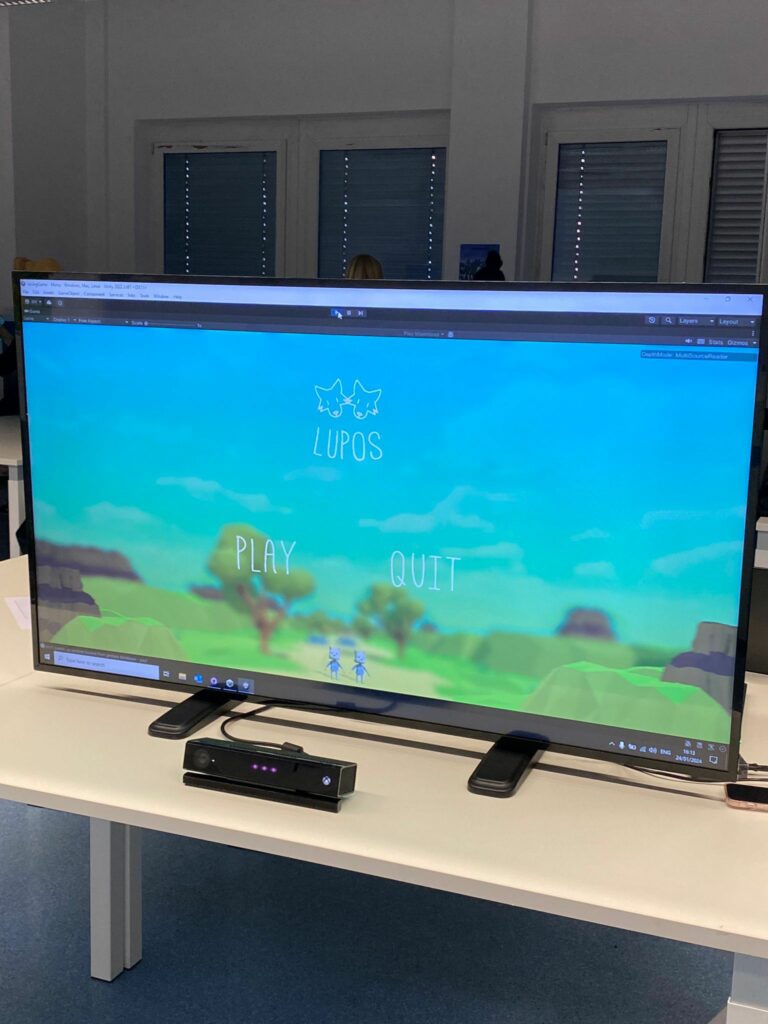
Before I speculate on the prototype, I want to mention a game we made last semester called “Lupos,” a simple 3D jump ‘n’ run game. Its distinctive feature was its control method: we used an Xbox Kinect to track the player’s body position and gestures. Leaning left or right steered the player character, while raising both arms above the head made the character jump. Since it was a cooperative game, the gestures had to be made in unison. I mention this game because it shares similarities with games used in rehabilitation and therapy. Using body movements to control in-game avatars can be a form of physical exercise, especially actions like raising hands, which require significant flexibility and range of motion.
Some common ways of displaying (health) information.
As mentioned in my previous blog posts, there are different approaches to gamification. One consideration is whether the service should be used during sessions with a medical professional or during the patient’s own training time.
Another decision is whether the gamification should focus on the exercise itself (turning the exercise into a game) or provide user motivation outside of these exercises (e.g., with leaderboards, visualizations, etc.). These approaches can also be combined.
For a first prototype, I will focus on creating an application that can reliably measure a specific movement and track how many repetitions a user has completed. Additionally, I will explore how this information is presented.
I do not yet fully know the direction I want to take this idea, but I plan to explore it naturally through the prototype development process.
The next step is to build a low-fidelity prototype, focusing on functionality rather than aesthetics. Accurately detecting repetitions without accidental triggers will likely be the most challenging aspect.